
Energiehuis De Kaai
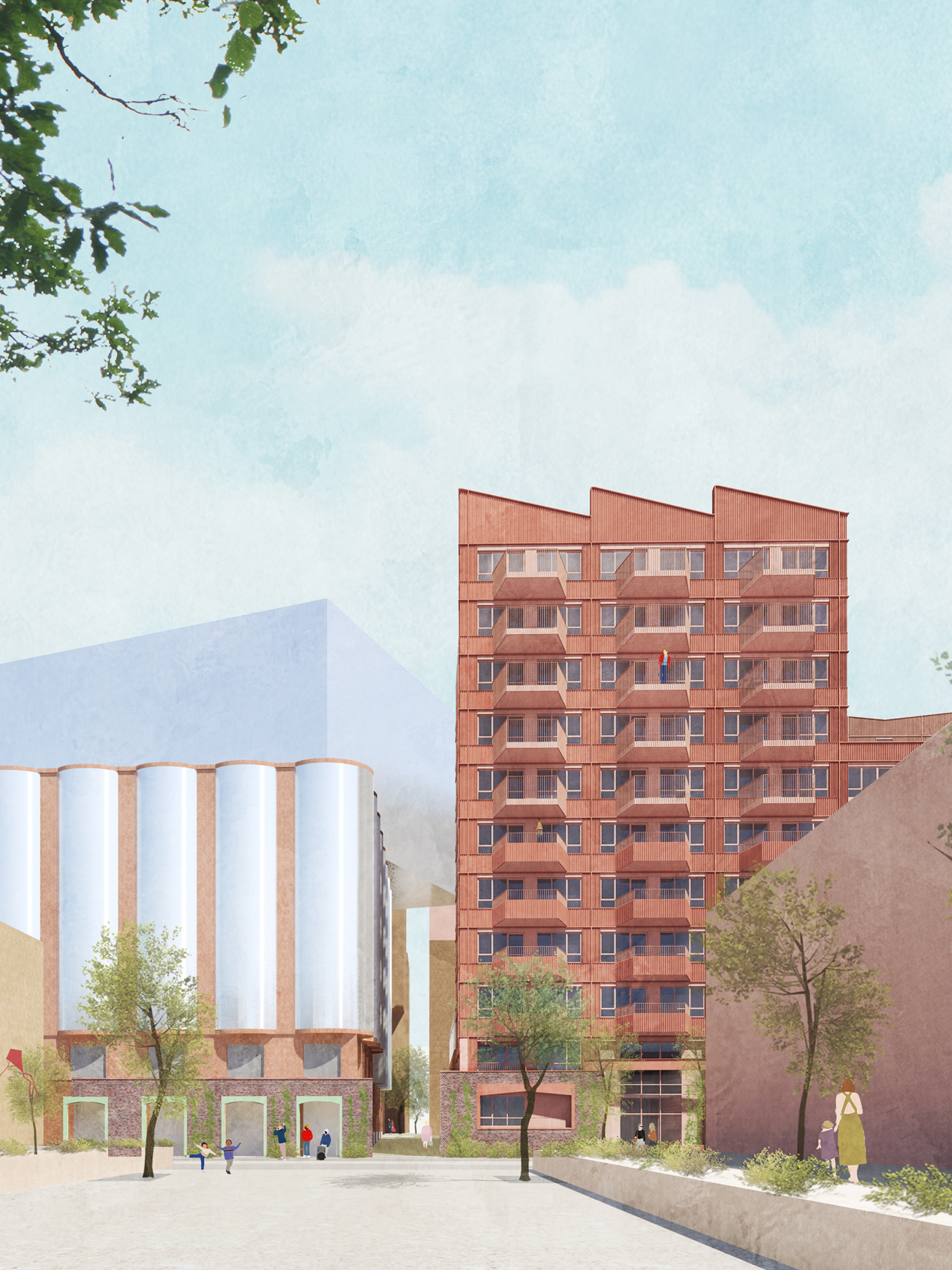
Energiehuis will be the first housing block to be built as part of the large scale urban redevelopment of the former Unilever terrain on the south banks of the Maas. In the coming years the former industrial site will gradually transform into a vibrant, high-density residential and commercial district with more that 1000 new homes.
The masterplan by Mecanoo aims to re-imagine the site’s industrial heritage by preserving iconic structures and by the introduction of new housing blocks with an industrial DNA.
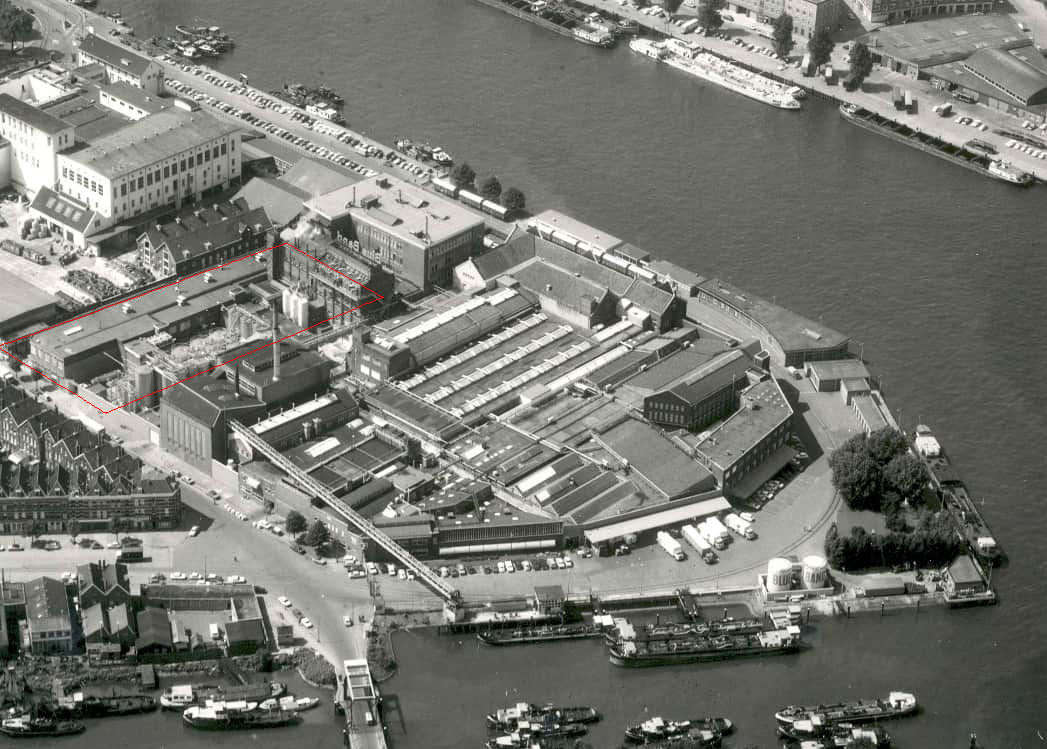
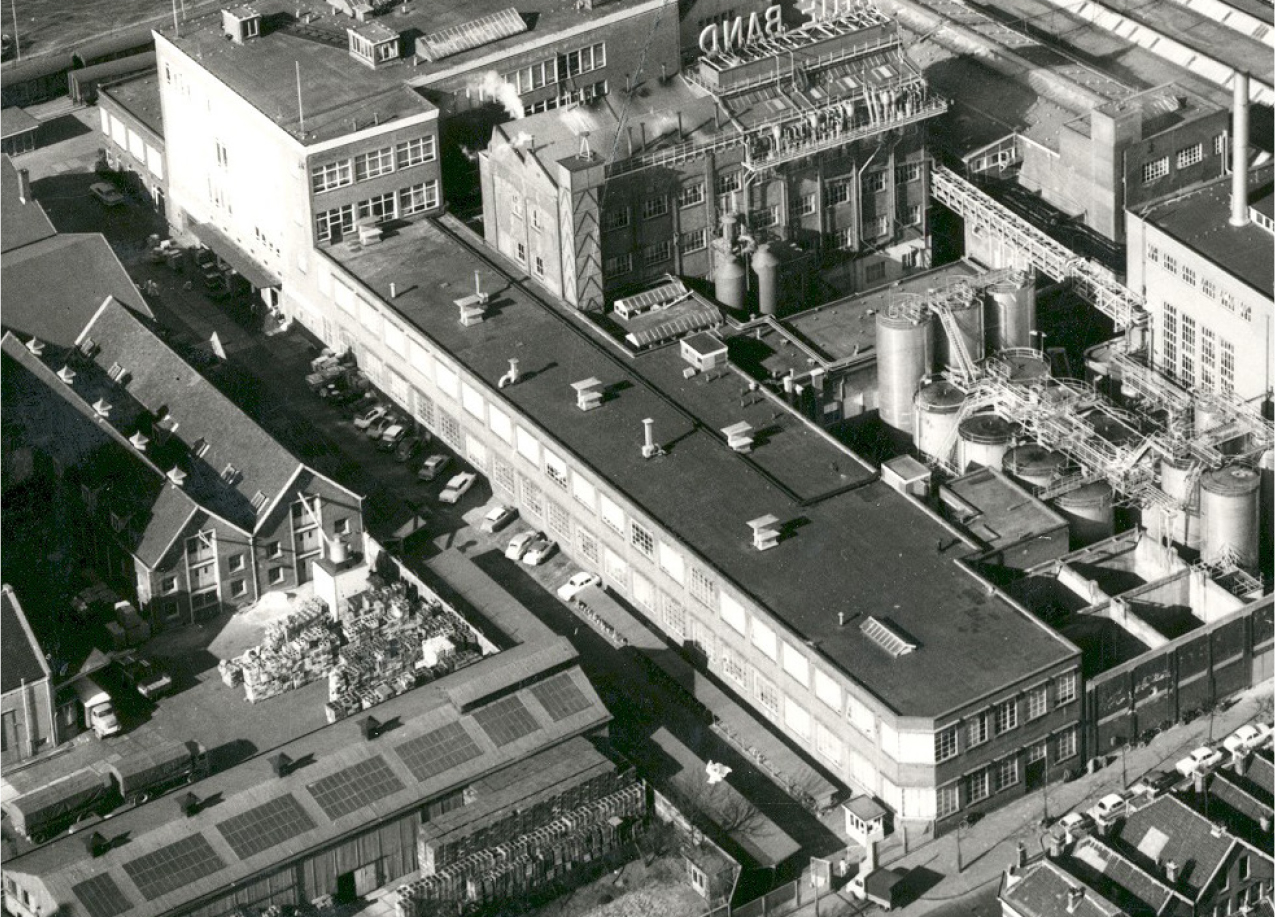
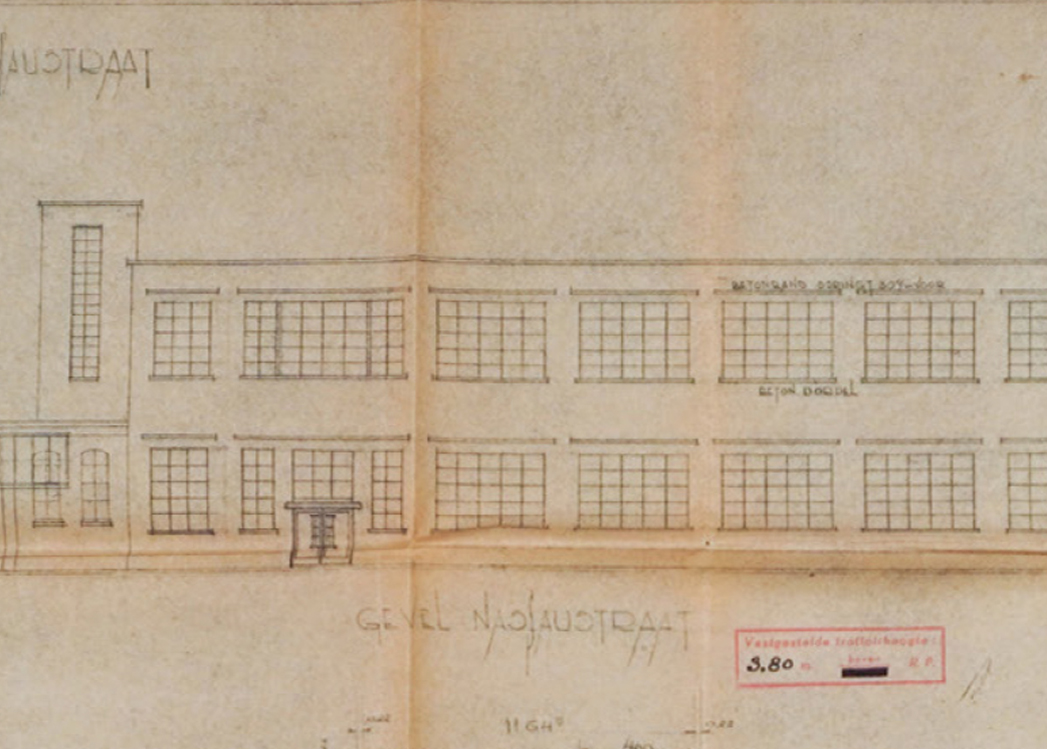

Our project adopts the rational and transparent facades of the former printing house that was situated here. Its industrial DNA is strengthened by the use of corrugated metal in brown-red, the most used color for shipping containers in the world.
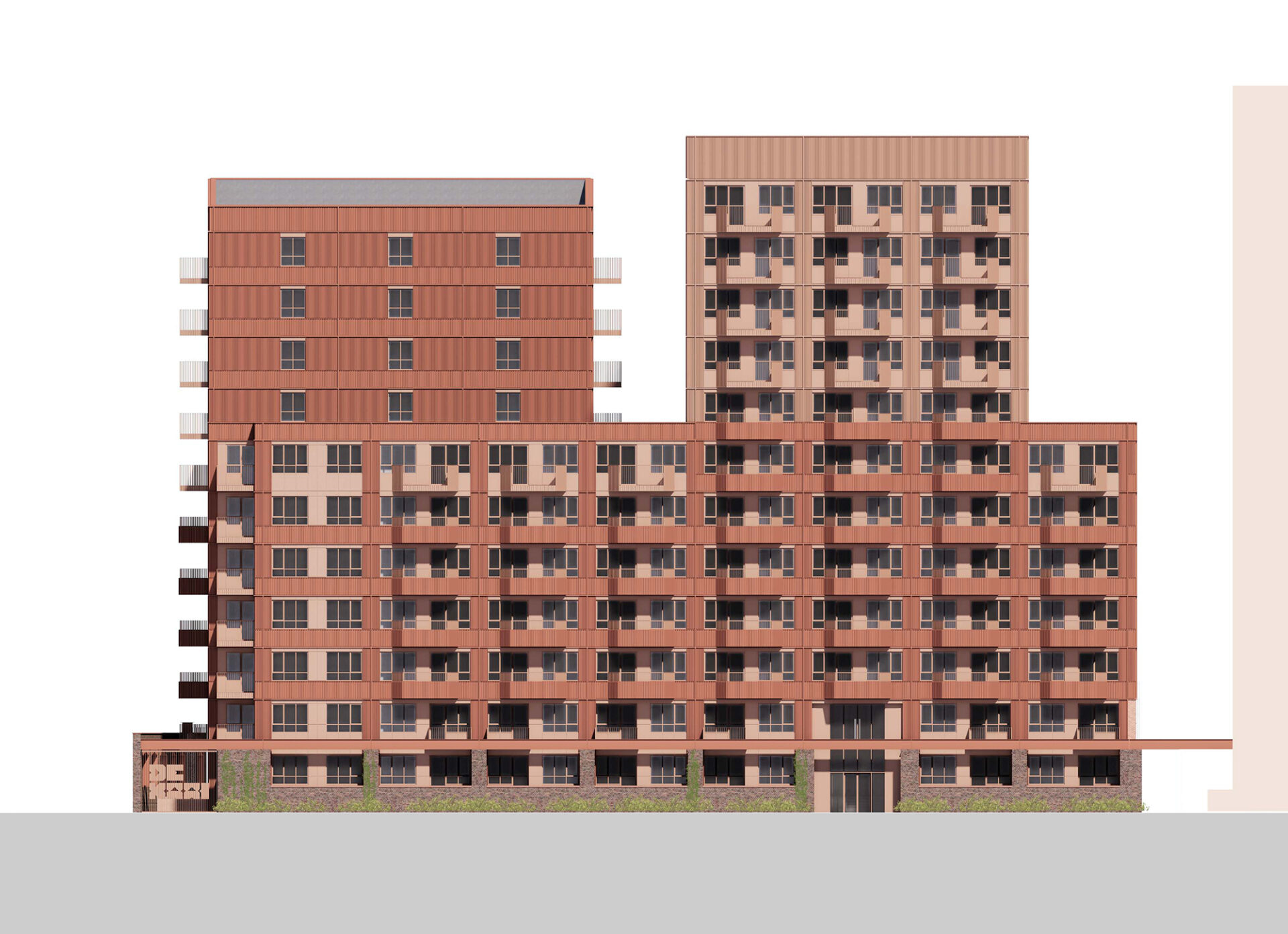
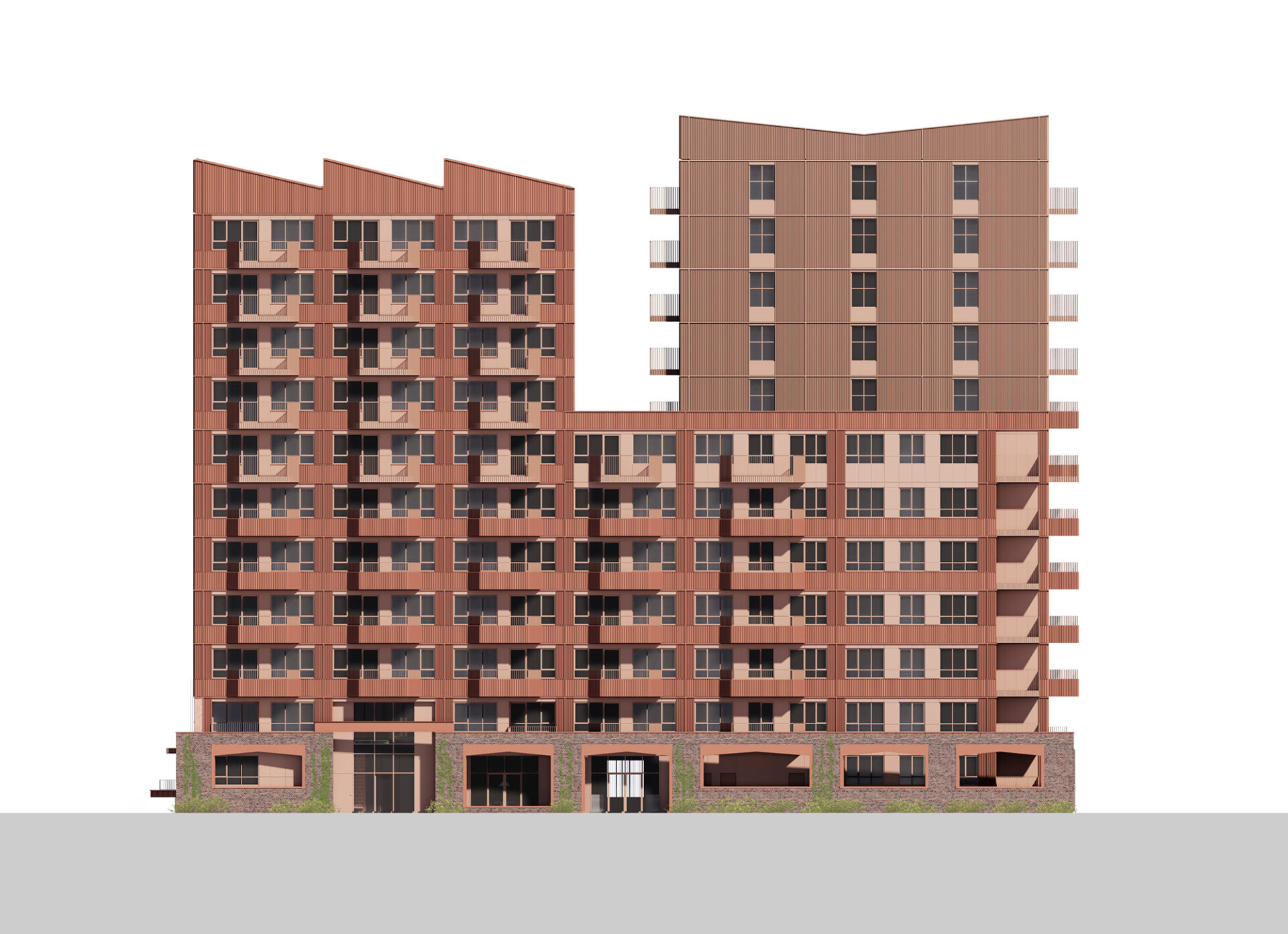

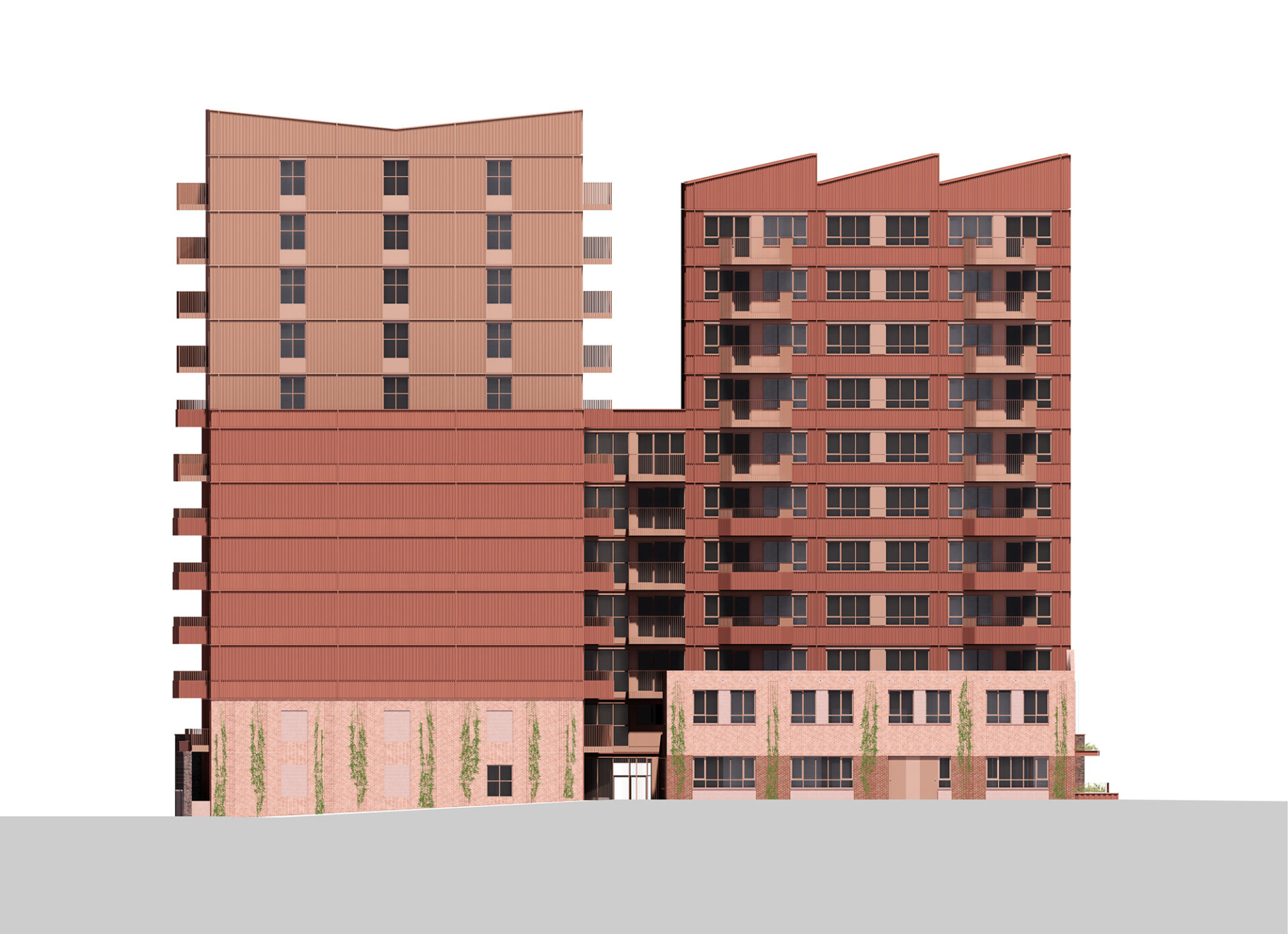


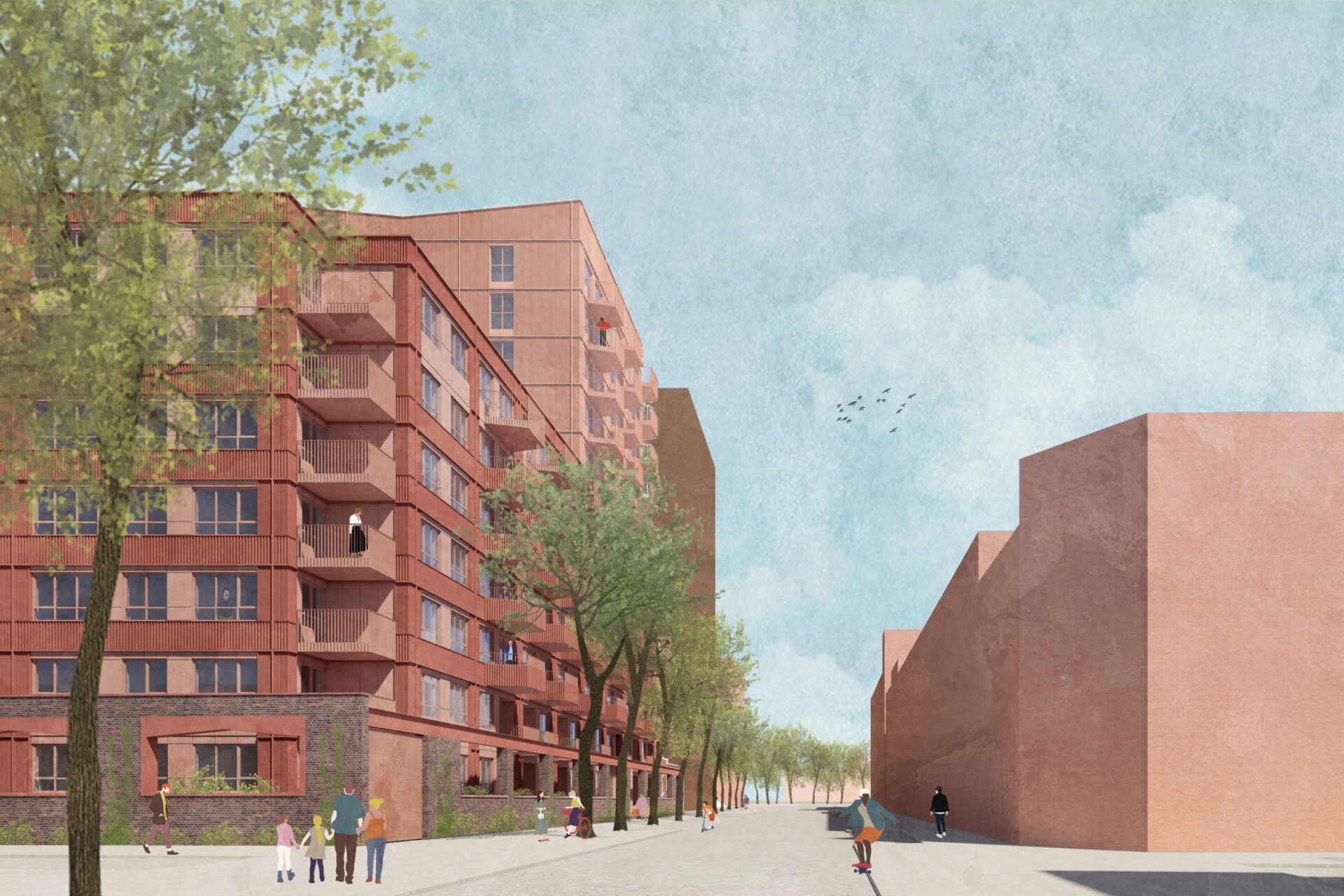

Additionally, we have incorporated the factory wall that surrounds the complex into the design. In its new shape, this brick wall is opened up and forms a robust buffer between the lifted outdoor spaces of the houses on ground level and the public sidewalk.
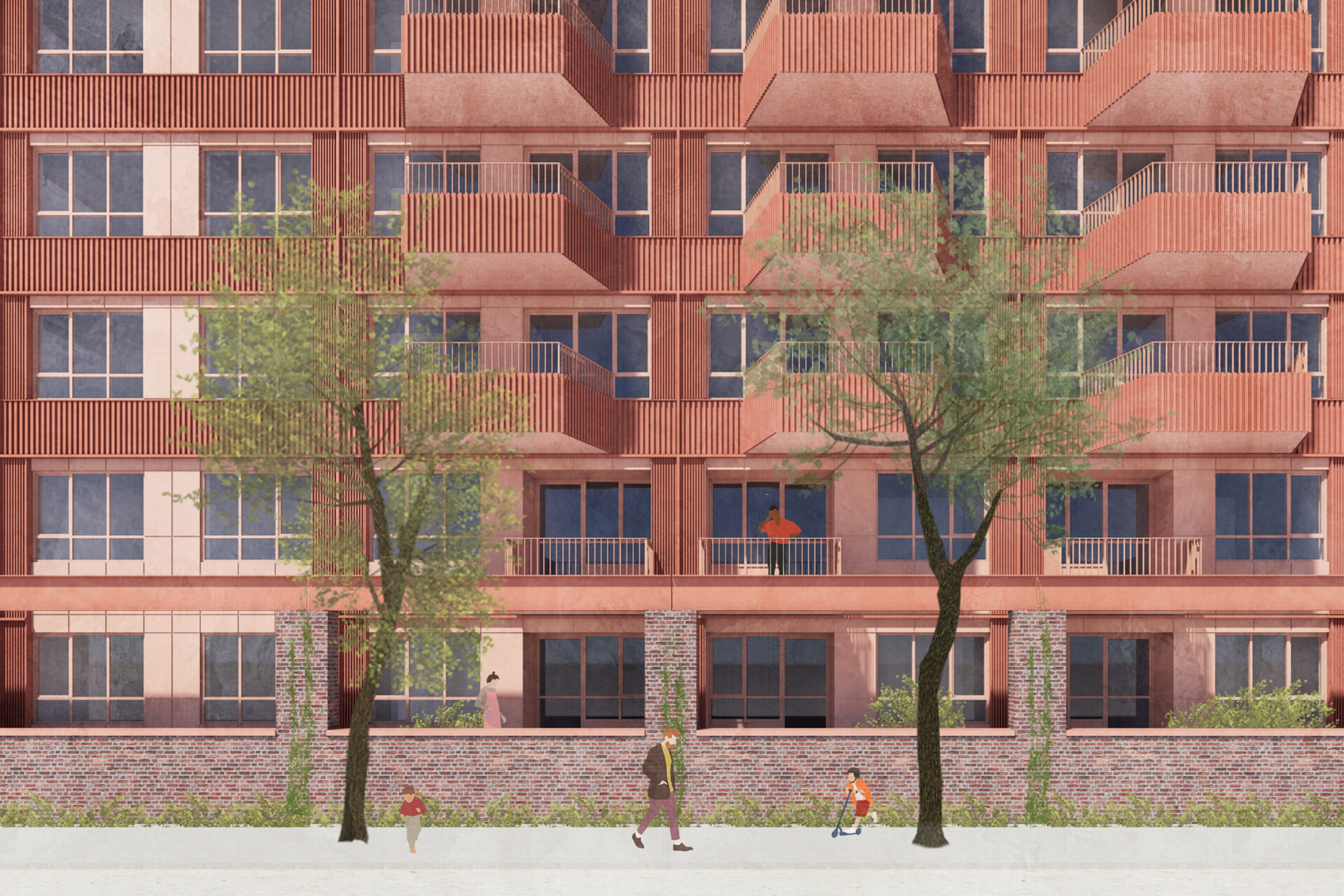

Programmatically, Energiehuis has a strong social agenda. It provides for a mix of 102 social houses, 58 houses for residents with light care needs and a care center for 20 people who need intense care.



Transformation Oude Dijk monastery complex
The existing complex of the Oude Dijk monastic community is not tailored to offer elderly care for the monastery’s aging population. The assignment is to realize 100 elderly care apartments in the convent garden, while preserving the continuity and the exceptional green character of the garden.

The convent of the Sisters of Charity in the centre of Tilburg is a unique ensemble formed by buildings and their adjacent outer spaces including the highly maintained garden. This large green oasis brings the much needed tranquility within the urban field. From the first establishment in 1832, the complex and its garden is undergoing a process of continuous spatial transformations following the changing needs of the sister community, with the last generation of buildings from the 1980ies. We see the current assignment as a logical next phase in this ongoing process. The challenge is to develop a spatial concept that answers the current (housing) need while anticipating the moment when the complex will be fully inhabited by laymen and the garden will be open to the public.

Despite its central location, the complex has a limited physical relationship with the surrounding city, partly due to the intrinsic monastery function, but also to the fact that the city in its development has consistently turned its back to the monastery. By selectively opening the complex in strategic places towards the surrounding public space, we see an opportunity to take the monastery complex out of its isolation without sacrificing the private monastic atmosphere.

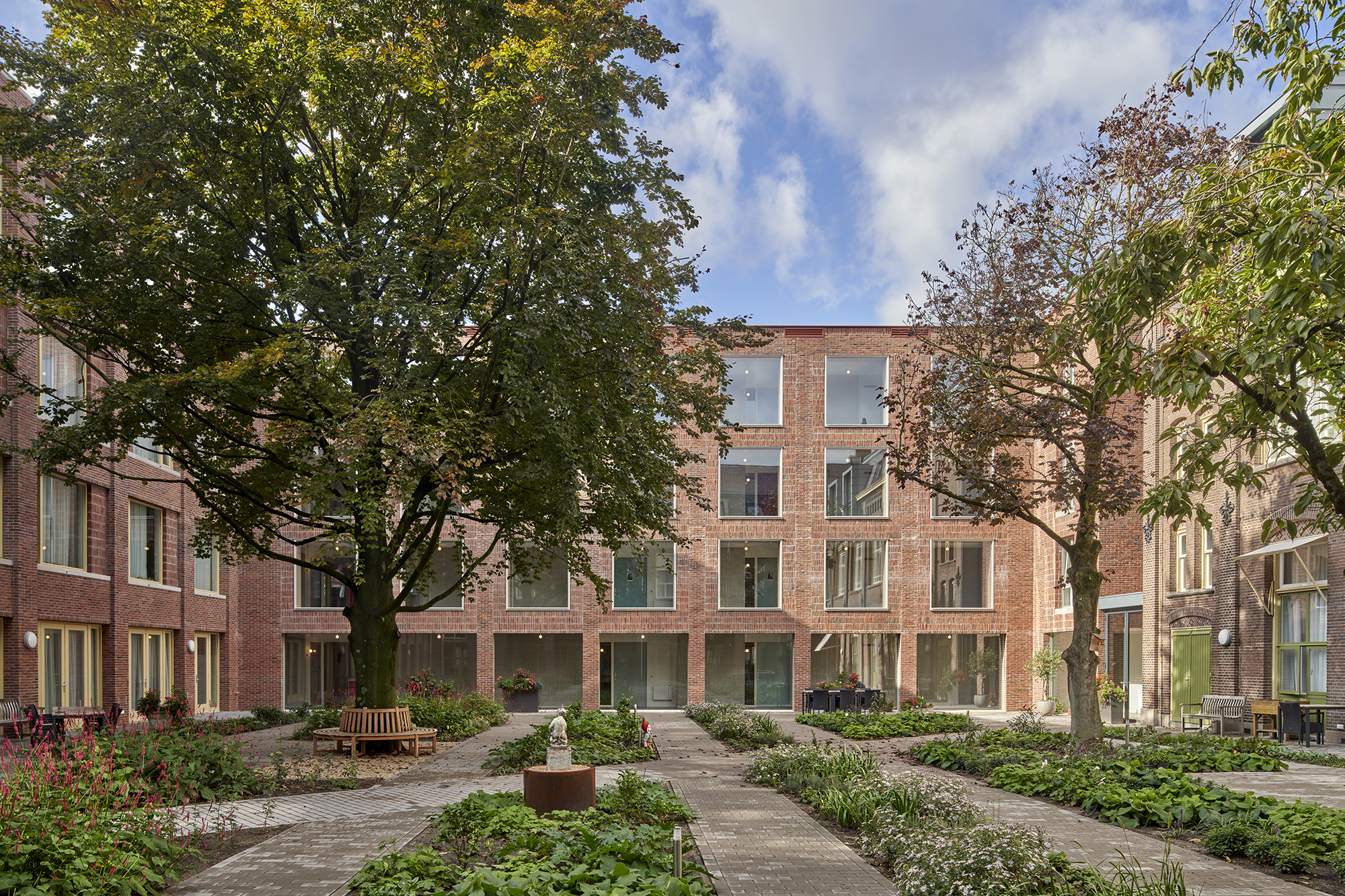
The starting point of the new design is the historical courtyard typology, present at several moments in the convent’s development. We propose three new courtyards at the edges of the convent’s garden, each with its own character and functionality. The new volumes forming the courtyards are not to be recognized as independent buildings, but rather as (decor) walls of the new (and existing) courtyards. They are subordinated to the overall figure of the ensemble by taking over the volume height and size of the existing.


In a first phase, the monumental wing of the “Oude Ontmoetings Centrum” (transformed into housing with high care level for psycho-geriatric patients) and a new volume at its west side (with medium care apartments) define two new courtyards. A private, closed courtyard forms a secure outdoor area for the psycho-geriatric patients. An open, city-oriented courtyard serves as an entrance square for both buildings and creates a new formal entrance to the adjacent city park (once part of the monastery garden, at this moment poorly accessible).
In the second phase, the outdated ’80ies central wing of the complex will be demolished. On its place, two new volumes, together with the western ’80ies wing, will define a new residential court. One of the new volumes sticks out through the current northern alignment of the complex, opening up the courtyard and announcing the presence of the complex towards the city centre. Perpendicular to it, the other new volume is positioned in such a way to create two openings towards the convent garden. The new residential court acts as a stepping stone between the city and the convent garden, spatially regulating the limited opening of the garden.

The materialization and façade design of the new volumes is derived from the urban concept of the courts, dictating the adjacent walls of a courtyard to have similar façades, and not the single volumes. This results in volumes with different “faces “, depending on the court they are oriented. When a façade is oriented to a monumental part of the monastery, the rhythm and proportion of the openings is adapted accordingly, when a façade is oriented to the garden, the design of the openings is more “free” and can therefore be maximized. These façade families along with the consistent use of a brick similar to that of the monument provide a sense of continuity in the overall ensemble between old and new. The flat detailing and the use of multiple bonds within the same plane create a contemporary look.


The new volume in the first phase has 4 floors, where the sisters will live in groups of 10 per floor. A transparent double-height entrance hall, placed in the corner of the entrance court, runs through until the garden and connects it visually with the city. The apartments are ordered by a common corridor, with most(8) oriented towards the garden and two on the entrance court. The corridor is generously lit via the closed courtyard and widens at the place of each apartment entrance. The relatively high surface requirements for care accessible housing combined with the desire to achieve a compact building has resulted in a particular typology of the apartments. These are made up of three naves, with the central nave functioning as both living room and connection between the other rooms.


The two new residential buildings of phase 2 with a total of 60 apartments create a new courtyard together with a renovated existing west wing. This residential courtyard functions as a buffer and at the same time as a future stepping stone between the city and the monastery garden. Both buildings have a fully sunken parking garage that allows the new residential courtyard to be car-free.

The north-south oriented residential building of phase 2 has a wide central corridor with entrances and daylight on which 36 relatively compact and affordable three-room houses are situated. The east-west oriented volume is accessed via three porches containing two luxury flats per floor, one with standard four rooms and one with standard three rooms. The very large nave dimension of 8.6m for residential construction, which is spanned in one go, gives residents a lot of freedom of layout.


The project brings biodiversity, water storage and reduction of heat stress in the middle of the city. The smart implantation of the new volumes maximises the preservation of existing greenery. This is combined with the generous planting of new vegetation and the placement of several nesting boxes.


Jozefzorg
This project deals with the redevelopment of an outdated care complex in Tilburg. Some buildings have to be kept, others need to be demolished. The new program consists of 120 apartments for seniors , 60 high care units and a local care center.


Our winning proposal introduces a meandering urban figure, a snake, that creates an intimate living environment for seniors along a series of open courtyards. It absorbs all program in one differentiated gesture whose form is derived from the existing comb-shaped monument with its typical open courts, an icon of post-war housing by architect Jos Bedaux. Two high-rise volumes at the perimeter of the site relate to the city, while the low-rise inside relates to the monument.

Two new east-west axis´ -one for car acces and one promenade- open up the site towards the adjacent neighbourhoods. The new courtyards relate towards these public routes without giving up their intimate quality. They function as collective garders for the inhabitants.
On the western side of the project area, the building frames the existing chapel and creates a new public square where the new housing, the monument and the city meet.


Plans groundfloor and first floor

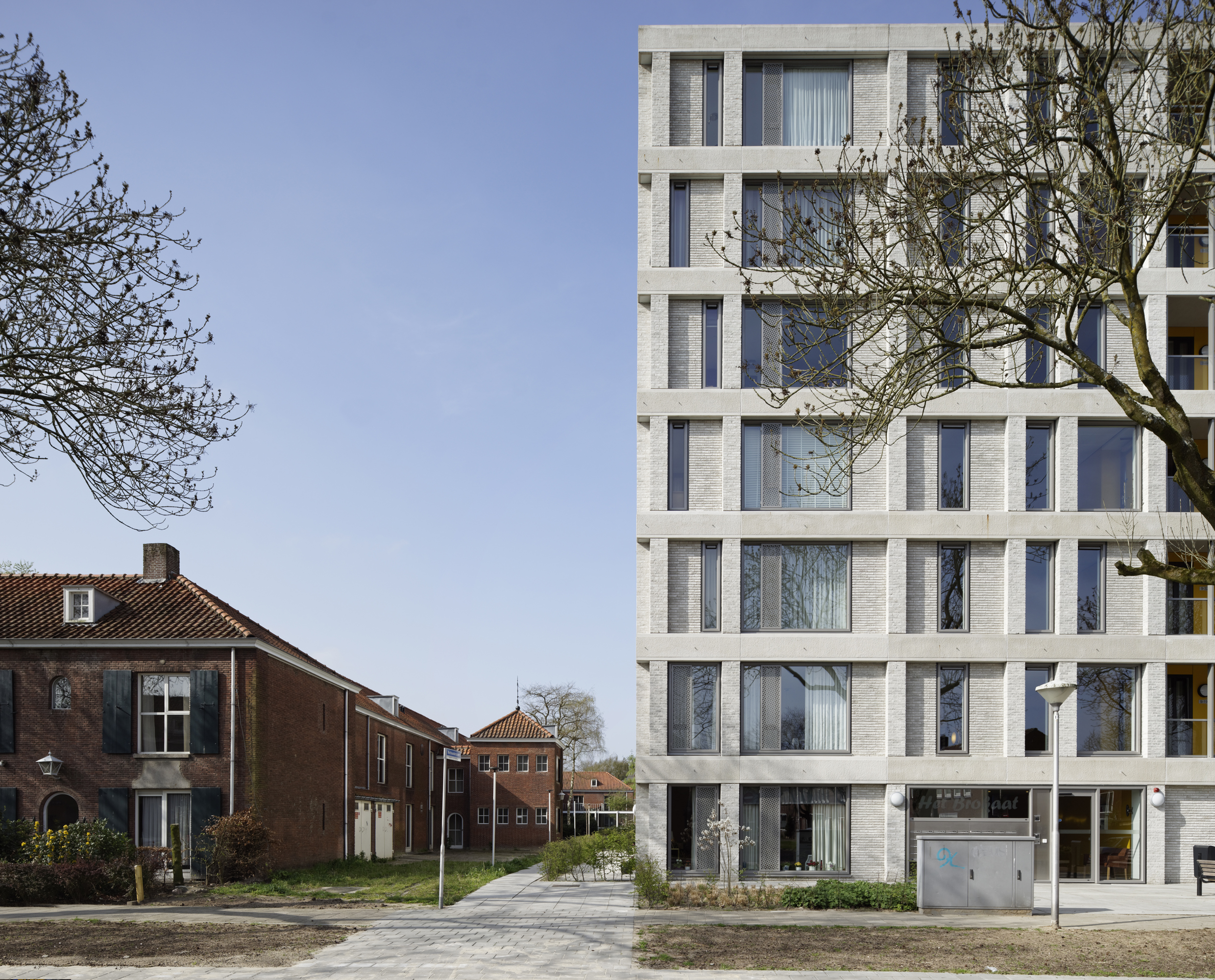
The project will be realised in two phases. Phase one was completed in 2014. Its homogeneous grid facade emphasises both the horizonality of the urban figure and the verticality of the main housing block. The overall gesture is further strengened by the monochrome charachter of the light concrete in combination with the cemented brickwork.


Phasing


Dentist with a view
The task of this project was to transform and extend a historical house in the centre of Best, a village in the south of The Netherlands, into a dental practice with four treatment rooms. The central question was how the extension responds to the existing architecture and how it profits from the green setting.


The four new treatment rooms are situated in a new volume that at the same time mimics and contrasts the existing house. Its archetypical volume is derived from the existing house – it takes over the exact same inclination of the pitched roof – while it is being materialized in a very different material.


All secondary functions of the dentist practice are positioned in the existing house without harming its structure and typical 1930’s details. The patient enters and waits in a homely and familiar atmosphere that, together with the experience of the surrounding garden from the extension, makes the necessary visit to the dentist in a (slightly) more comforting experience.


A glass corridor separates and connects the new volume to the historical house.


The new volume provides each treatment room with the archetypical space of a miniature house. Its high ridge and steep ceiling results in a vertical space that connects to the perspective of a patient in the dentist chair.


A roof light in each treatment room enables the patients to relate with the outside, even during treatment. A large ‘flower window’, that also serves as a bench, floods the rooms with daylight and provides both the staff and their patients with a framed view of the surrounding green.


Both the roof and the facades of the extension are clad with zinc. This strengthens the iconic quality of the archetype and renders the new extension into a “contextual alien” that blends into the rural surroundings and at the same time creates a clear new landmark that expresses its new function.

