
Batavialand
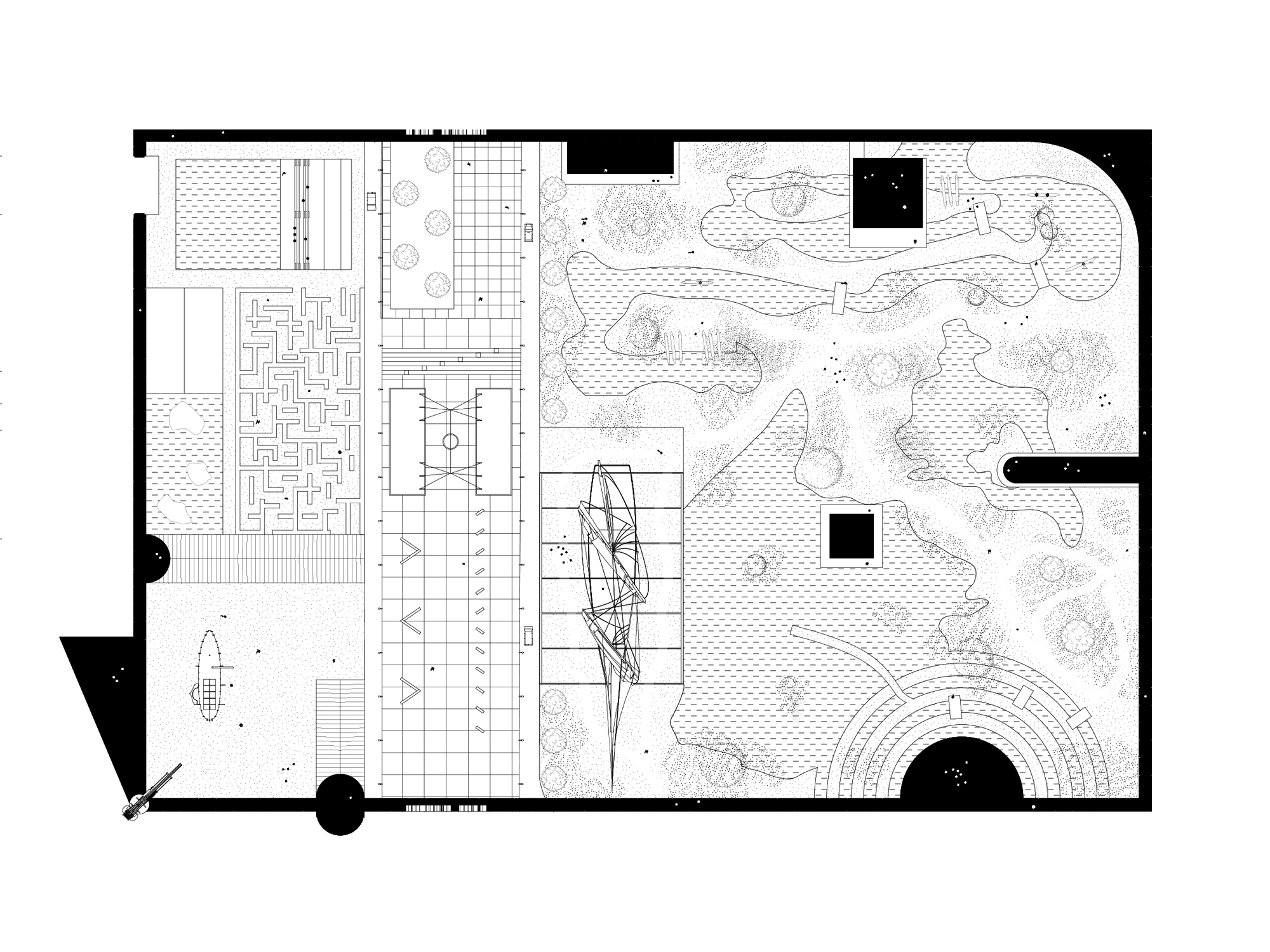
The Batavialand Foundation aspires to become THE museum in the Netherlands that portraits the origins of our national DNA, developed by living on the border between land and water. In order to achieve this ambition a large-scale expansion and transformation of the current museum is necessary. Shift architecture urbanism has been commissioned to do a spatial exploration that investigates how to translate the new Batavialand program into an architectonic, urbanistic and landscape design that does justice to this ambitious assignment within the context of the Lelystad Batavia quarter.


formal frame versus informal landscape
Batavialand will become a world in which the visitor is guided along experiences that feature the historical, current and future relationship of water versus land in the Netherlands. This time travel runs through the recreated historical landscapes of the prehistoric creeks, Flevo Lacus of Roman times, the Zuiderzee in the Middle Ages and finally the international exploration of the world’s oceans with the Batavia ship as a highlight. Subsequently the present and the future are presented, in the form of a manufacturing landscape, a shipyard, and an information center where companies in the field of water management demonstrate their current and future knowledge and skills.

Our proposal consists of a fixed, uniform and formal framework that encloses a flexible, differentiated and informal world. This frame both unifies and separates. It unifies the varied parts of the museum by embracing the different landscapes and by connecting the different buildings. It separates by defining a clear limit between museum and its surroundings, creating a clear entity towards the outside and an introvert inner world that lends itself for a varied collection of simulacra that recreate the Dutch relation of water and land over time. By incorporating the public promenade that runs right through the museum, the clear division between inside and outside is locally released. Here, museum and city are intertwined.

The frame contains a covered walkway that opens inwards and has a more closed character towards the outside. The formal indoor route it creates contrasts with the labyrinthine outdoor routes through the landscapes it surrounds. The visitor can freely switch between these two ways of navigating the museum.Both existing and new buildings are situated on the inside and on the outside of the frame. Within the buildings there is room for museum experiences with more depth and reflection; in the framed, free outdoor space there is room for play, infotainment and discovery.

CultuurCentrale
The CultuurCentrale proposes a rehearsal accommodation for dance and theatre in the so called Ebbingekwartier, a former industrial area in the city center of Groningen. The location is situated next to the old Machine Factory, which is already in use as a dance and theatre studio. The new accommodation should house four different companies which are currently scattered around the city.
The assignment has a somewhat ambivalent character. The different accommodations should together function as a site-specific ensemble that revitalizes the area with cultural activity. However, the future program is rather closed (dance and theatre studios) and each company prefers to maintain its own identity and a maximum amount of flexibility to adjust their accommodation within the complex.


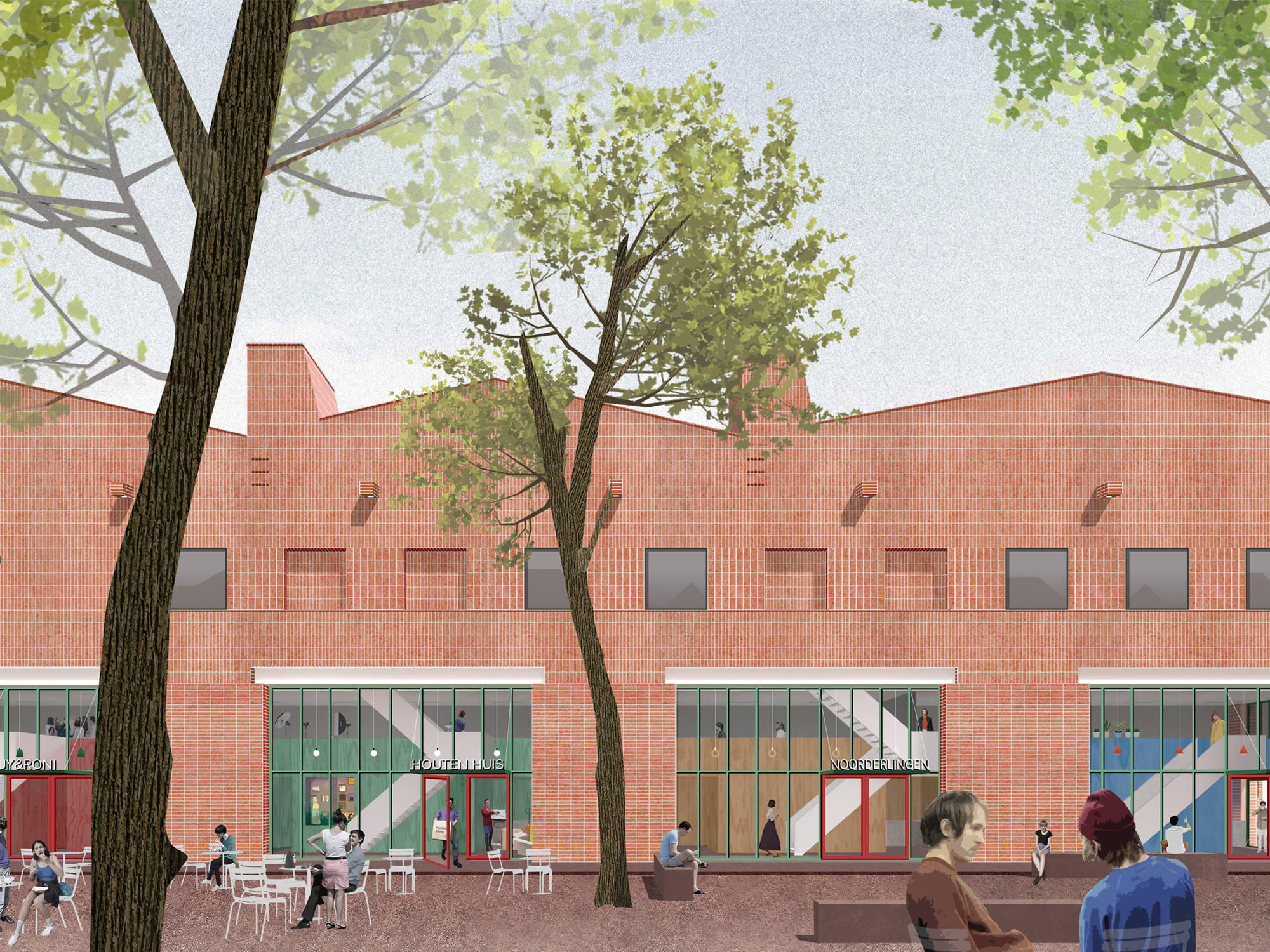
CultuurCentrale proposes a compact and rational building that maximally opens up towards the ‘route van de ziel’, a public route that connects the different historical remnants of the Ebbinge Kwartier. The building is perceived as a factory. Apart from the reference to the history of the site, the archetype of the factory hall fits perfectly with the demands for rehearsal studios for dance and theatre productions: large column free spaces that are flexible in use and have a functional and no-nonsense finish. Also, the compact and rational setup of the building answers to the complex urban situation, the tight budget and the ambition for a net-zero energy building.
The building is set up as a linear series of programmatic zones for studios, offices, dressing rooms and foyers. The three largest studios are placed upon the smaller studios and storage spaces to create a compact and structurally logical configuration. Underneath the cantilevering large halls is a 6-meter-high zone with offices, facilities and foyers.

All four entrances are situated along the route van de ziel and open up generously towards the surrounding public space. A strip of facilities (dressing rooms, toilets and kitchens) separates the public entrance zone from the rehearsal studios. The offices are situated on top of the facility zone and look out over both the entrance and the rehearsal studio’s. The rational linear layout of the building allows for a lot of cross-overs between the different companies, and introduces a maximum amount of flexibility for the wishes of the different users, now and in the future.


Plans

The concentration of all circulation space in the double high foyers creates a very spacious and lively entrance for all four institutions. The high glass facades enhance the openness and interaction with the surrounding city and create a clear individual entrance for each company.
The partition of each programmatic zone is flexible and differs per zone. Only the walls between the rehearsal studios are loadbearing, creating a lot of freedom to adjust the individual entrances, facilities and offices to the wishes of the different institutions.

Along the new building the route van de ziel will be designed as a multifunctional square that can accommodate exterior cultural functions and events. The public square forms the connection between the different companies and creates an urban ending to the route. The pubic space within the ensemble becomes part of the shared domain of the different cultural institutions. Bordered by the existing monumental factory wall on the one side, and a new pergola on the other, the area will be designed as a green garden with outdoor work and meeting spaces.

The architectural appearance of the building seeks a balance between the continuity of the existing city and the industrial history of the location on the one hand, and the recognizability of the new on the other. The facades are composed of brick, resembling the existing Machine factory, but the appliance of the material is consciously different in both color and type. By using wire-cut brick and white seams in a tiled pattern a contemporary and industrial look is created with a graphical quality that forms a subtle contrast with the traditional brick architecture of the Machine Factory. On the first floor the facade flips from a horizontal to a vertical pattern. This creates a double high plinth that subtly refers to the internal organization of stacked halls inside the building.


For the interior, the analogy with the factory is continued further by using industrial materials that are selectively (un)finished. There is a clear contrast between the interior of the entrance area, and that of the rehearsal studios.
The flexible interior of the foyer, facilities and offices consist of light walls which are clad with panels of underlayment. Each institution is free to appropriate these spaces, creating a clear and distinct identity for each individual organization in the building.
The concrete walls of the rehearsal studios will only be finished there where acoustically necessary. From two meters upwards the walls will clad with a theatrical padded surface which contrasts with the atmosphere of the industrial hall. Also, the curtains have an acoustic effect and add to the contrast between theatre and factory.


Museumplein Limburg
Museumplein Limburg is a trinity of complimentary museums combining design, science and technology in one museum district in Kerkrade, a town at the Dutch-German border. The existing Continium (a discovery centre for science), has been extended with Cube (a design museum consisting of exhibitions and exploratory labs) and Columbus (housing a unique Earth Theatre and a 3D cinema), as well as a wide range of public facilities for events, workshops and education.
Capitalizing on the strategic location, the museum quarter formalizes the entrance into Kerkrade for both train passengers and visitors arriving by car from the main access road.

The brief required the extension of the existing museum with two new institutions, each with an own identity, but which can also function as a whole. Our answer is an ensemble of clearly recognizable volumes connected by an elaborate underground public space.

Above ground, a cube and a sphere, spectacular in their absoluteness, provide the two new institutions with distinct identity. With their pure geometry and omnidirectional orientation, the cube and the sphere counteract the amorphous and introvert character of the existing museum. However, their iconic character doesn’t make them into isolated urban objects. Together with another primary solid, the 80m long beam which doubles as a giant canopy, they are carefully placed in relation to the nearby station to articulate the public route between the station and the city centre. On this public walkway, the volumes reveal themselves towards the pedestrians with lively areas such as the entrance hall underneath the beam and the design labs underneath the cube.

Underground, the sunken square, the best feature of the original museum, is extended underneath the new volumes. A continuous landscape is created that connects all the facilities of the museum district, both old and new, and allows them to function as a single whole.


The new enlarged sunken square forms the heart of Museumplein Limburg. It extends seamlessly underneath the beam that hovers above the double height entrance hall. This linear entrance hall serves as the logistic backbone of the whole museum district. Visitors descent via one of two wide staircases at both ends: one orientated towards the train station and the other towards the town’s centre.


In addition to the new museum square and entrance hall, the underground landscape hosts a restaurant, an enclosed patio and two tunnels connecting to Cube and Columbus.


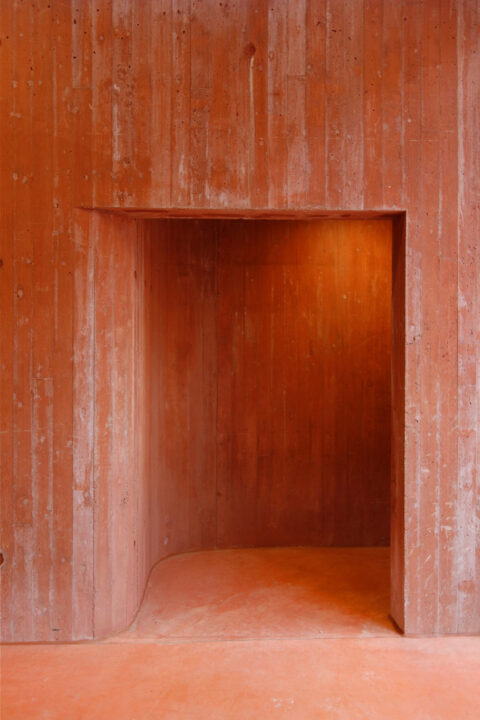
All stairs, walls and floors of the underground landscape are made of a uniform earth tone concrete to emphasize the connective character of the space and to create the suggestion of an excavation. The walls were poured in a formwork of rough wooden planks adding a tactile quality that contrasts with the abstract volumes above ground. The excavation out of red concrete, combined with the experience of descending below ground, refer to the mining past of Kerkrade.


Floorplans

Content-wise, Museumplein Limburg aims to be a “museum without boundaries”. As opposed to the static vision of the museum as an island offering a passive escape from reality, the “museum without boundaries” is an interactive workshop where visitors are regarded as participants rather than spectators. They discover the world and their place in it through interaction, participation and debate.
Our ambition was to translate this concept architecturally by blurring the boundaries between museum space and public space, and make Museumplein Limburg an integral part of Kerkrade.

By situating a large portion of functions underground, the built footprint on the ground level was minimized, thus leaving space for public walkways to criss-cross the museum district. The route to and from the train station, designed as a scaled up zebra crossing, creates a visual dialogue between the museum district and station area and adds to the experience of both the museum visitor and the train passenger.

A transversal walkway, punching through the entrance hall, connects the sunken museum square to the district’s bus terminal in the forecourt. This walkway provides train and bus passengers direct access to the museum’s restaurant which can double as waiting room, transforming the museum square into a true extension of the public realm of Kerkrade.


The combination of public space and public transport with the museum district fits perfectly with the ambition of a “museum without boundaries”: even passers-by become participants.



Cube
Cube, one of the three attractions of Museumplein Limburg, is a design museum. The museum is aimed at an international audience interested in the process of designing. Simultaneously it functions as a permanent laboratory where students and designers co-create together with the public.


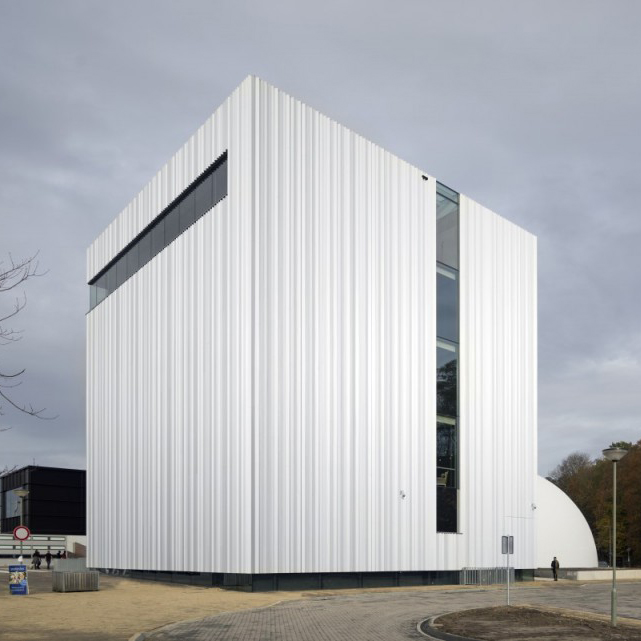
Cube is draped in a reflective curtain of coated steel that emphasizes the vertical character of the museum. The curtain effect is obtained by the random placement of vertical profiles of three varying folds that each reflect the light differently. The facade is cut open by two identical windows: one vertical that reveals the stacked exhibition floors, and one horizontal that provides the multifunctional space on the top floor with a panoramic view over the Limburg landscape.


The museum is housed in a perfect cube measuring 21x21x21 meters. A glass plinth creates the illusion of a volume floating above the red underground landscape. Together with the patio, this plinth allows for natural light and views into the space underneath where the design labs are situated. True to their programmatic role as interface of the museum with the outside world of regional education centers, business and manufacturers, the design labs form the showcase of Cube towards the public space of the city.



Cube is organized as a vertical exhibition machine with identical floors, creating space for an ever changing set of exhibitions. Each floor is divided between a „servant“ core (containing utilities, technical spaces and circulation) and a „served“ open space. This exhibition space is dark, generic and its prefab concrete structure is left unfinished. This gives curators and exhibition designers maximum freedom and flexibility to appropriate it according to any given theme.


The only specifically shaped element in Cube’s interior is the main staircase that links all gallery spaces of this vertical museum. It is made of identical straight flights which are variously rotated, creating the effect of a cascade falling down a 25 meters high void. Its generous dimensions allow it to function besides as circulation space as an extension of the exhibition spaces.


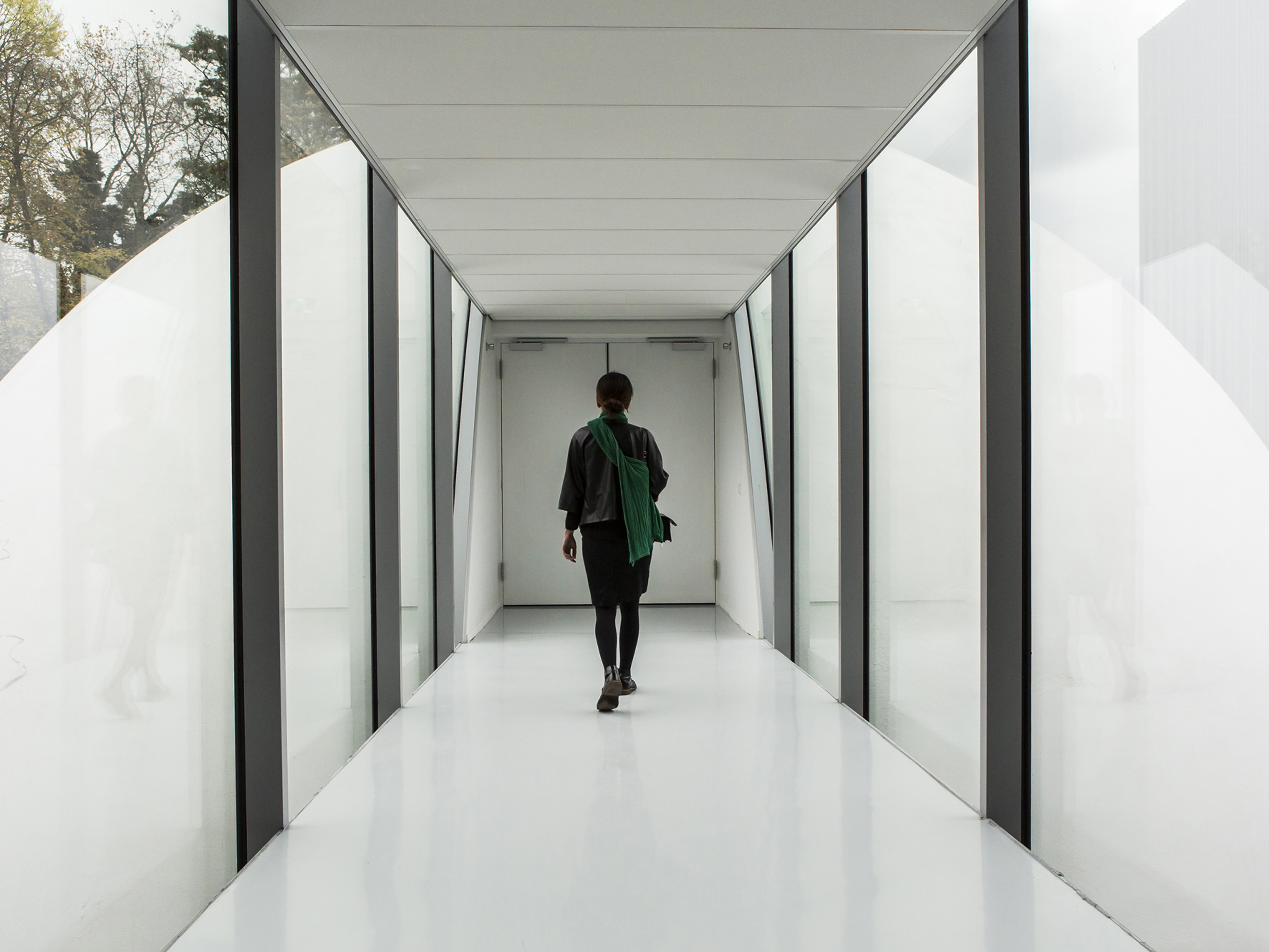
The top floor offers a multifunctional event space that can be partitioned in many different ways by means of a curved curtain system.


various spatial scenarios created with the curtains



Columbus
Columbus, one of the three public attractions of Museumplein Limburg, is a visualization machine for Planet Earth. The main message of the shows concerns the limits and the vulnerability of our home planet, its uniqueness, beauty and above all, its irreplaceableness. In the tradition of architecture parlante, it is housed in an ostensibly perfect volume: a sphere, half above ground and half underground. The spherical design draws inspiration from several visionary proposals in which the sphere stands symbol for the immensity, the sublime, the future, inclusiveness, shared experience and responsibility.


The lower half of the sphere accommodates the Earth Theatre, equipped with a spectacular – 16-meter wide and 9 meters deep – hollow projection sphere which can be viewed from two rings of glass balconies. This first built inverted planetarium offers visitors the experience of an astronaut looking back towards planet earth, featuring the effects of human inhabitation on Earth.


Besides pre-programmed movies which project the reality as seen from above, the theater is designed for the visualization of big data. In the near future, with a projection system operating in real-time, the users will be able to navigate through a predefined database to view and interact with future scenarios regarding the development of our cities, regions and the planet. The sheer scale and dramatic setting of the Earth Theater will enhance the perception intensity and understanding of the visualized big data. The theater becomes a machine providing people the unprecedented power to understand, analyze and make decisions about, and thereby ultimately change the world we live in.


The upper half of the Columbus Sphere, underneath the dome, is occupied by a circular auditorium. It can be reached by a glass bridge from the entrance hall via the Beam building or through an internal stair that descends into the Earth Theater. The auditorium functions independently for lectures and conferences and as a National Geographic 3D cinema or in combination with the Earth Theater, as a platform for dialog and debate after the visualizing experience in the inverted planetarium.


Columbus’ cupola is made of two shells of shotcrete. The concrete was sprayed on a permanent geodesic scaffolding filled in with triangular plates of EPS isolation. The seamlessness of the shotcrete skin emphasizes the absolute form and its density guarantees sound insulation from the loud shows inside.

CMY pavillion
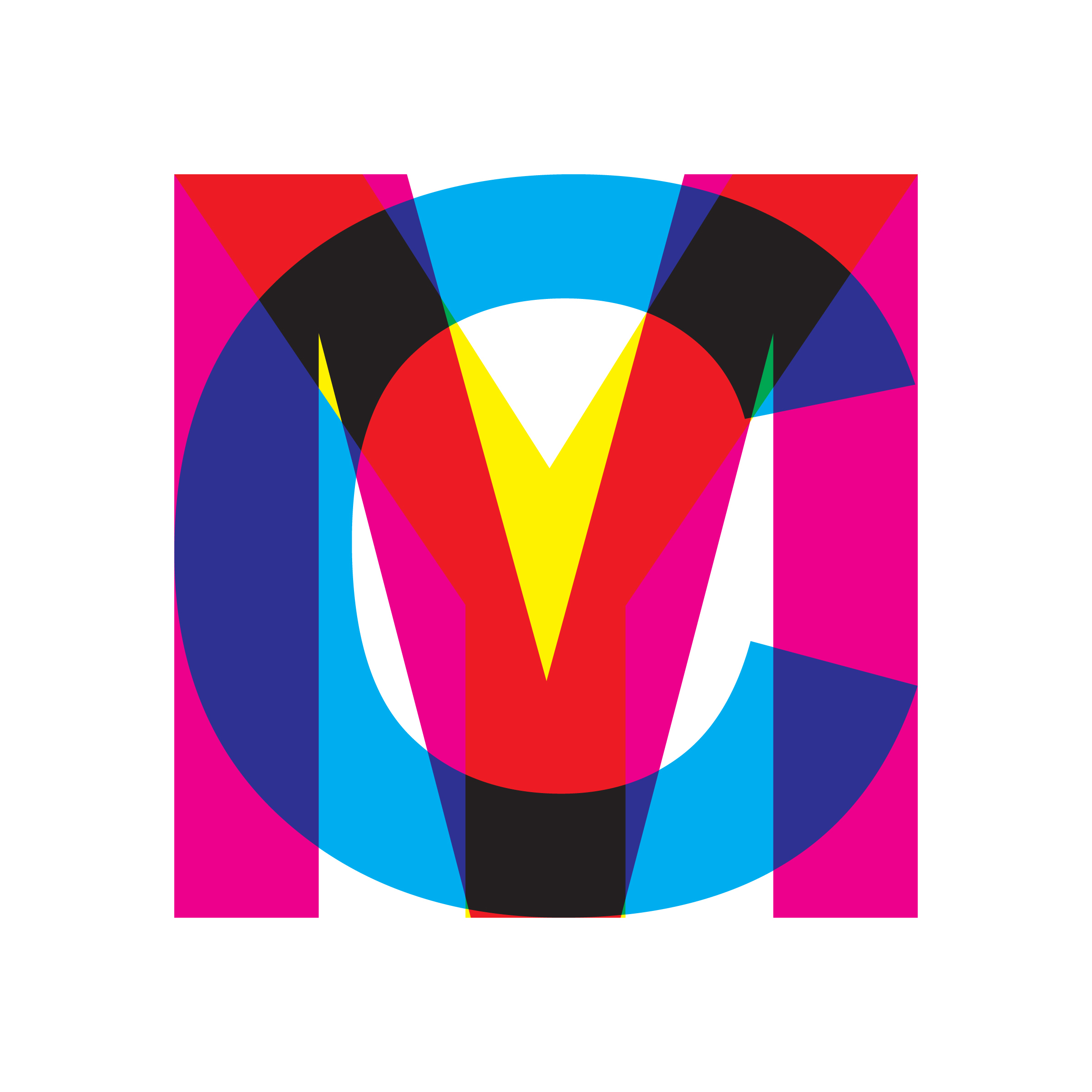
The CMY pavilion transforms the glass structure of Tschumi into a three dimensional graphic work that shifts its composition and color scheme with the viewpoint of the spectator.

The Tschumipavilion was originally built as a video pavilion for the city-wide exhibition-event “What a Wonderfull World” in 1990. Scattered around the city, five pavilions brought pop-music videos into the public realm. They were designed by the architectural avant-garde of the time, labeled two years earlier as ‘deconstructivist’ by the MOMA. The pavilions of Eisenman, Hadid, and Himmelblau disappeared, while the ones of Koolhaas and Tschumi remained.
Remarkably, it is OMA and Tschumi’s very different approach to program that have made their pavilions last. OMA’s programmatic alchemy, pairing of the pavillion with a bus stop, is the reason it survives today. Tschumi’s pavilion has persisted precisely because of the opposite reason: its lack of any precise program. Being a transparent envelope, it has been used as a public/urban event-space for temporary art projects since 1995.

In the middle of a busy roundabout in Groningen, Tschumi created one of the most transparent buildings ever built: its facades, roof as well as structure are made of clear glass. Tschumi chose glass for its reflective quality to create “instable facades” that would reflect the video images endlessly. These videos transformed the “invisible pavilion” into an “illusionistic spectacle” in which the virtual image from the reflections mix with the real image from the monitors and the city.

Shift’s intervention reinterprets the idea of “instable facades”. Instead of using the glass envelope to mix videos, the CMY pavilion uses the glass to mix colors. By applying translucent films in the colors cyan, magenta and yellow onto the glass, the pavilion turns into a three dimensional graphic piece that changes continuously with the movement of the spectator.


The colored pattern of diagonal bands that wrap around the building is derived from the rigid paneling system of the structure. Because of the parallel transparent facades, the color bands start mixing according to the subtractive color model. The overlap of the “real” primary colors on the glass create secondary “virtual colors”: C + M = Blue, Y + C = Green, M + C = red. The transparent pavilion becomes a dynamic color space with a strong urban presence.

From different angles come different experiences of the CMY pavilion. People circulating on the roundabout will experience continuously changing colors and patterns. Standing on the square facing its long side, one perceives a cross-hatch pattern in six colors (CMYRGB). One waiting for the bus with an oblique viewpoint sees the “actual pattern” of diagonals in three colors (CMY).

Inside another appearance is uncovered: here the colors mix with the city rather than with each other. Since there is no more overlapping of colors, the diagonal CMY color bands are clearly visible. Their diagonal wrapping enhances the destabilizing, girating effect that Tschumi intended by tilting the building.



Klaksvik United
Klaksviks sublime location has become its weakest link. Present day Klaksvik is a spatially divided town. Ironically it is precisely the spectacular estuary location, and the way it is occupied, that causes this separation. Both the bay and the central isthmus act as barriers that split the town into two linear settlements with little connection to the water.

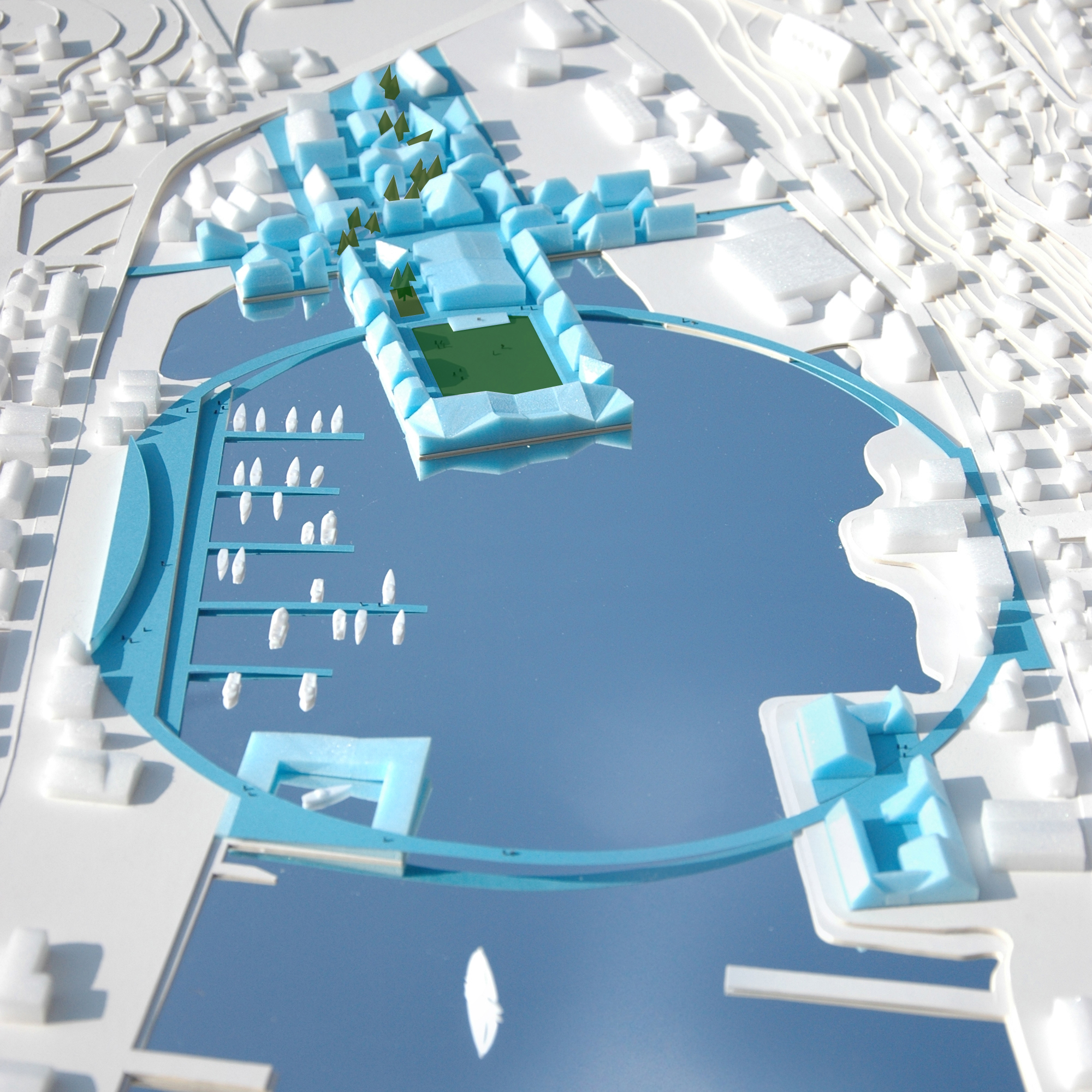
Our proposal, Klaksvik United, aims at creating a new town center that unites Klaksvik with itself and its waterfront. Two strong forms, a ring and cross, are used to transform the open water and the empty center from barriers into connectors and from non-places into places. They function as fixed armatures for flexible city center developments. Their unifying gesture opposes ánd incorporates the urban fragmentation of the site and creates multiple links between east and west, north and south, water and land, old and new. The new center makes Klaksvik into one and celebrates its unique location.


The Ring reinforces Klaksvik’s relation to the sea by connecting both parts of the town an uniting them with the water. It functions as a pedestrian boardwalk of exactly one kilometer long that links a variety of waterfront programs, both new and existing and defines a new water square. In a mere 10 minutes walk one can experience the vital role that the sea plays for Klaksvik. The ring connects the outdoor event area of the new cross with the existing marina, the ferryboat terminal, the second landfill and the existing shopping street on the south bank.
The ring transforms the bay experience into Klaksvik’s main asset.

The Cross, consisting of various spatial typologies designed to minimize the disturbing winds, establishes two crucial connections.
Main street runs from North to South and connects the separated halves of Klaksvik. Its mixed use program of retail, services and housing creates a lively street that forms the backbone of the cross development.
In the other direction, a central square with public facilities and a wind free labyrinth neighboorhood connect the green isthmus with the bay and reestablish the relation of the old center of Klaksvik with the water. The central square is surrounden with a multifunctional event hall, the administration building and the tourist information, which protect it against the wind and use it to program cultural outdoor festivities, year round. The intimate and wind free labyrinth invites for strolls along its shops. Existing buildings are integrated in a compact urban tissue. The small block size allows for a flexible infill with a variety of retail and leisure programs combined with housing.


Skate off the art
The existing skatepark Westblaak is at the end of its lifecycle. Its skate objects are outdated and do not meet the requirements of many skaters any more. They dislike the prescribed movement that the objects imply and prefer a park in which skating merges with public space and street furniture. Also the mono functional character of the place is considered as problematic by the municipality.


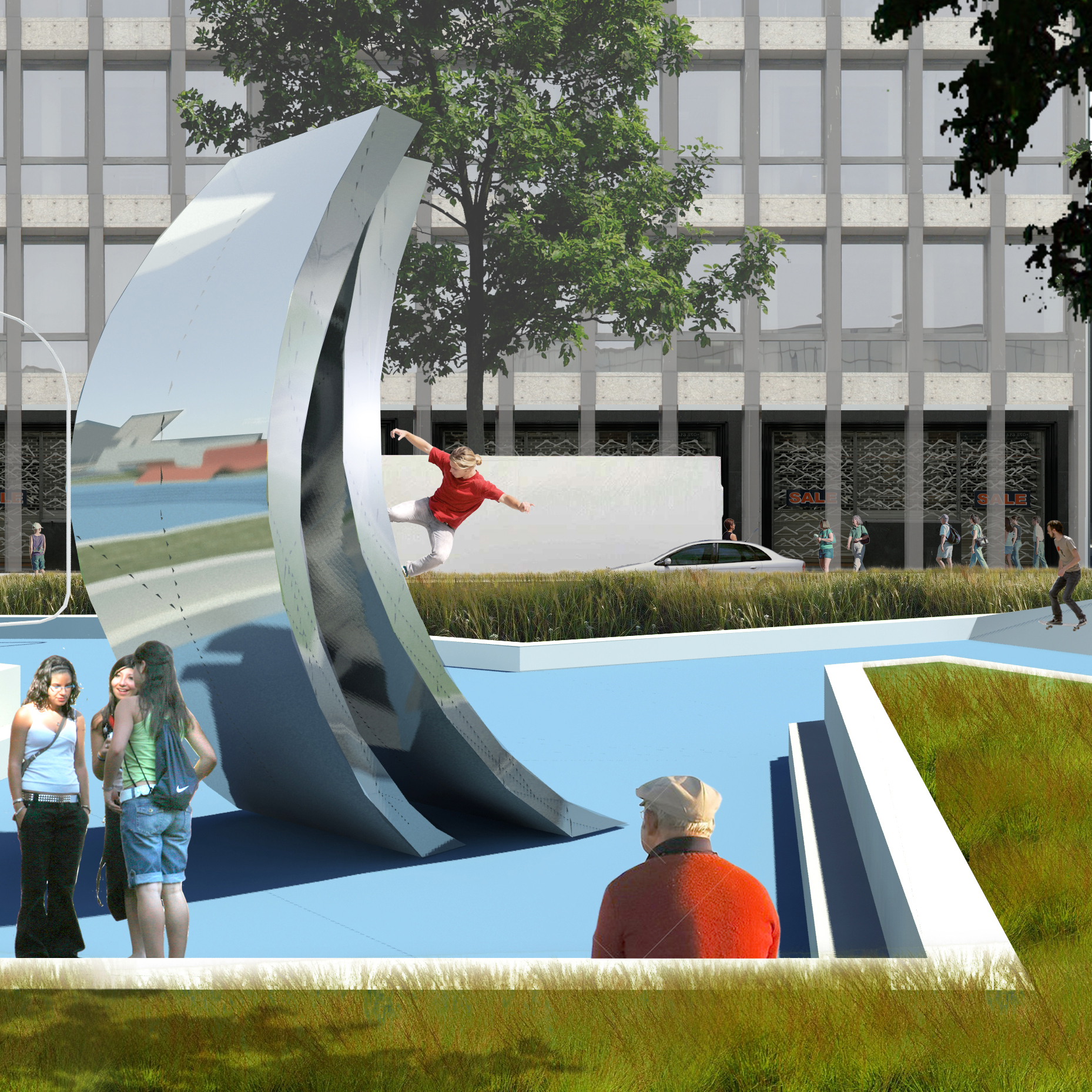
The project proposes a hybrid concept of a skatepark and a sculpture garden. It forms a new art route that anchors the project into the area’s cultural profile and attracts a larger public than skaters only.


The design consists of a three dimensional edge that defines a series of chambers that fluidly morph into each other. This spatial armature serves as a skateable edge, a green buffer that separates the park from the road and a sitting area for the spectators of the art and the skaters.

In the chambers, a variable collection of ‘skate-off-the-art’ objects is placed. They are designed by the skaters in collaboration with artists and local manufacturers. Their specific design triggers different forms of skating, without imposing a specific skate moves.

The skate sculptures introduce a collection of ‘use art’ that, like in the neighbouring galleries and museums, changes regularly. The park’s continuous renewal enables it to remain attractive and exciting for skaters and the public over time.


OPEN specifiCITY
The open city stands or falls on the way it manages the organisation of diversity. Our heterogeneous society demands a planning regime that shapes the exchange between and the overlap of different worlds. The public domain, in particular that of the square, is typically the place where contact between different sections of the population is stimulated and forms of new collectivity take shape.
In order to redevelop the square into a social space that ties in with the reality of the open society and that of the network city, we must introduce new types of buildings and squares. These types must be at once open and specific: open to different groups of users and uses while at the same time specific enough to produce the necessary differentiation and identification.

The Western Garden Cities, are being transformed with little regard for the original qualities of the modern city. The open structure of the initial General Extension Plan is replaced by a defensive form of urban planning that sources its ingredients from the pre-war city. Parks are fenced off, flats are replaced by perimeter blocks and open squares are redeveloped into indoor shopping areas.
The result – a patchwork of gentrified enclaves – may be filling the indeterminate open space of the original city, but is incapable of accommodating new forms of collectivity.

The brief for the August Allebé Square offers the opportunity to formulate an alternative strategy for the ‘problematic legacy’ of the modern city that failed to respond to demographic developments. This must be a strategy that sees the open city and its diverse population not as a problem, but as a chance to forge new types of collectivity and urbanism.


The design proposes a new spatial and programmatic composition that opens up radically on the levels of both neighbourhood and network city.
The potential of the square’s strategic position between the regional axes (A10, metro and train) and the major thoroughfare (Postjesweg) is capitalized on by spanning the square in between these different axes and introducing programs that are relevant on both regional and local levels.

In order to program and differentiate the larger space of the square, while at the same time safeguarding its openness, a new type is introduced: the so-called ‘pleingebouw’ (square building). An amalgam of building and public space, the square building is capable of adding programmed mass as well as charged emptiness to the square as a whole.
In dialogue with the existing buildings and/or embedded within the infrastructural network, a sequence of square buildings will enrich the open space with a number of urban archetypes (the podium, the colonnade, the canopy, the plan oblique and the frame).


snake


collonade


podium


table


labda


oblique plan
The result is a square-within-a-square-situation, which can simultaneously accommodate different groups and activities without disrupting the continuity of the open space.
The explicit programming of the masses (public transport, commerce, culture, community and sport) and their specific design imply the use of adjacent public space without fixing it. There will still be room for improvisation, spontaneity and the appropriation of the squares by different groups.


The August Allebé Square in its entirety is more than the sum of its individual parts: the co-existence of different groups and their activities transforms the square into an urban “coulisse landscape” where one is constantly reminded of the presence of parallel worlds, of ‘the other’.


