Our Lourdeshof
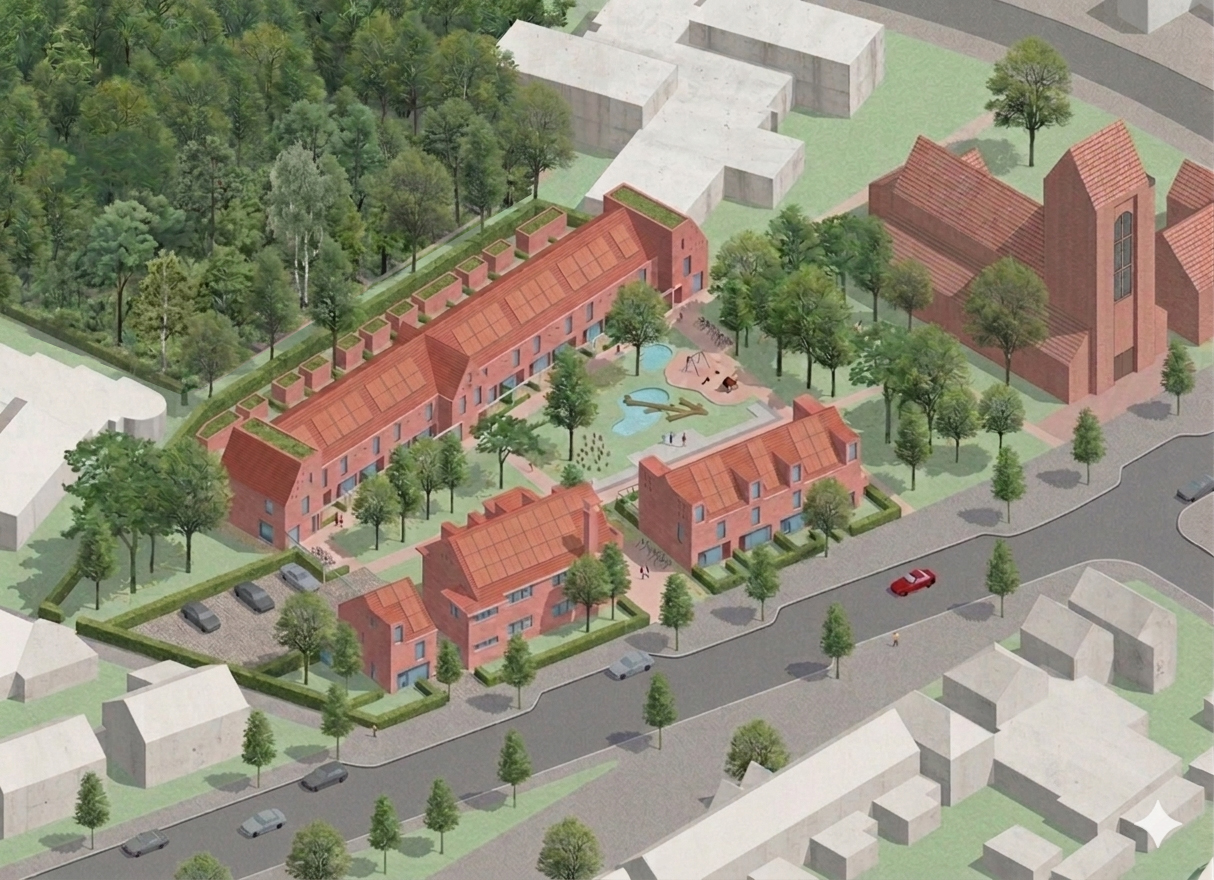
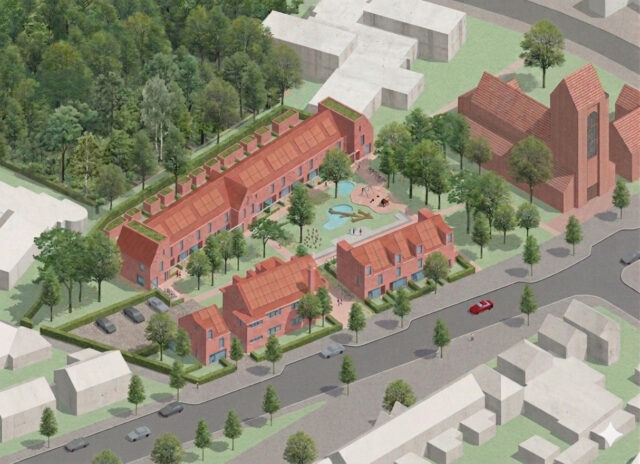
Our Lourdeshof is a compact residential development in Eindhoven that carefully positions new housing within a historically layered urban context. The project consists of 20 energy neutral wdwellings arranged around a shared, green and car-free courtyard, conceived as a space for play, encounter and biodiversity.
Set along the Vlokhovenseweg, on the site of a former school, the plan explicitly engages with the existing ensemble of church, school, presbytery and surrounding 1930s housing. Rather than introducing a contrasting urban model, the design builds on the spatial logic of the former “kerkdorp”: a recognisable cluster of buildings structured along a historic route. The restoration and reuse of the former school building, combined with new dwellings that align with the existing street and sit in a second line around the courtyard, reinforce this layered composition.
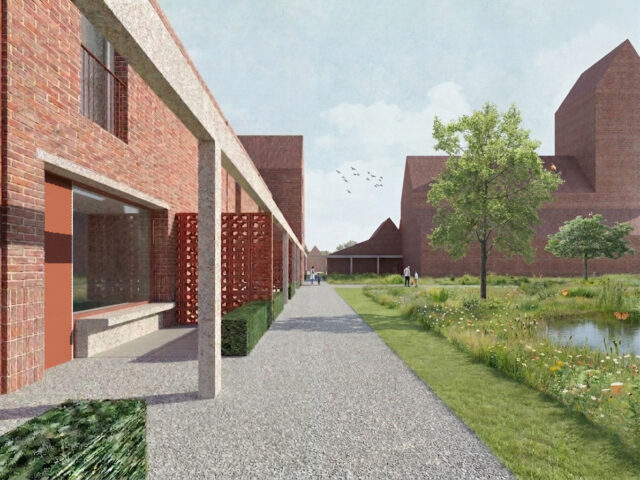
Architecturally, the project adopts a restrained, context-driven language—brick facades, pitched roofs and a two-layer typology—while incorporating contemporary detailing. This ensures that the new intervention remains subordinate to the historic ensemble, in line with the ambition that new development should not disturb the identity of the “kerkdorp in de stad”.
At the same time, Ons Lourdeshof introduces a forward-looking layer through its strong focus on sustainability and nature-inclusivity: climate-adaptive landscaping, water buffering, and integrated habitats for birds and bats contribute to a resilient and biodiverse living environment.

Green Revolucni

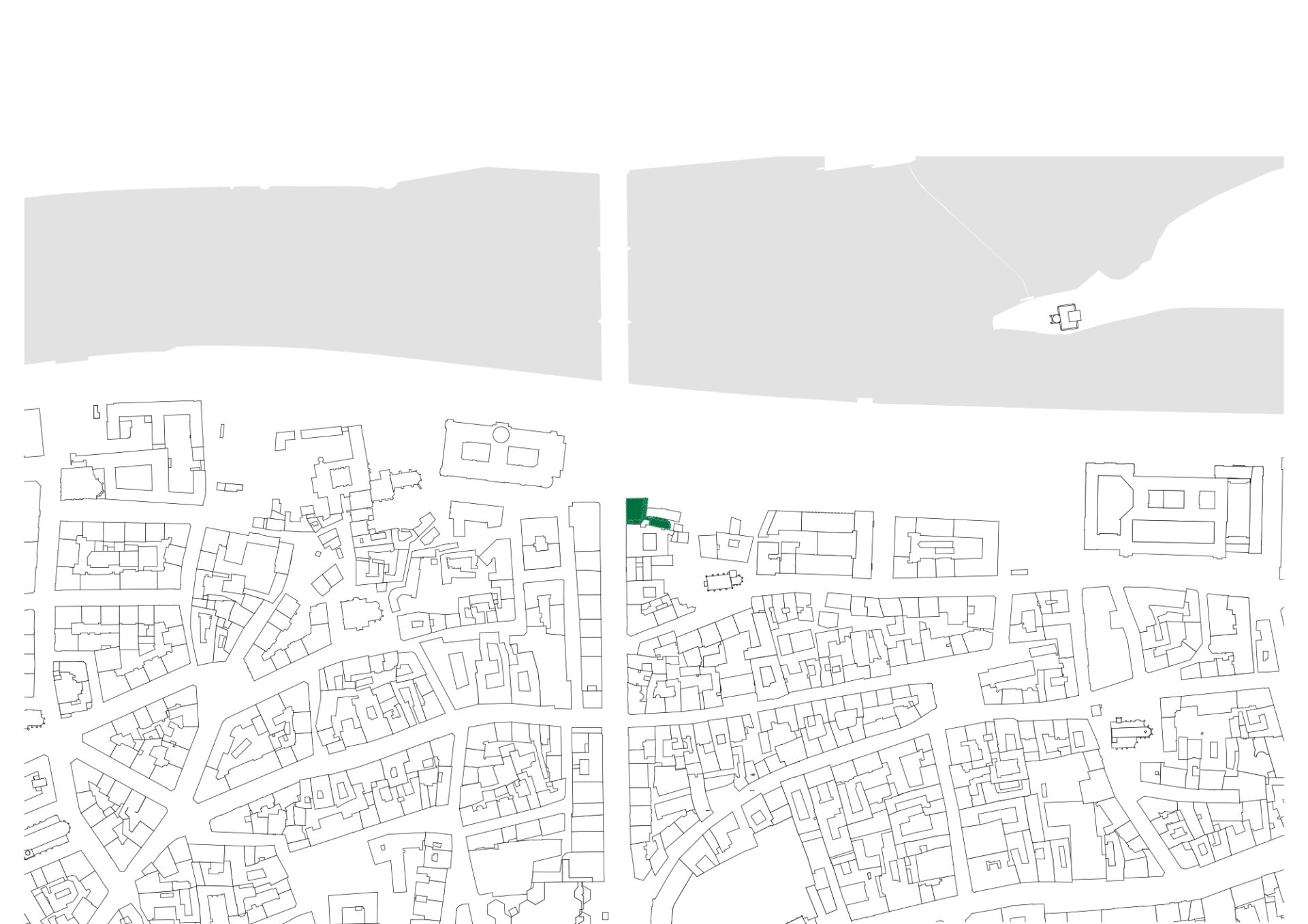
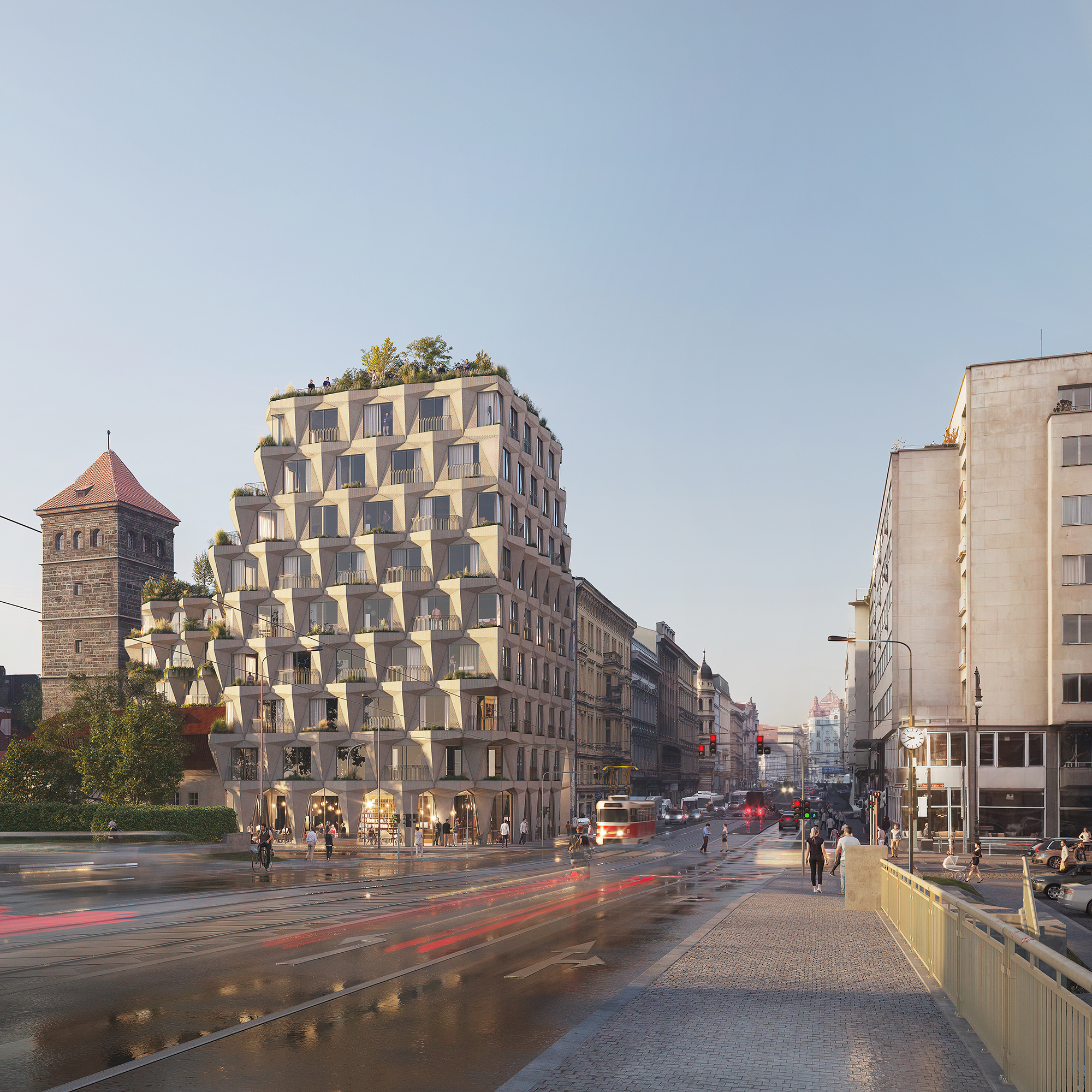
What type of icon do we imagine on this uniquely prominent site with its extraordinarily ambitious brief?

We believe it should be a contextual icon.
A building that stands out without being out of place by combining boldness with sensitivity for its surrounding.
It should be an icon that elevates the historic ensemble it is part of.
Rather than an abstract, introvert and self-referential object, it can be a layered and differentiated volume that creates a dialogue with the buildings around.


We believe it should be a paradigmatic icon.
An icon that embodies a paradigm shift: a shift towards a new future for the city.
A future in which cities are conceived as urban biotopes for people, plants, and animals.
Urban biotopes with nature inclusive architecture that boost quality of life ánd deal with the big global problems connected to climate change and loss of biodiversity.

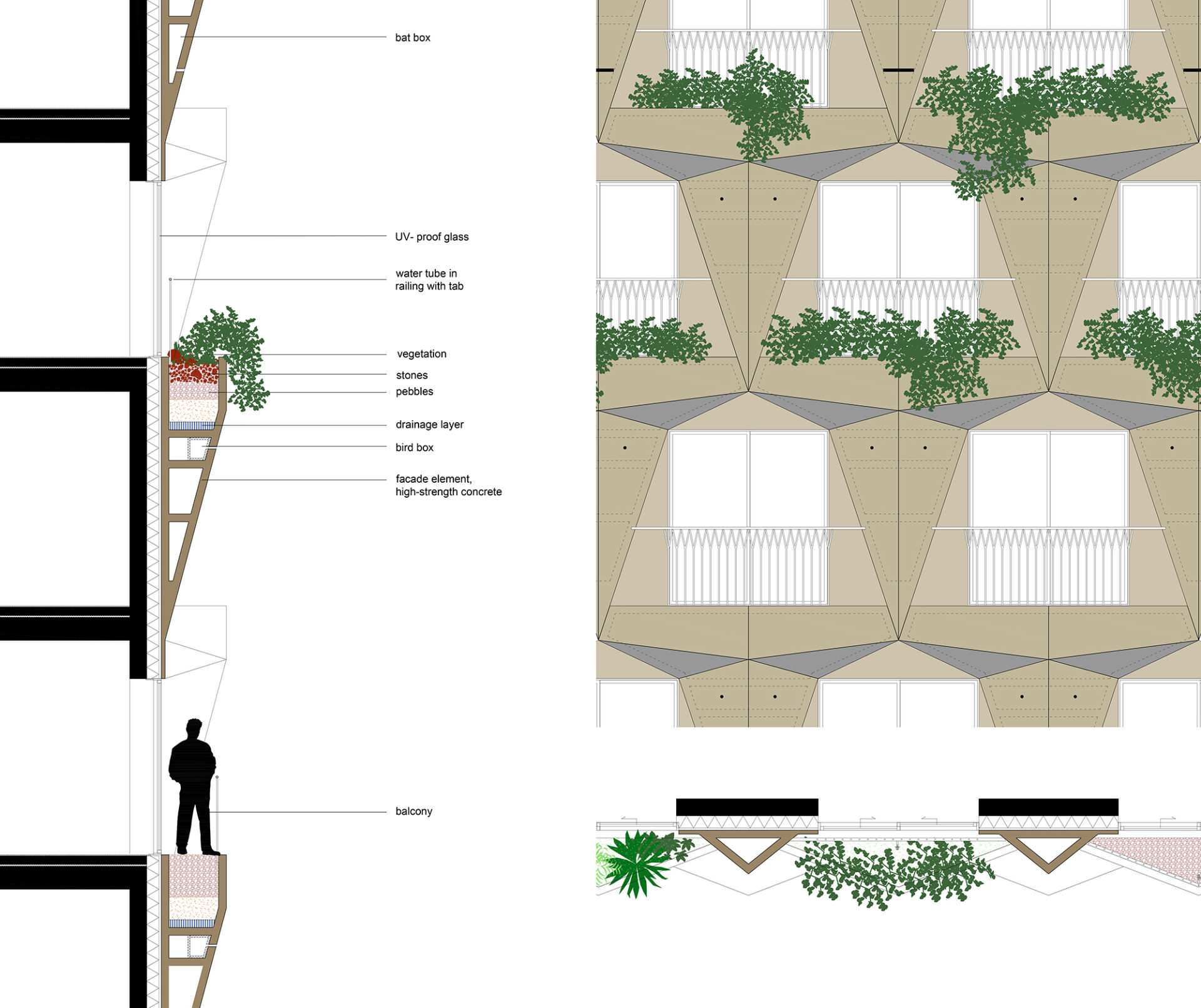

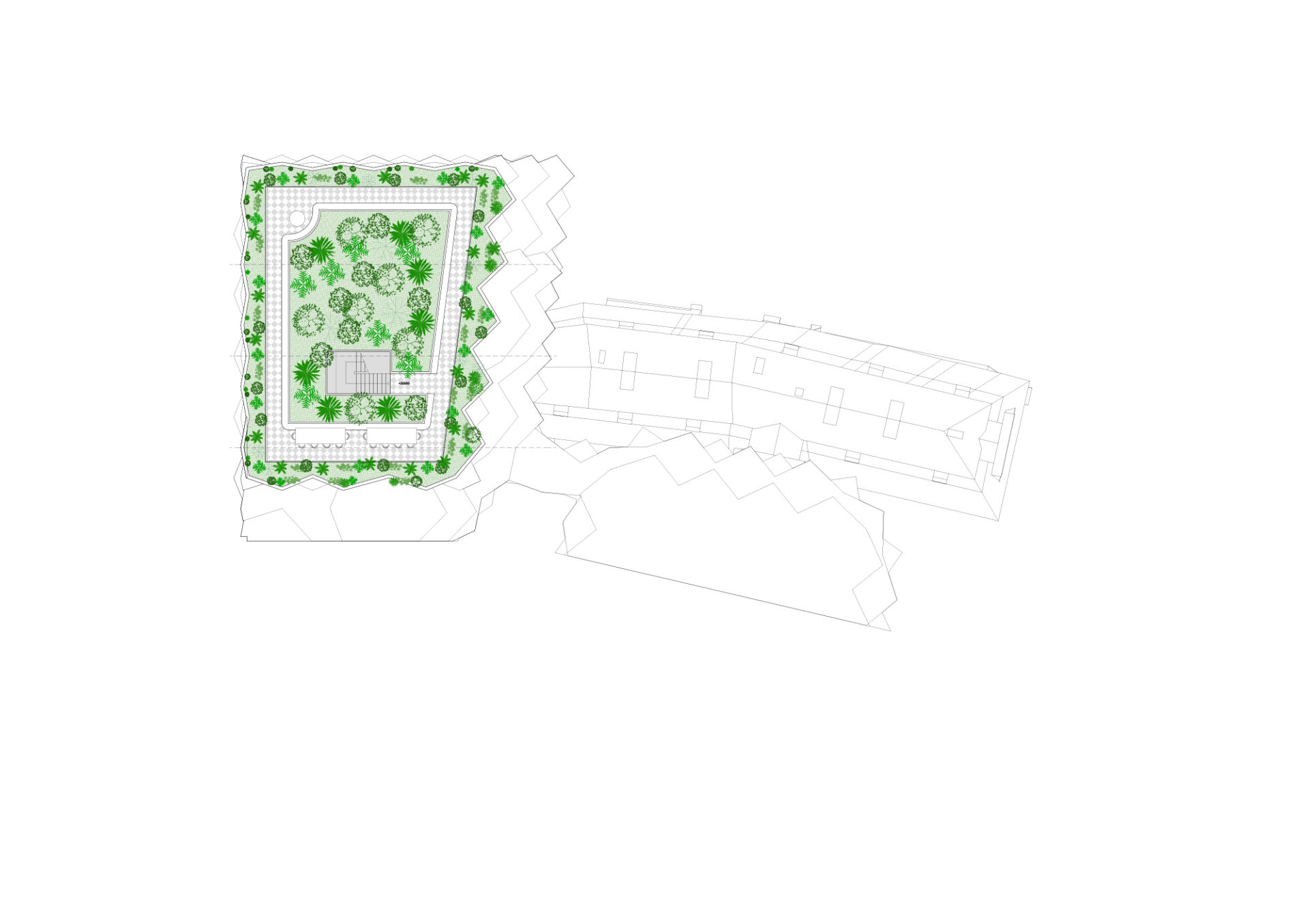

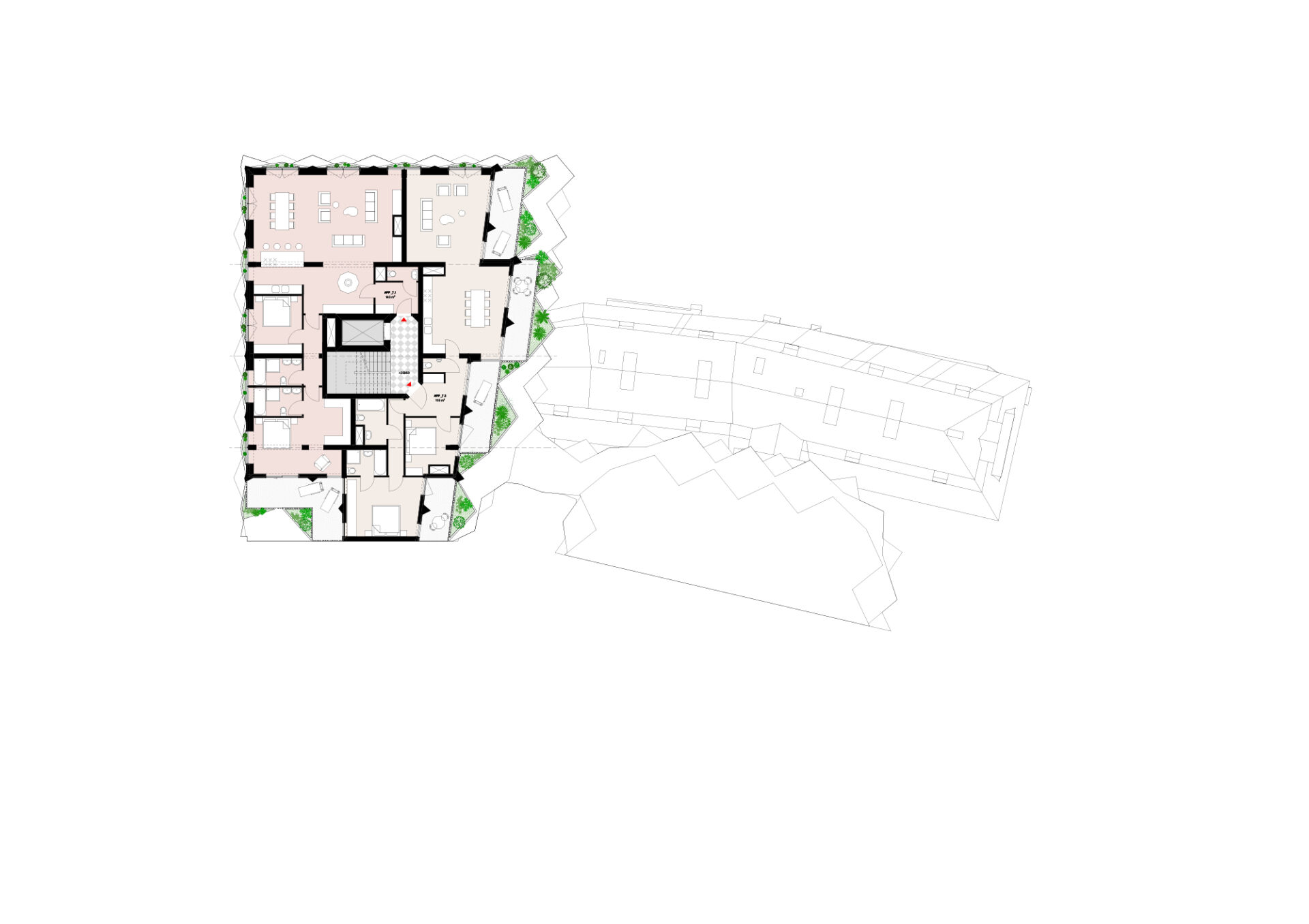
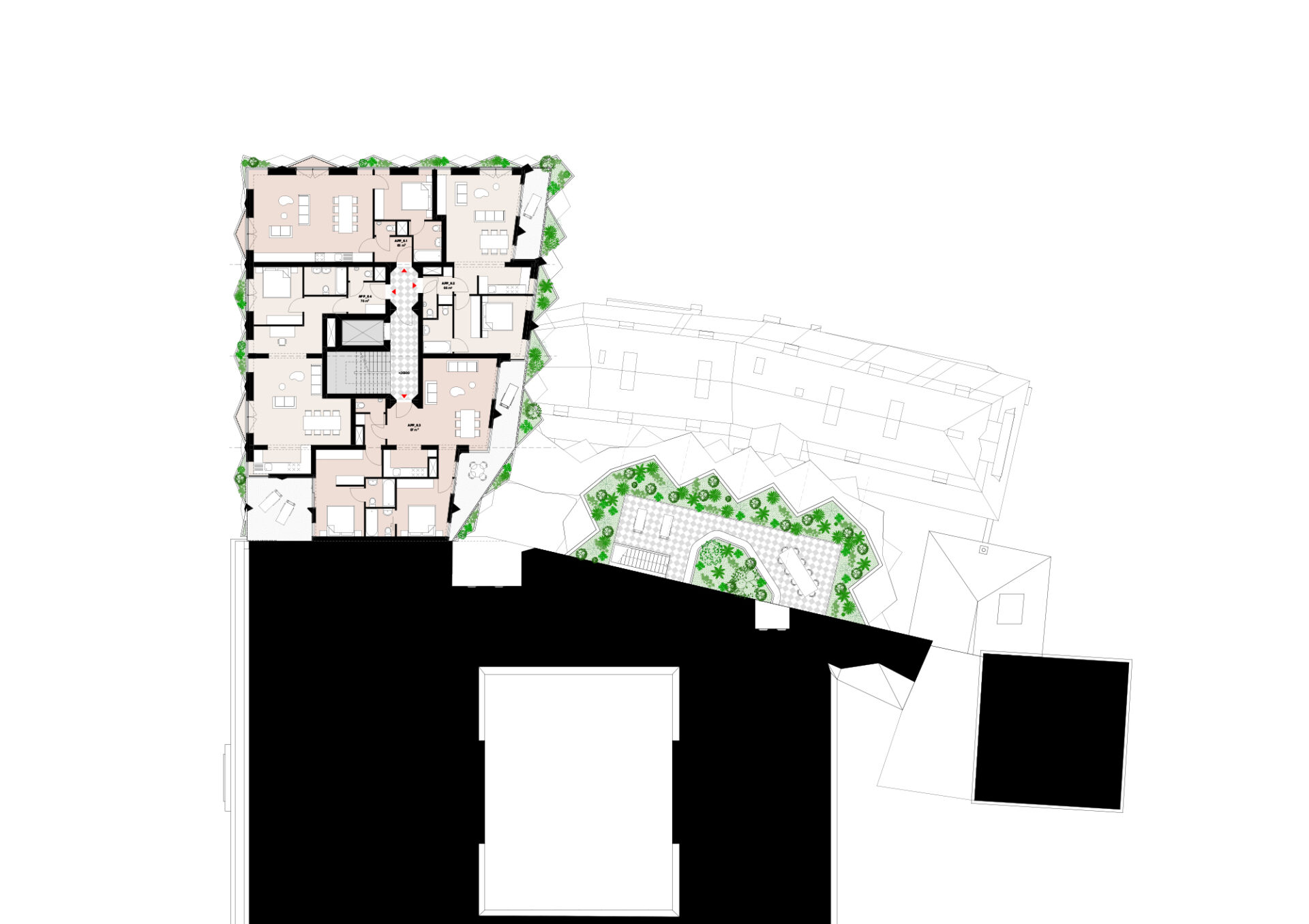
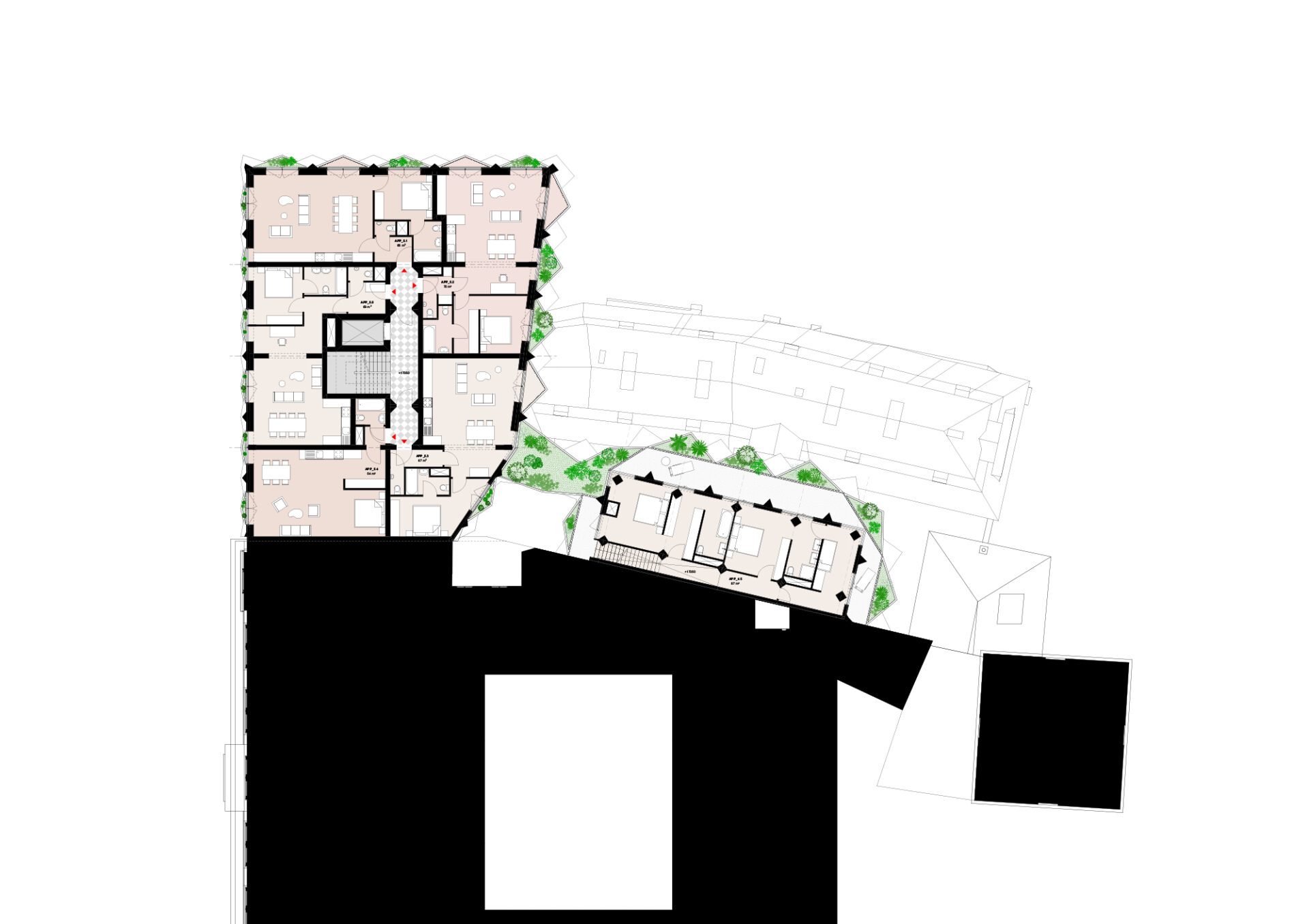
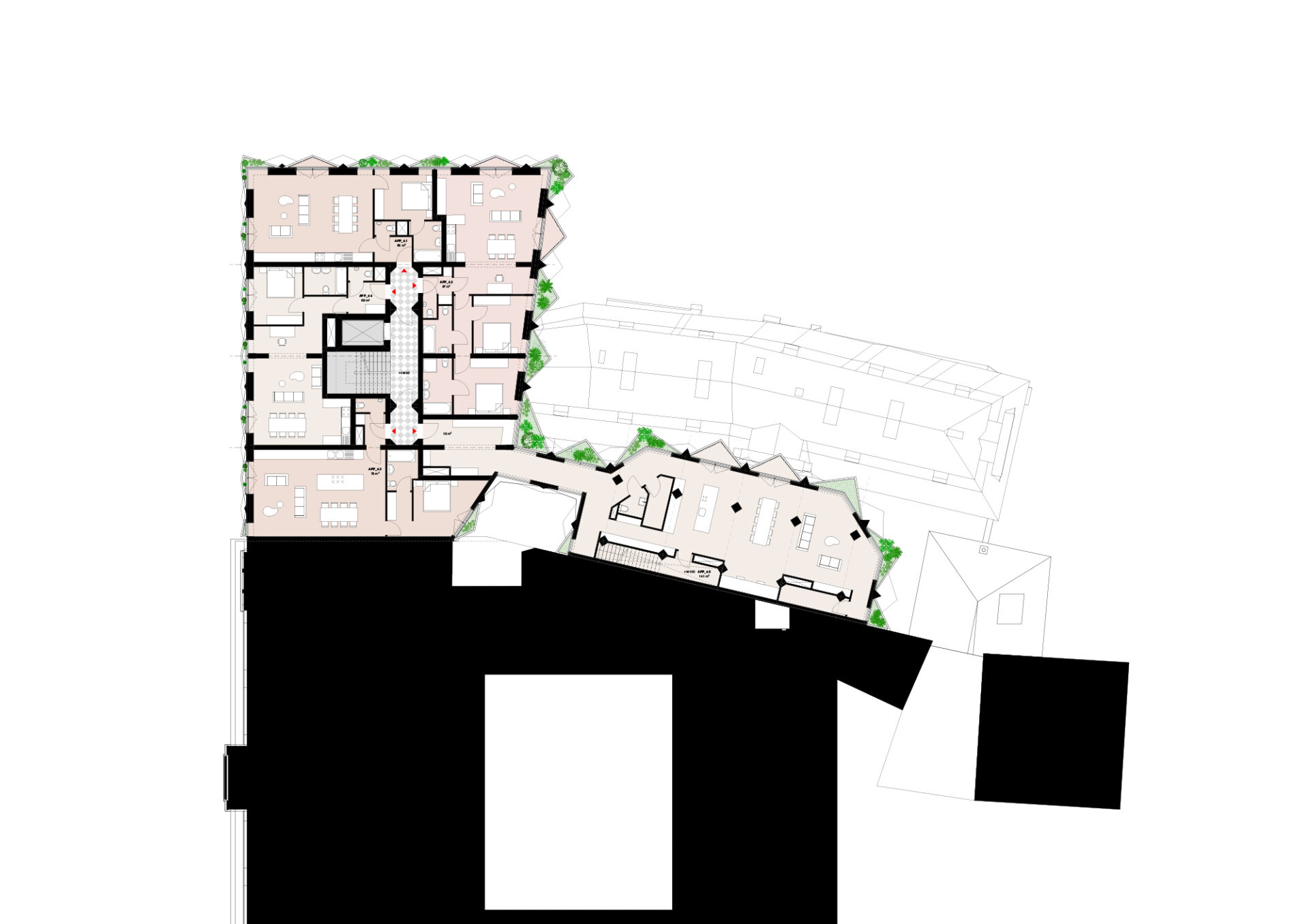
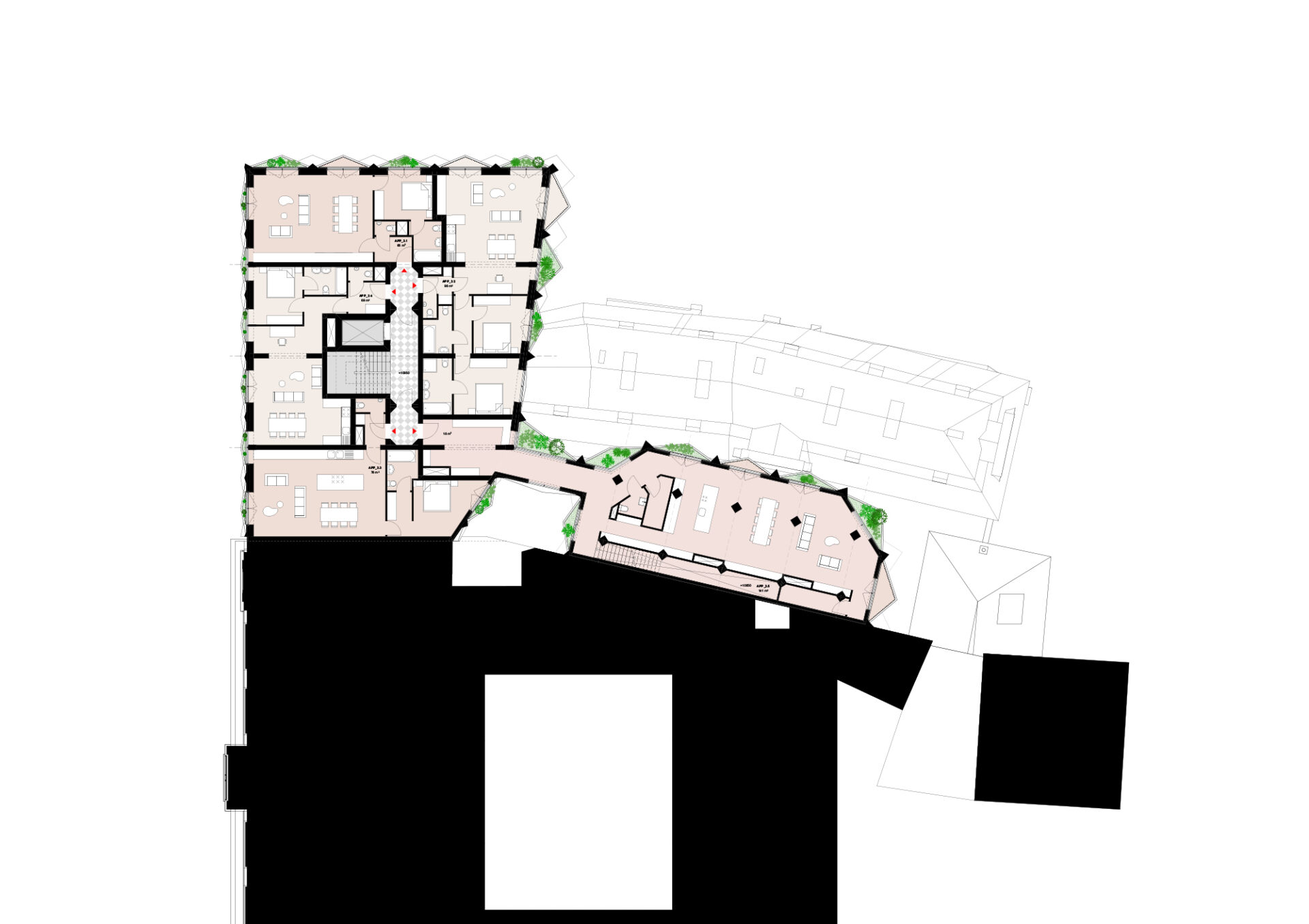


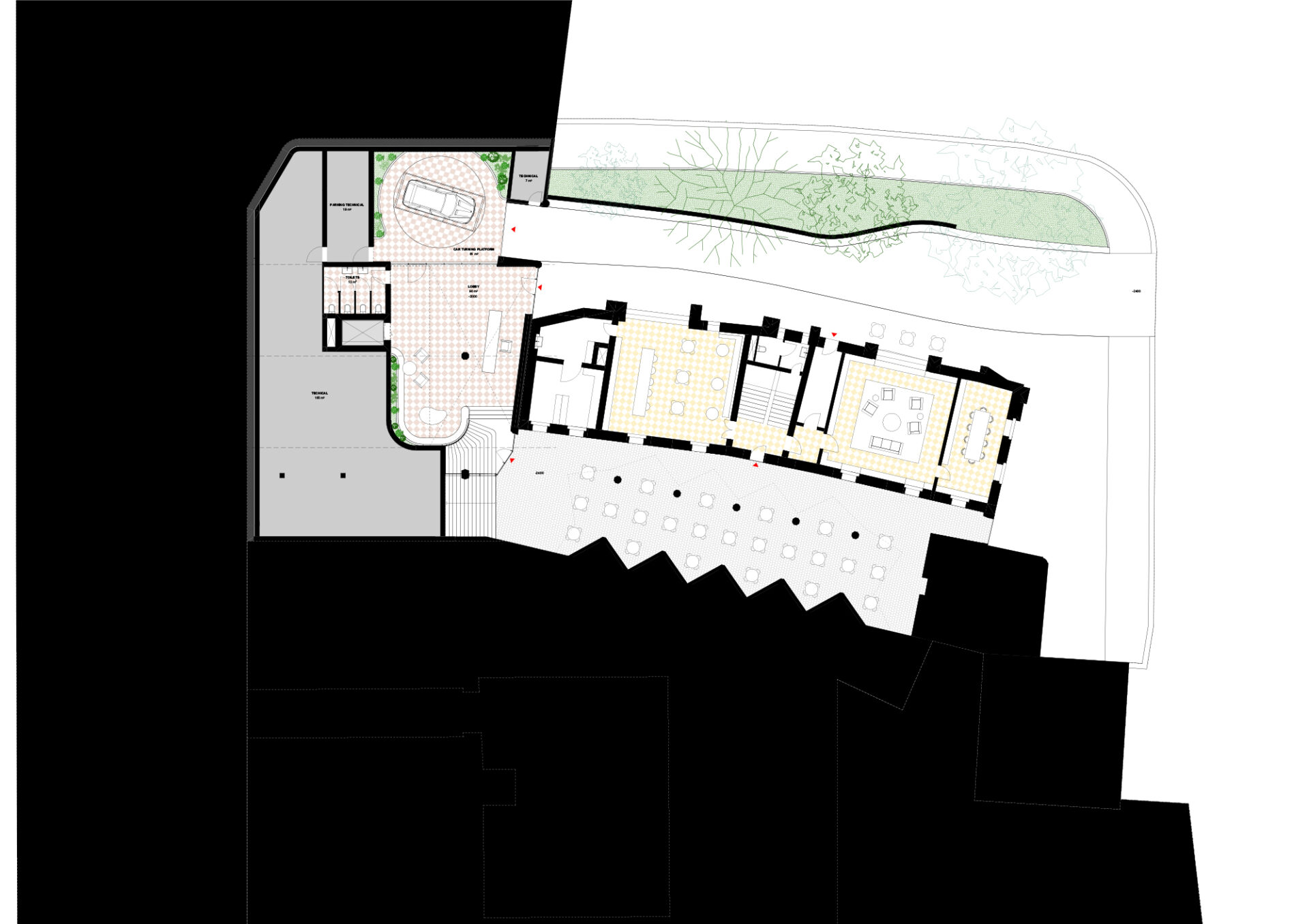

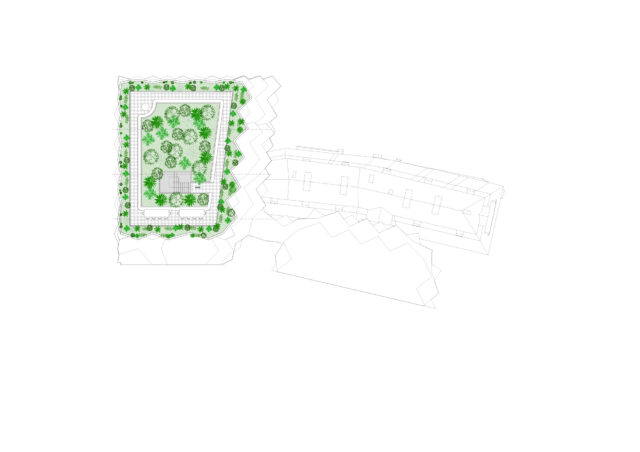


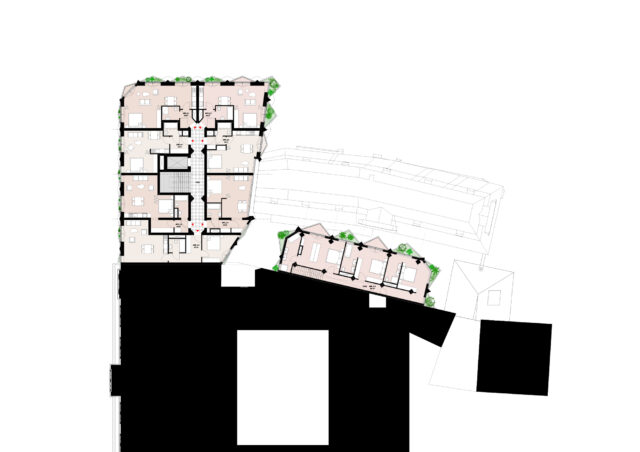
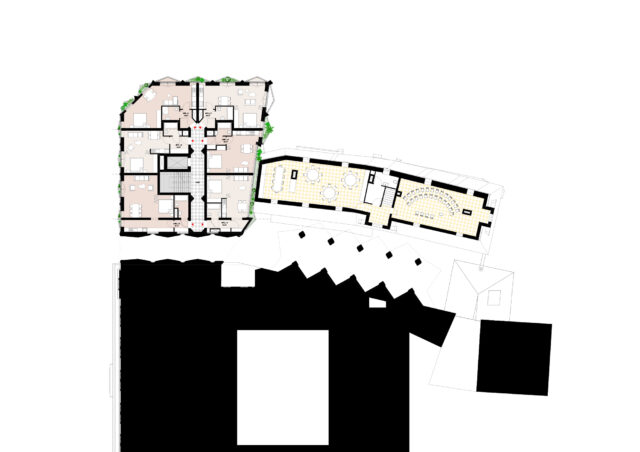


plans


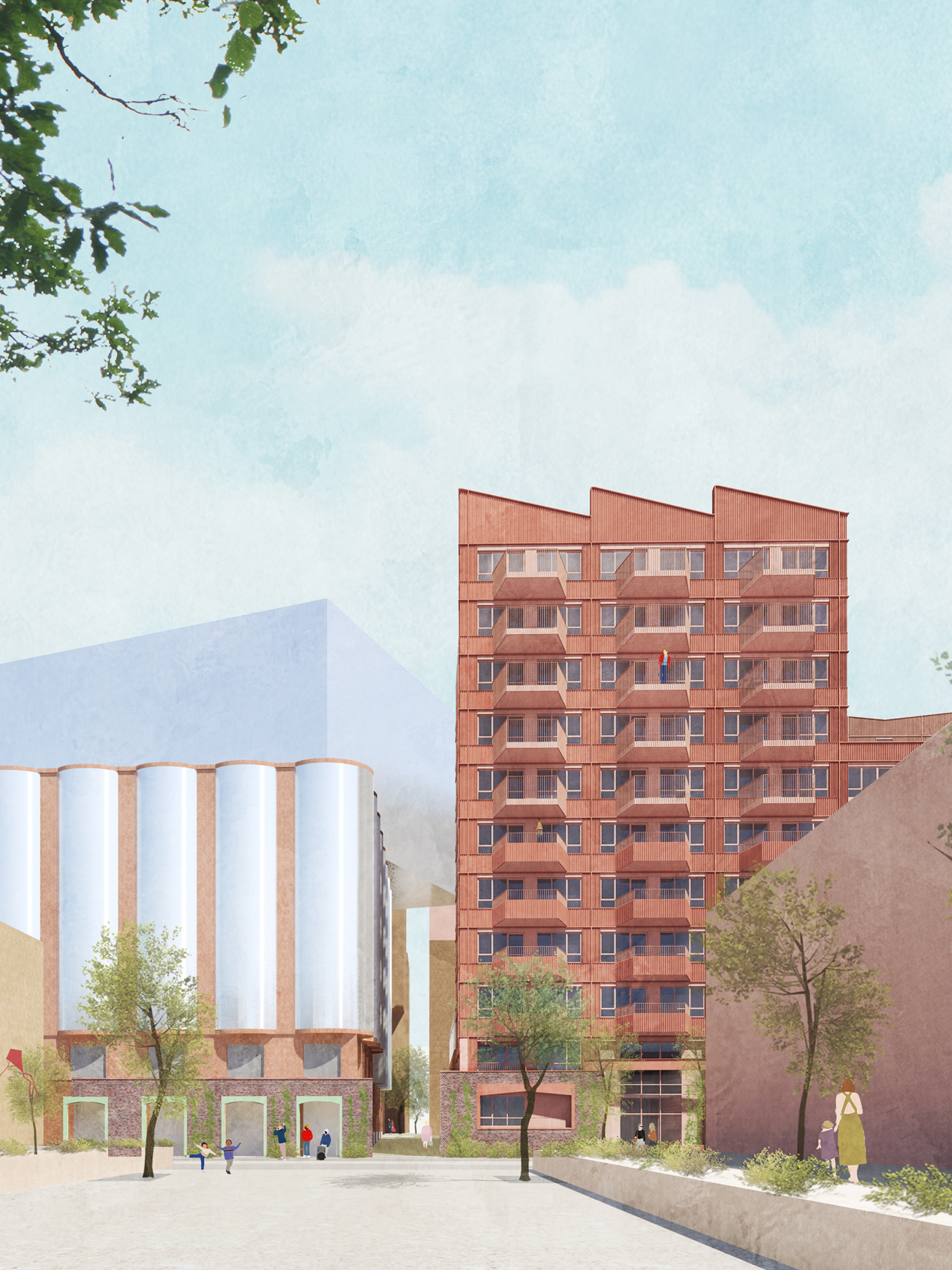

Energiehuis De Kaai
Energiehuis will be the first housing block to be built as part of the large scale urban redevelopment of the former Unilever terrain on the south banks of the Maas. In the coming years the former industrial site will gradually transform into a vibrant, high-density residential and commercial district with more that 1000 new homes.
The masterplan by Mecanoo aims to re-imagine the site’s industrial heritage by preserving iconic structures and by the introduction of new housing blocks with an industrial DNA.
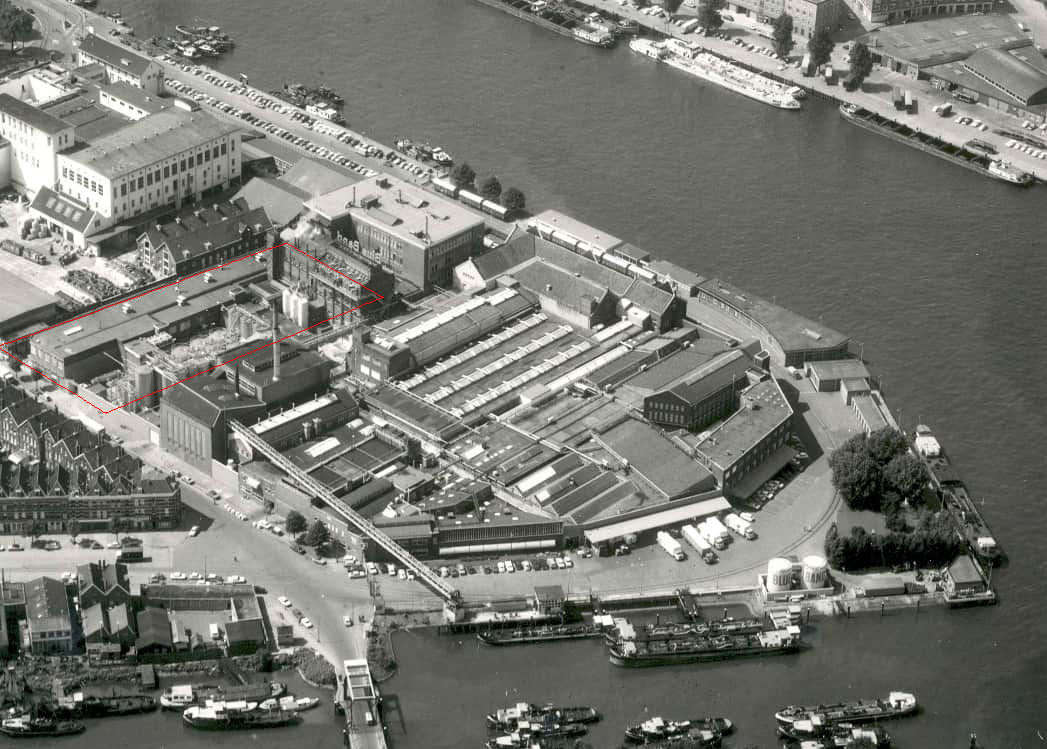
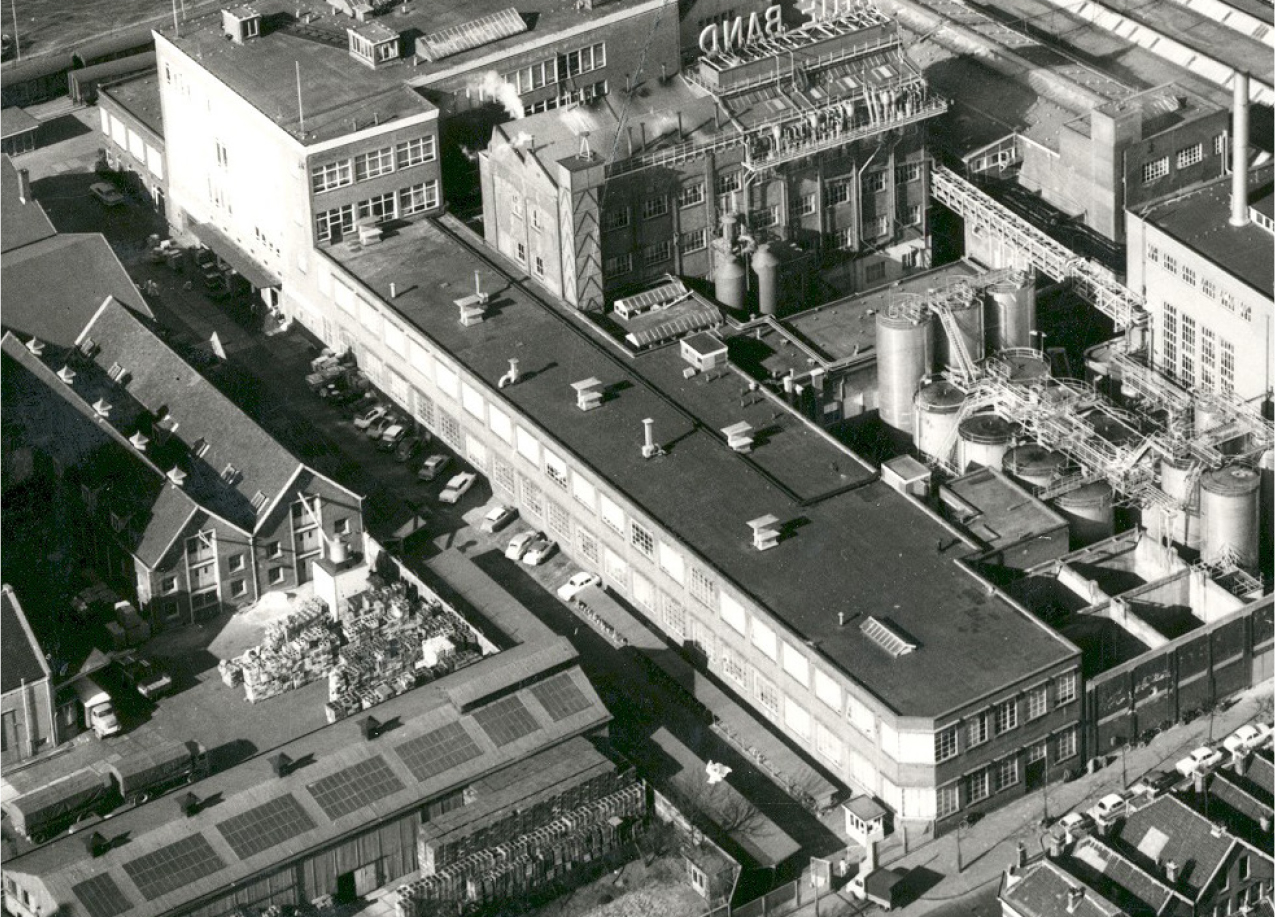
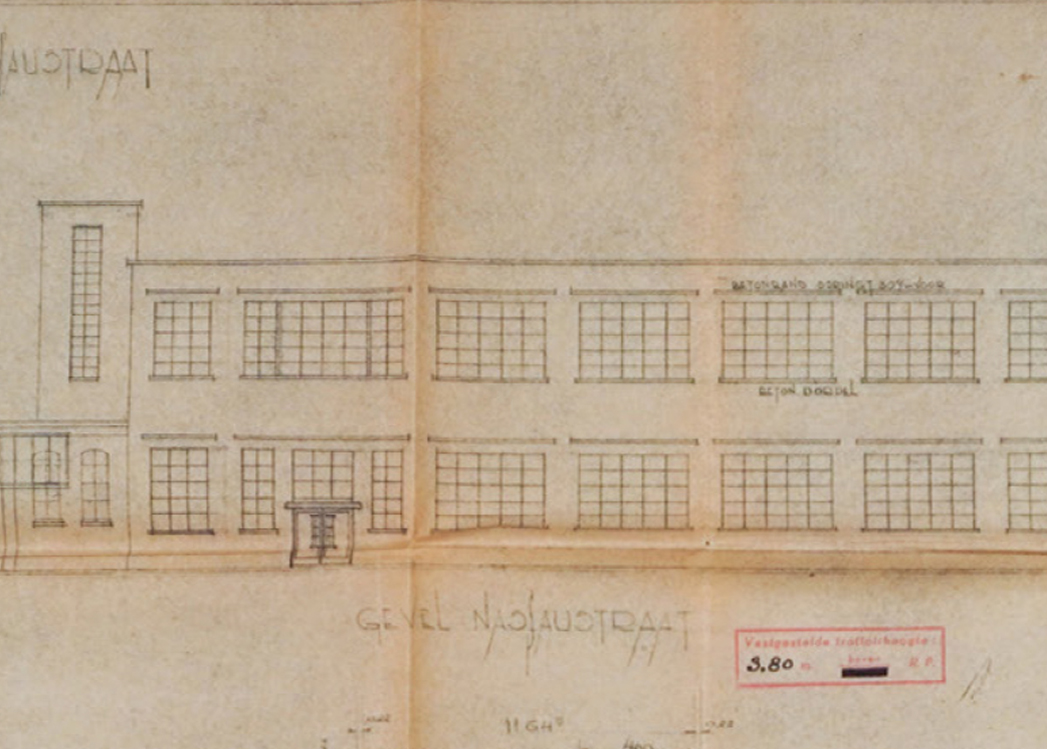

Our project adopts the rational and transparent facades of the former printing house that was situated here. Its industrial DNA is strengthened by the use of corrugated metal in brown-red, the most used color for shipping containers in the world.
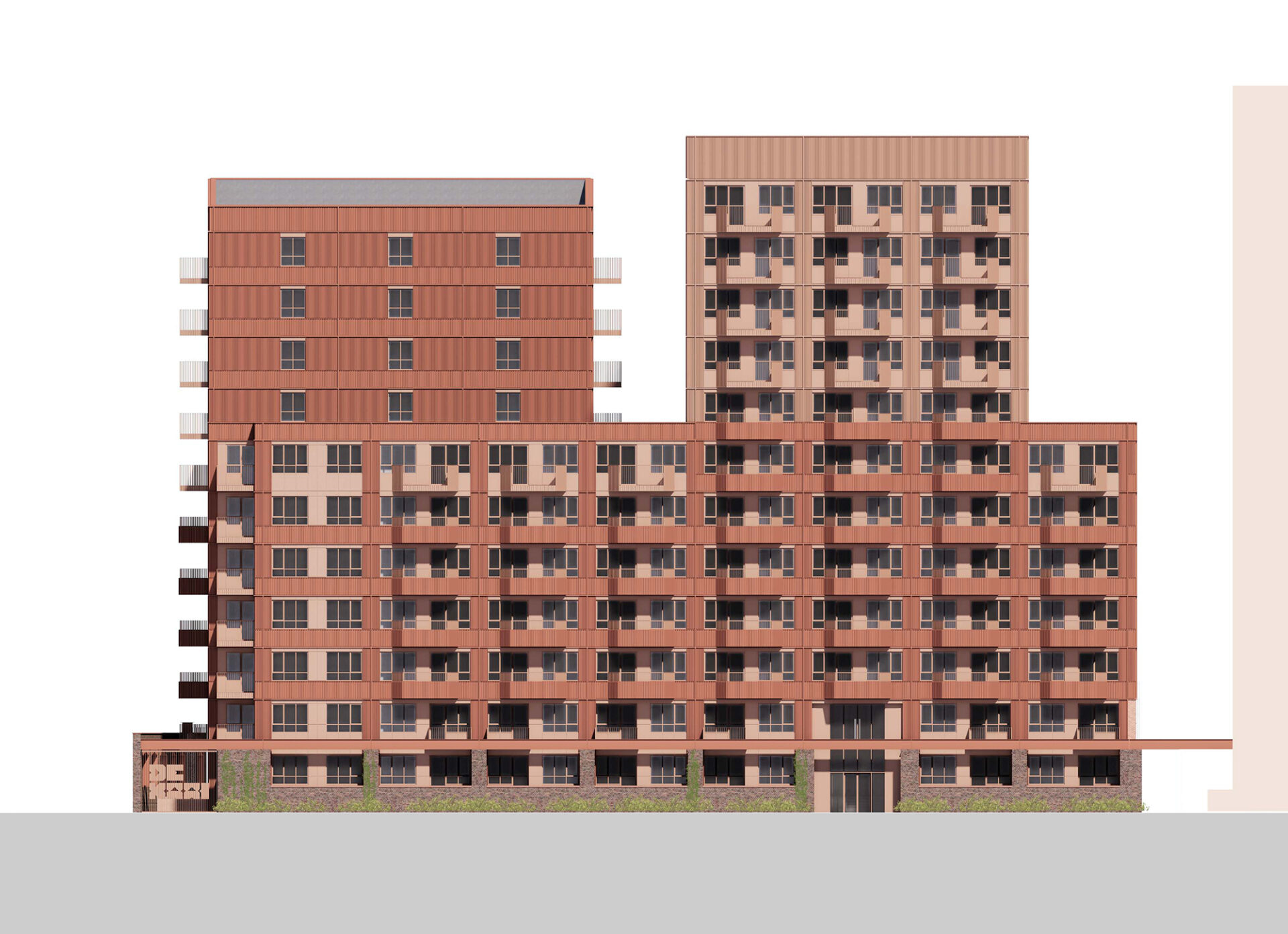
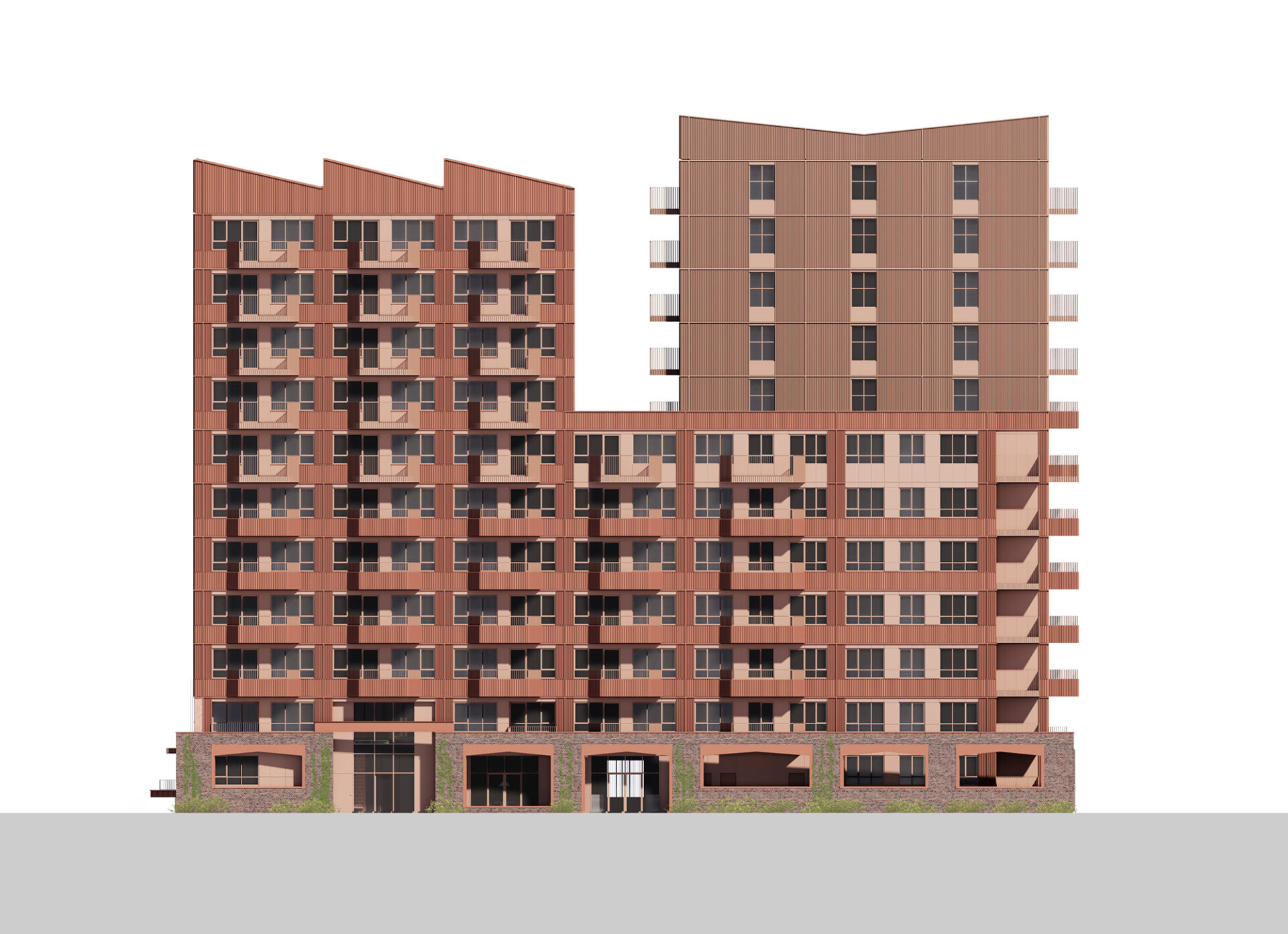

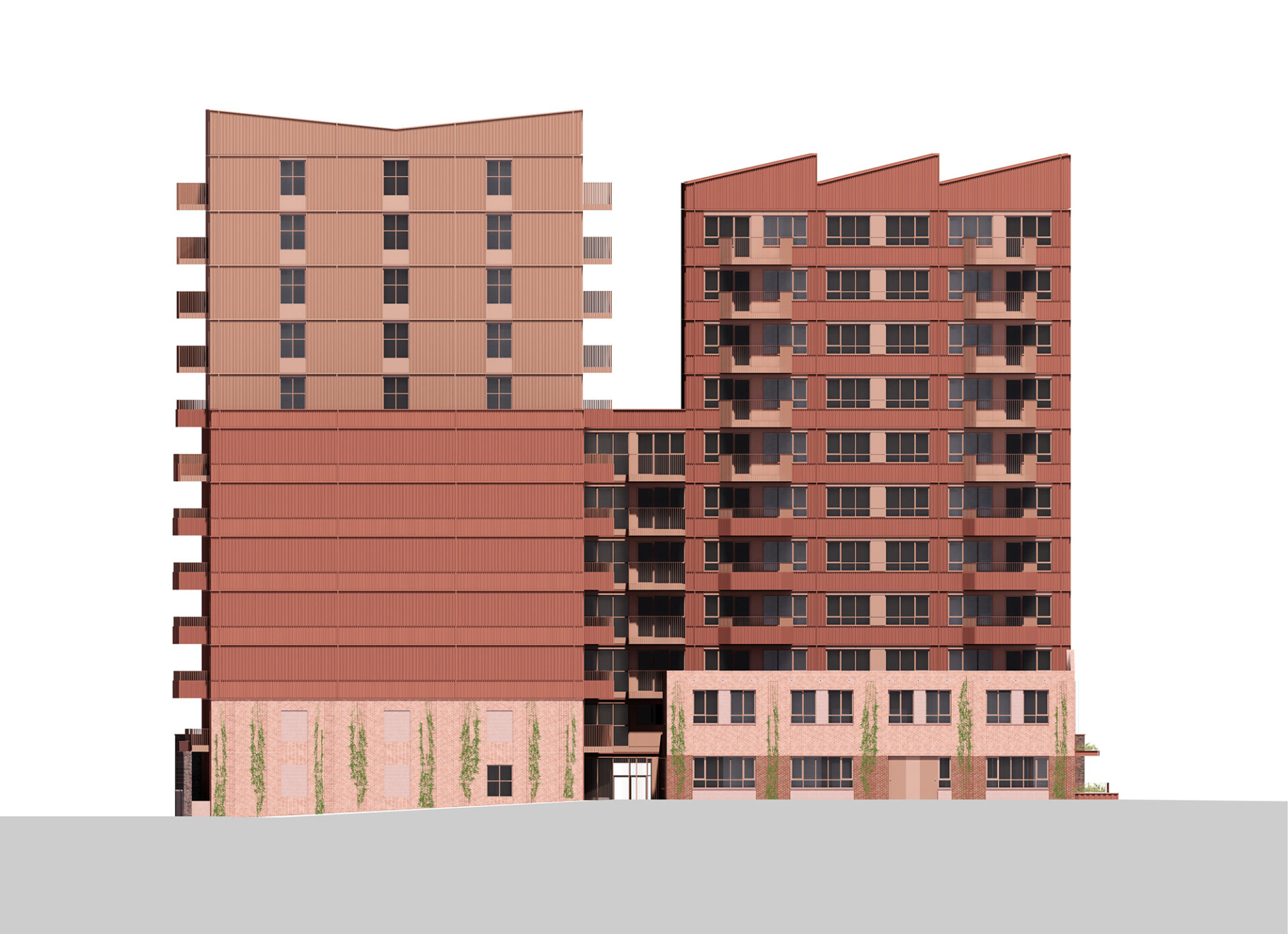


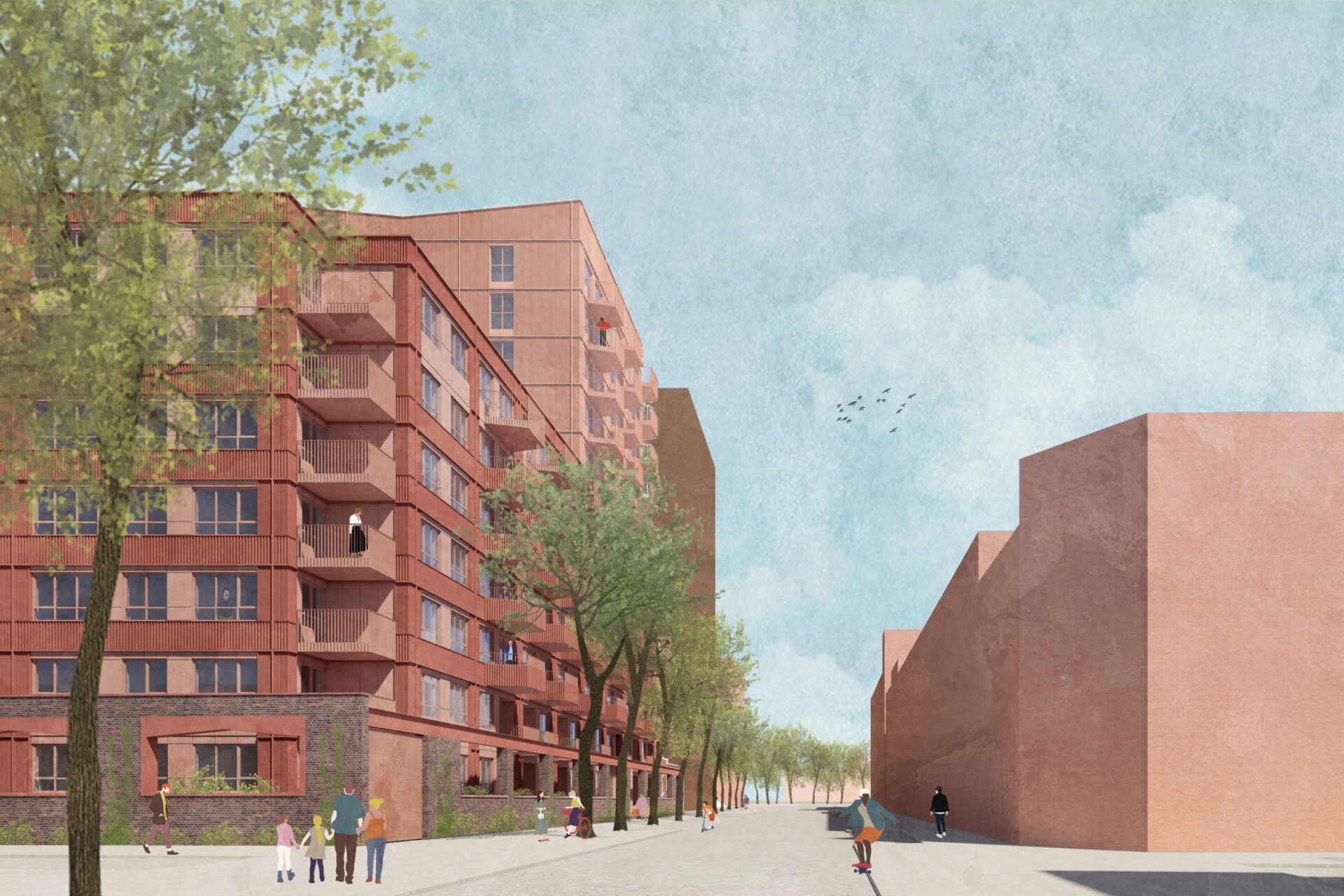

Additionally, we have incorporated the factory wall that surrounds the complex into the design. In its new shape, this brick wall is opened up and forms a robust buffer between the lifted outdoor spaces of the houses on ground level and the public sidewalk.
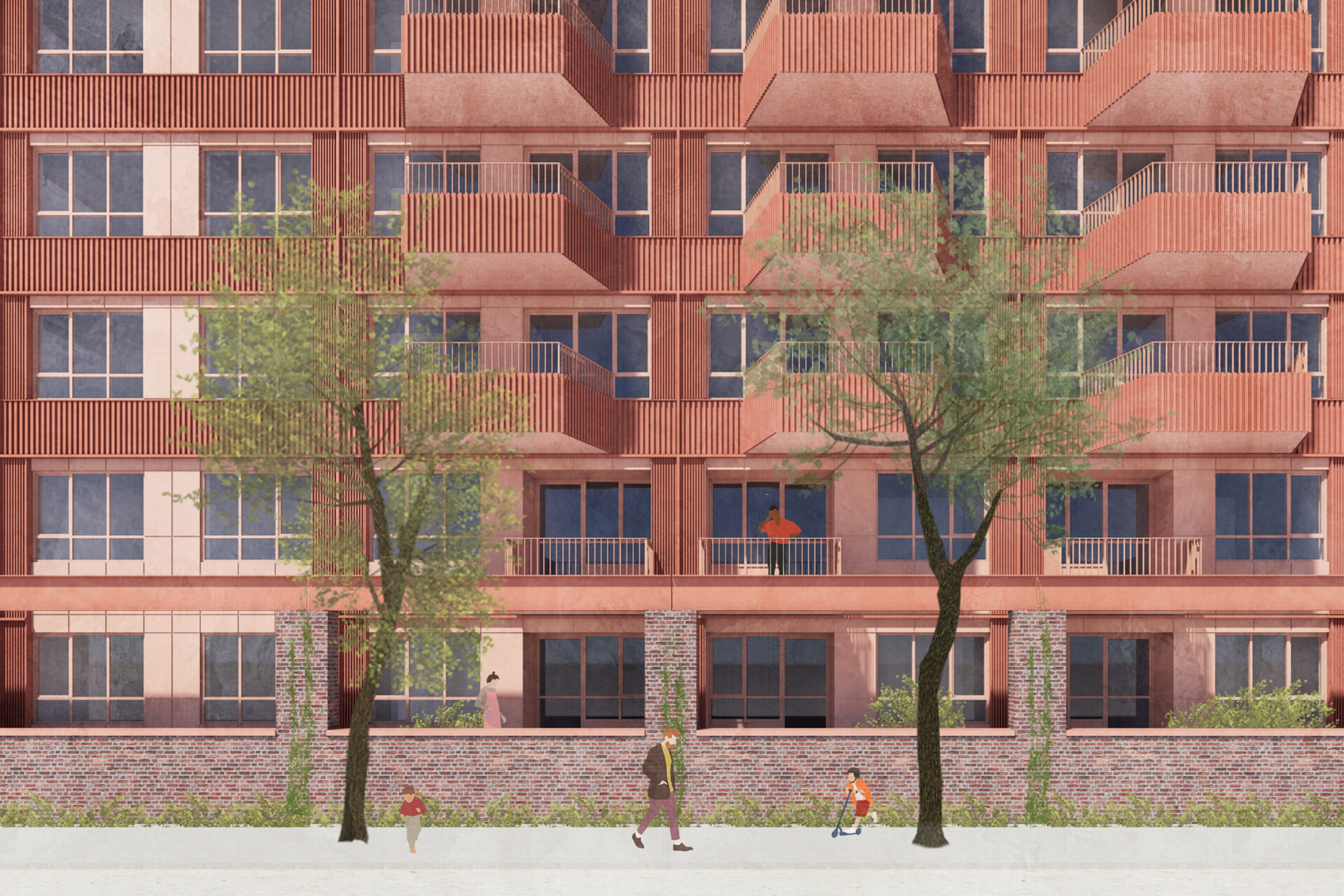

Programmatically, Energiehuis has a strong social agenda. It provides for a mix of 102 social houses, 58 houses for residents with light care needs and a care center for 20 people who need intense care.




Dune house

The new existing city
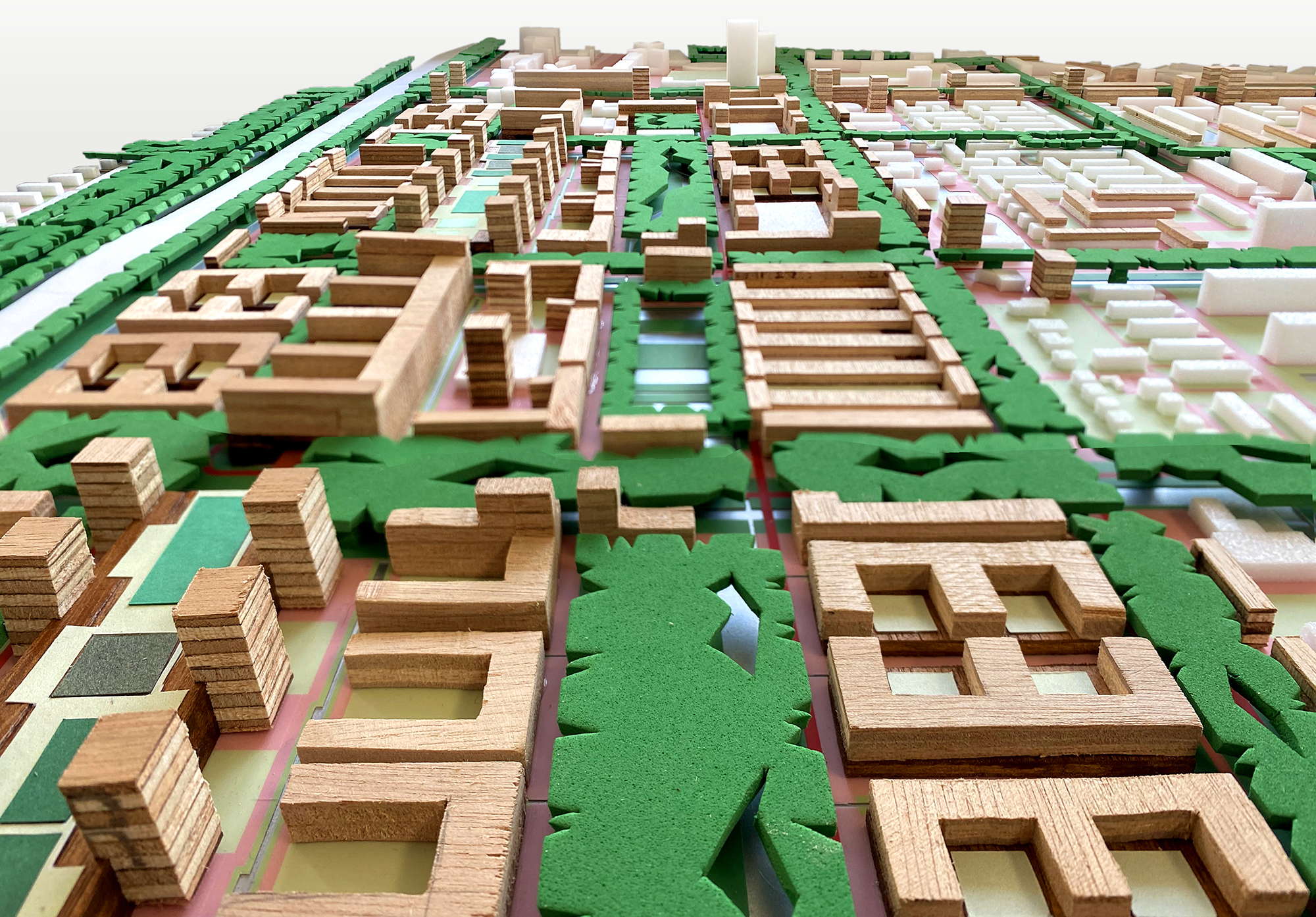
is the title of our entry for the Ministerie van Maak exhibition, following the call to 100 designers to come up with concrete solutions for the housing shortage, the energy transition and the consequences of climate change. Our plan shows how the Rotterdam post-war district Het Lage Land can be densified with 15,000 new homes, new working places and various amenities. The 100 models are showcased during the 2022 Rotterdam Architecture Biennale, in the largest scale model ever made of the Netherlands.
We believe that a significant part of the housing to be built in the coming years must find a place in the existing city. After all, that is where all the facilities, the infrastructure and especially the public transport nodes are located. Inner city densification can also serve as an opportunity to address the water, climate and energy assignments in the existing neighborhoods. And it can provide the necessary new housing typologies for existing residents, elderly for instance, so that they don’t have to leave the neighborhood.


Rotterdam “urbanized landscape”: an agglomeration of introvert islands within the system of the traffic machine
(after a drawing by Frits Palmboom)
Our location, the post-war modernist district Het Lage Land in Rotterdam, is fertile ground for further densification. Not only with homes, but also with spaces for work, water and greenery. The modernist idiom of separation of functions has resulted here in spacious, introverted residential islands surrounded by oversized transition areas, residual spaces and infrastructure. There is a need for a new urban layer that densifies, differentiates and connects this district with the city around it.


the postwar district Het Lage Land is in need of a new urban layer
The plan makes use of Oswald Mathias Ungers’ concept of Grossformen (megaforms), that unite flexibility and adaptability with permanence and a strong architectural expression. By framing the existing district with a metropolitan fabric consisting of city streets and work-live city blocks, the plan injects urbanity, form and connections in the peripheral residual buffer zones, characteristic of most modernist districts.


We transform the Prins Alexanderlaan, a 100-metre-wide thoroughfare east of the district, into a metropolitan city street. The metro line, located on the ground level, is flanked and topped with facilities and dwellings. The space for the car is limited in favor of cyclists and pedestrians. This gives the adjacent district Lage Land a representative front in the form of sturdy city blocks with dwellings, facilities, shops and offices that focus on the new city street.


We transform the Prins Alexander industrial premises and the adjacent communal- gardens location into a new mixed live-work district. The current low occupancy and low employment rate on this prime location situated right next to the Rotterdam Alexander train station, makes it ideal to partly preserve and partly intensify the existing businesses with new ones and combine them with up to 10,000 new homes. The railway line, located on a dike, will be provided with underpasses and an overpass, dissolving its barrier effect. The parking program of the entire district will be situated above the railway line. The business/industry areas are located under and inside the building blocks. They are accessed from a circular loop, which means that the entire development itself can be car-free.


We transform the neighborhood itself with acupunctural infills and a green-blue network that enhances the biodiversity and the sponge effect of the district. New slow traffic paths connect the neighborhood with its surroundings, including the Kralingse Bos, which we are expanding with a sports forest up to the highway. The Prinsenlaan will be transformed into a linear park connecting the Kralingse Bos with the Schollebos.


acupuncture in the existing district


Large-scale densification, as we advocate it, is complex. Too complex to be left solely to the market. The management should lie with the municipality. The design disciplines also need to sit more firmly at the table. After all, it is the architects par excellence who can think integrally and literally give shape to THE NEW EXISTING CITY.



Schiehaven Noord
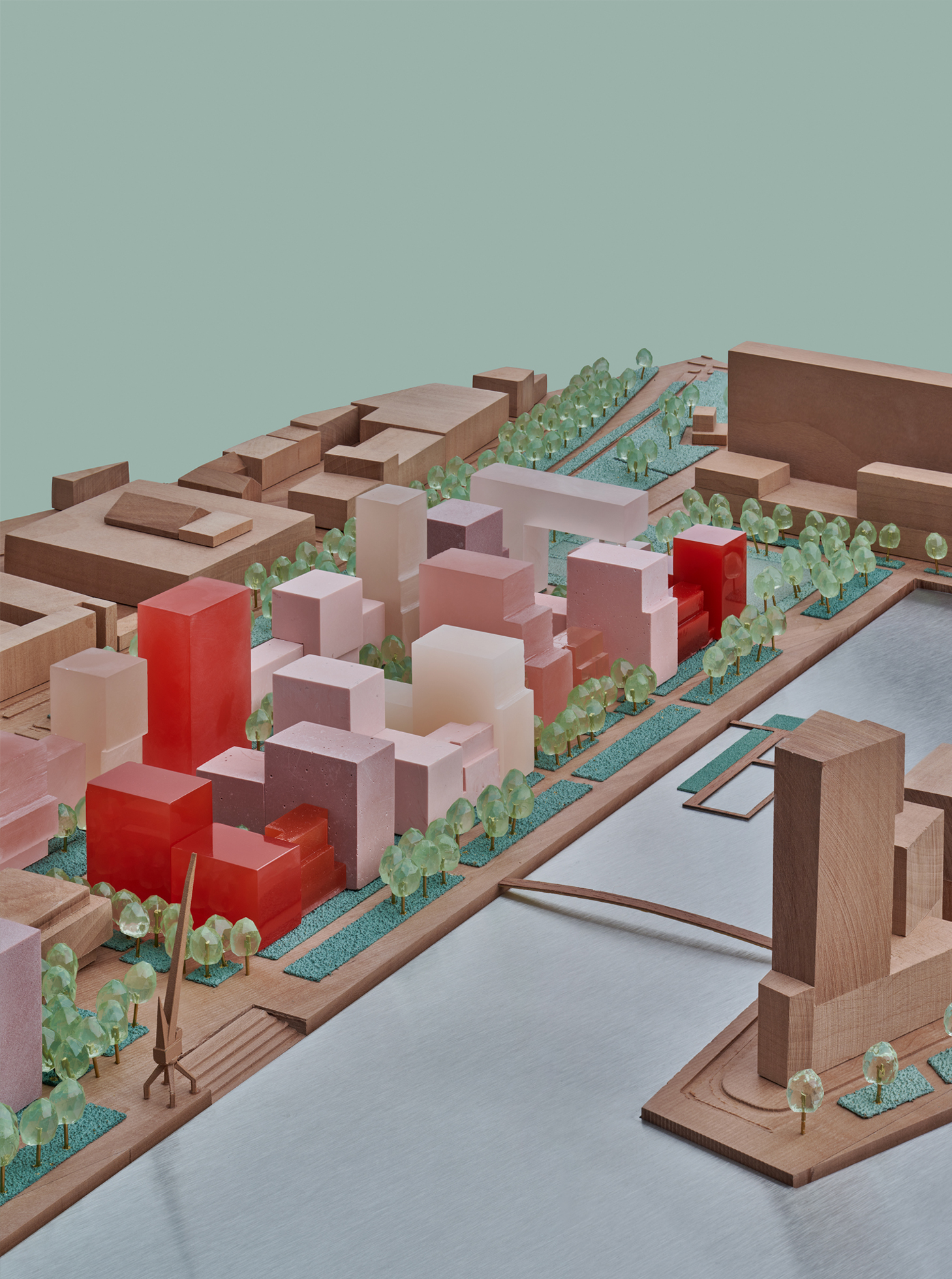
The masterplan for Schiehaven Noord capitalizes on the opportunity to further develop Rotterdam as a city on the river. It shows how inner-city densification of port areas can go hand in hand with creating high-quality public spaces and facilities that function both at the level of the city as that of the neighborhood. In its renewed relationship with the river, the neighborhood celebrates liveliness and urban connections as well as tranquility and intimacy. The plan is developed in close collaboration with the Municipality of Rotterdam and BplusB urbanism and landscape architecture.

The green urban plan provides for a varied mix of 1000 new homes, half at affordable and half at market price, thus making an important contribution to tackling the housing shortage through inner-city densification. The existing heritage (the Maaskant building with offices and the Marshall warehouse with cultural and social functions) are logically integrated in the plan and complemented with other strategically located public facilities in the plinth of various buildings.
A 40m quay extension makes it possible to combine the significant building program with a wide range of green public and collective spaces, as a welcome addition to the stony character of the adjacent Lloydpier and Müllerpier, and compensating for the wide area with underground infrastructure where no construction is allowed. Specific hindrances of this former harbor area such as the impact of wind and noise ask for an intricate urban fabric of medium height (instead of high-rise) that can provide shelter and security.


The urban design features a differentiated ensemble with a strong character, fabric and vertical silhouette. At the level of the city, the plan manifests itself as two superblocks matching the size of the port. On the scale of the neighbourhood, the plan reads like a sequence of green courtyards that together form a green residential fabric. On the scale of the building, a conscious effort is made to use a small grain that reflects the rich mix of residential typologies and residents, as well as enables identification with one’s own residential building.
Each layer of the plan connects to the city and the public space on a different level.
The superblocks relate to the two urban axes of the quay (Maaskade) and the dike (Westzeedijk) and as well as to the green connection on top of the underground infrastructure. The series of courtyards form wind and noise-free green collective spaces for the neighbourhood community. Finally, the individual buildings have addresses towards all sides so that the plan has no backsides. With carefully designed transitions between private, collective and public space, including raised terraces in front of the ground-floor homes, they contribute to the synergy between living and public space.


Within the range of Rotterdam’s (post-)industrial harbours, Schiehaven Noord is special because of its large contact with both the river and the dike. These two long lines of water and earth are used to give identity to the plan. A wide landscaped quay redefines Delfshaven’s relationship with the Maas by giving the opportunity to experience the river up close. The proposed new city square in front of the Maaskant building will have wide, sturdy stairs descending towards the water: De Maastribune. Existing and new sports facilities, as well as sunbathing areas on the quay, bring urban activity right down to the water. Natural zones and native plants are located both on and along the quay and reinforce the ecological position of the Lloydkwartier along the banks of the Maas.
At the other side of the plan, a differentiated urban facade is proposed along the dike. Ground bound dwellings with front doors on the dike alternate with apartment buildings with see-through entrance lobbies. This setup with addresses along the dike ensures liveliness and urbanity to this important scenic urban structure of Rotterdam.


The street between the two superblocks is an extension of the northly situated Oostkousdijk and Havenstraat in Delfshaven, strongly connecting the new neighbourhood to the inner dike city parts. This slow traffic axis connects to three parallel slow traffic routes: one along the dike, one in the inner area and one on the quay. They accentuate the characteristic longitudinal direction of the harbour and connect the Lloydkwartier with the former Schiemond port area and the De Kroon site. The car is given a subordinate place in the plan by accommodating it in two parking hubs on either side of the plan: a fully underground parking garage (2 layers) on the East side and a demountable multi-level parking garage on the West side. The quay and the dike route are only accessible to car traffic for the purpose of garbage collection, parcel services, moving and emergencies.


The project strives for a differentiated unity, both at the urban and architectural level. The two super blocks are made up of individual buildings placed next to each other, which clearly acquire their own character within a common architectural DNA. This creates a family of buildings that shape the quay, dike and courtyards by means of differentiated urban walls. In addition to the so-called “Rotterdam layer” consisting of 3 to 6 floors, the plan has a rich collection of higher volumes up to a maximum of 15 layers. The “Rotterdam layer” is oriented to the ground level and shapes the urban spaces. The height accents, situated in a checkerboard pattern, focus on the view and give the project its own distinctive skyline with staggered height accents.


Westwijk Rooted
Westwijk, an icon neighborhood of post war urbanism, needs renewal. Both the original housing stock and the public space are outdated. The clear urban layout designed by Willem van Tijen offers a good basis to further draw upon. At the same time we will have to break with some of the original principles. We have to move form tabula rasa to tabula scripta and from a separation to combination. More specifically, this means that the relation between the residents (and their houses) and the ground has to radically change and that both the housing stock and the public space has to become more attractive, diverse and sustainable.
Westwijk Rooted is about a neighborhood that is linked to its reconstruction past, its wet soil, the adjacent polder landscape, the new metro station and of course with existing and new residents. A new ground level based on the wet soil condition forms the landscape framework of the plan. It makes the neighborhood climate-proof, water-resilient and biodiverse. At the same time, it creates the ideal conditions for attractive new living environments that are anchored in the ground level.
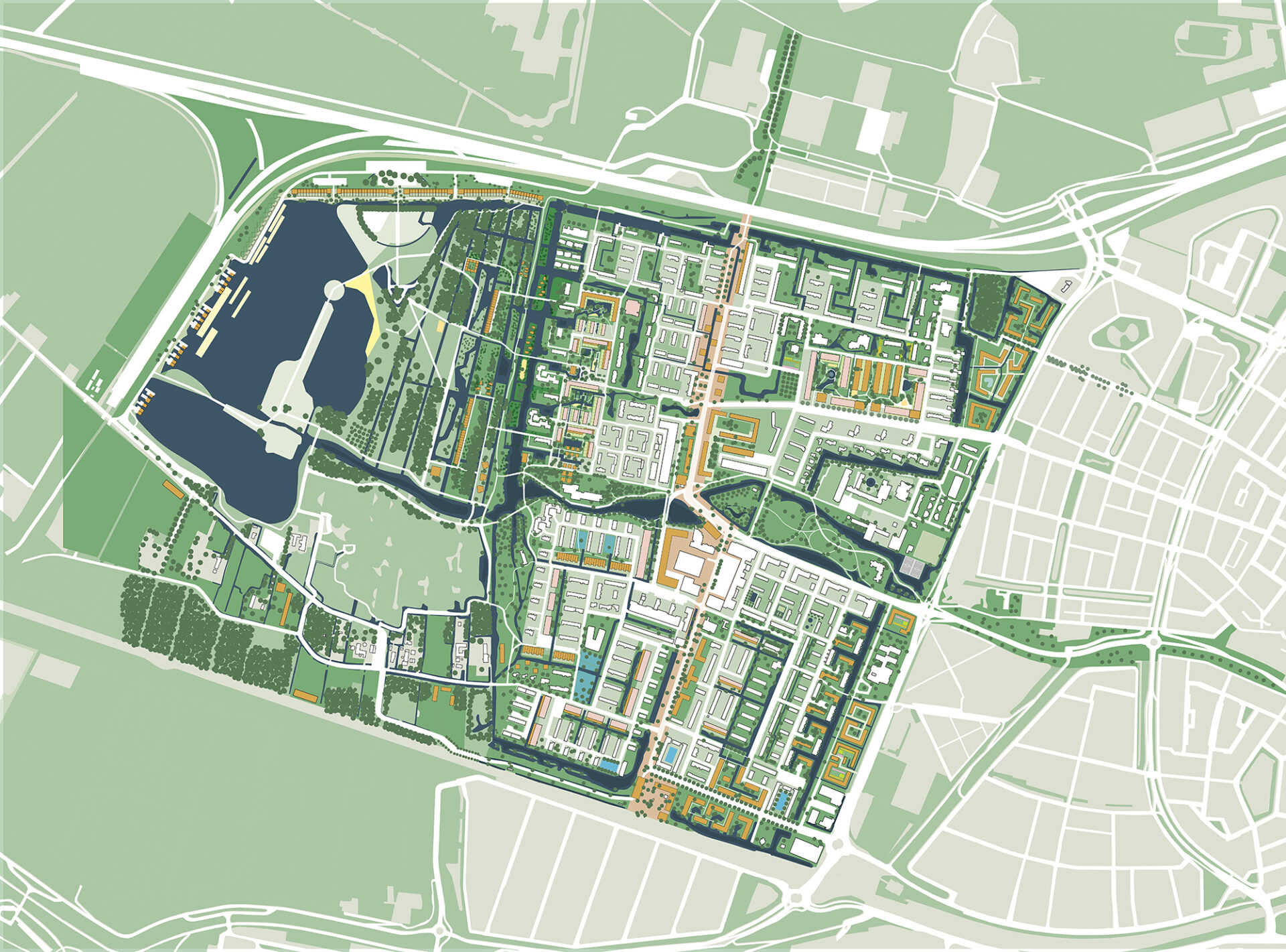
To help Westwijk and its residents take root, we use the following five strategies:
From floodings … to a climate-adaptive living environment
Westwijk was built in the 1950s on a thick layer of sand without any relation to the peaty ground. By excavating the sand layer in the public space, adding much more surface water to the neighborhood and raising the Krabbeplas area in strategic places, attractive and climate-adaptive residential environments with limited subsidence are created.
From isolated … to connected
In addition to the interweaving of Westwijk with the Krabbeplas recreation area, the connection with the new metro station must also be strengthened. What is needed is an entrance square, a station development with housing and an improvement of the north-south axis that also establishes the link with the Broekpolder.
From skimpy green … to green with value
By better attuning the greenery to the water-rich soil condition, less maintenance will be required and the ecological quality will increase. A greater biodiversity goes hand in hand with a more recreational qualities and attractive walking routes. The green can also be used functionally due to its water purifying capabilities.
From uniform housing … to a diverse mix
Our plan focuses on a varied housing stock with an emphasis on more ground-based housing in the private sector. In Van Tijen’s urban stamps, the necessary adaptions because of the energy transition are used to realize a combination of demolition, new construction, renovation and transformation. In the new development locations on the edges of the neighborhood, a combination is also being sought between homes for young and old, both in the private sector and in social rent sector.
From social isolation … to communities
We are committed to stimulating communities. Communities consisting of residents with a mix of economic strength, age and family situation. Communities that feel connected to their immediate living environment. In addition to the housing supply, the design of the public space plays a decisive role in the creation of these communities.
The deployment of the various strategies provides the ambition map for the Nieuwe Westwijk. This map is not a blueprint, but a dot on the horizon to work towards. Based on two prototypical case studies, we show how this ambition can be put into practice.

Wetering: Core of the neighborhood
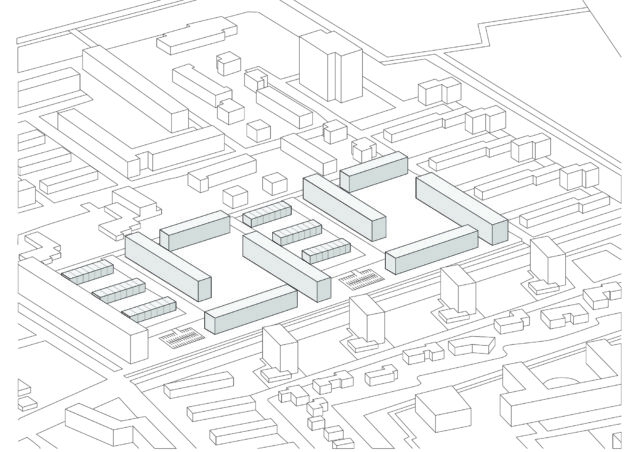
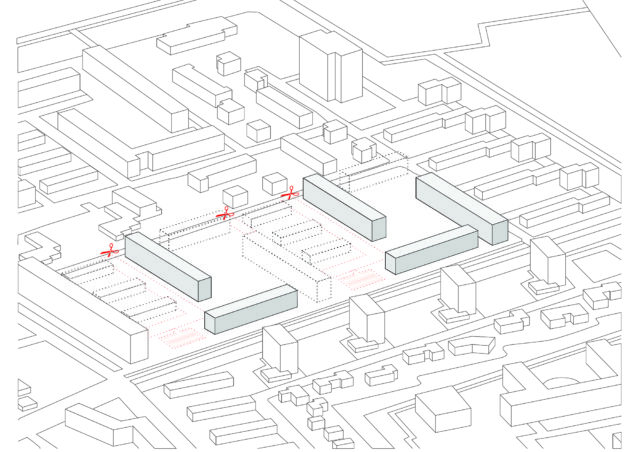
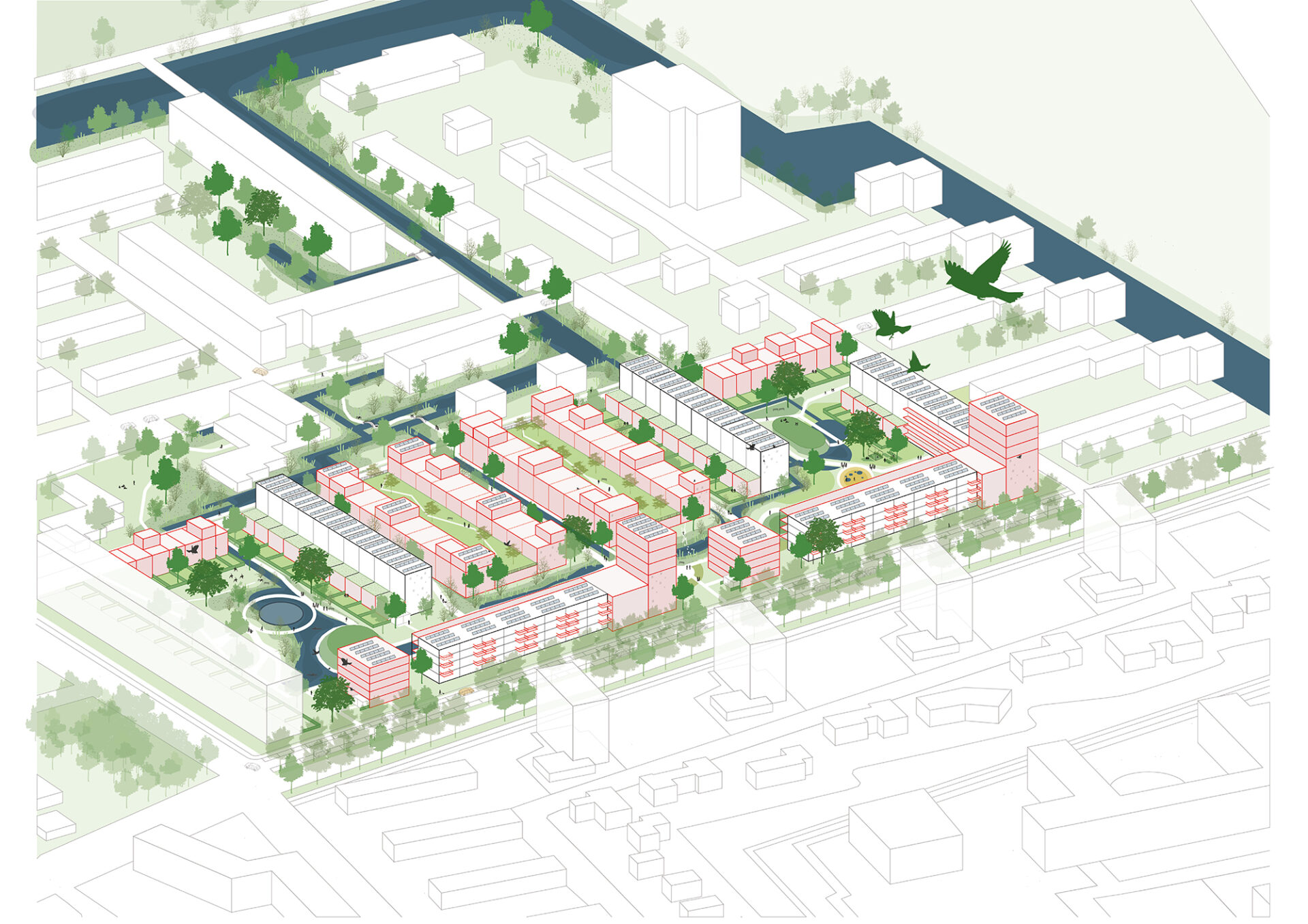
In the core of the neighborhood, stamps with one-sidedly oriented residential blocks and an indefinable public space currently dominate the image. By demolishing part of the residential blocks and replacing them with ground-level homes and transforming some of the blocks into homes for families and the elderly, a rich mix of housing types is created. In the public space, a climate-robust, connective and biodiverse outdoor space is created by cutting roads, excavating soil and connecting waters. In the south a more urban wall is being created by the addition of life-course-proof apartment buildings.





Lage Weide: Connection with the landscape
The current situation is characterized by a hard division between landscape and neighborhood. They are separated from each other by a wide watercourse without bridge connections. Our approach is to interweave landscape and neighborhood and to connect both with the natural wet soil condition. This creates a connecting water landscape that forms the basis for new living environments. The current homogeneous housing stock in the stamps is supplemented with new housing typologies with an emphasis on ground-based family homes. To this end, both new constructions (after demolition) and transformation of the existing flats are applied. In order to create more water, ground is excavated. Excavated soil is used to create mounds for a mix of recreation and housing in the landscape.


Ring around Krabbeplas
In order to co-finance the large-scale transformation of the public area of Westwijk in particular, we see an opportunity to make a limited number of specific forms of housing possible in – and especially around – the Krabbeplas area. The condition is that living remains subordinate to recreation and that the residential buildings make a significant financial contribution to the transition of Westwijk. In addition to the residential enclaves located on mounds in the transition area between landscape and neighborhood, we are also providing noise barrier houses along the A20 in the north. Together with water houses on the west bank of the Krabbeplas and a series of CPO residential areas on the southern polder ribbon (Zuidbuurt), a new route around of Krabbeplas is created.


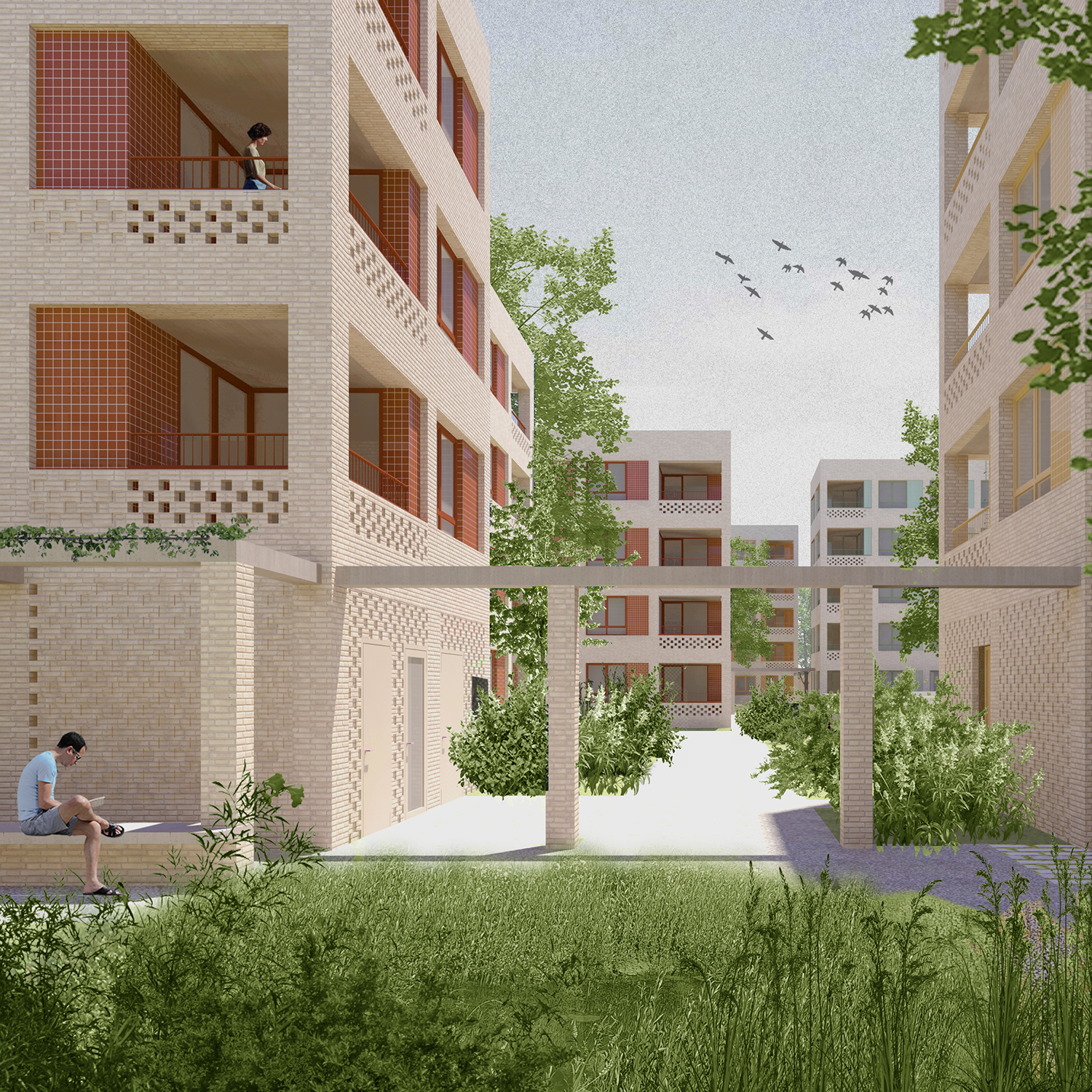

Rozemaai at home
Rozemaai at home is a plan for 140 social houses, 30 medium-priced houses, a day care center, commercial facilities and an array of public spaces. The site is part of Rozemaai, a postwar extension district of Antwerpen in modernist tradition, that is undergoing a massive transition. A masterplan by Buro Lubbers for the whole district includes a new natural park along a re-opened creek, the Donkse Beek. The jury, chaired by city architect Christiaan Rapp, praised the way our winning entry – At Home in Rozemaai – relates to the fragmented urban context and in particular to the new landscape of the creek’s valley.
The main contradiction in social housing today is the tension between the necessity for standardization on the one hand and the need for identity on the other. Housing blocks, urban spaces, buildings and units should all be the same for financial reasons and all be different for socio-cultural reasons. Team BOGDAN & VAN BROECK and Shift A+U has chosen to explicitly use this ambiguity in the urban scheme, the building typologies and the architecture of their project for Veld 15a in Rozemaai.
Currently Rozemaai lacks any kind element in the public space that embodies the idea of community. The question therefore is how can we create a home, both on the level of the city and the house, that combines the suburban living qualities with a landscape design that is based on strong ecological connections and accessible green spaces of quality.
“Rozemaai at home” is the result of a search for an environment in which houses and inhabitant are part of larger whole, a Habitat. Neither the modern city with its isolated machines for living nor the traditional city with its perimeter blocks, streets and squares, provide the answer in the context of Rozemaai. The answer lies in residential buildings and inhabitants that relate in an alternative way to one another, to the ground and to the landscape.

The urban scheme consists of an ensemble of solitaire blocks and slabs which together form clearly defined public spaces that balance between open and enclosed. Because of their clear definition, hierarchy and function these so called outside rooms are clearly different from the flowing and desolate public spaces of the modern city around. At the same time this new urban fabric offers enough openness for the creek valley to be experienced from the houses and for this water landscape to physically enter the project. In this way the most important feature of Rozemaai, its creek valley, becomes an integral part of the daily living experience of the new inhabitants.


The proposed buildings have a relatively fine grain size. This results in public spaces and housing blocks with a human scale that allow for appropriation and identification by the inhabitants. It also leads to apartments with a lot of living quality in terms of light and view. All apartments in the blocks are corner apartment with a two sided orientation that offers views of two different outside rooms. The galleries in the slabs are relatively short and they are loaded with so called see-through apartments.

The outside rooms are clearly different in scale, function and degree of openness. The parking program is distributed across several small green parking’s along the perimeter of the site. In this way, large and desolate parking fields are avoided and in time, when car sharing becomes the norm, they can step-by-step be replaced by green. Each housing cluster has a central court with an enclosed character. The intimate quality of these residential courts is enhanced by a system of pergolas between the blocks that also articulates the entrance zone to the blocks. Lastly, a large multifunctional square connects both new residential clusters with each other and with the adjacent gallery flats.
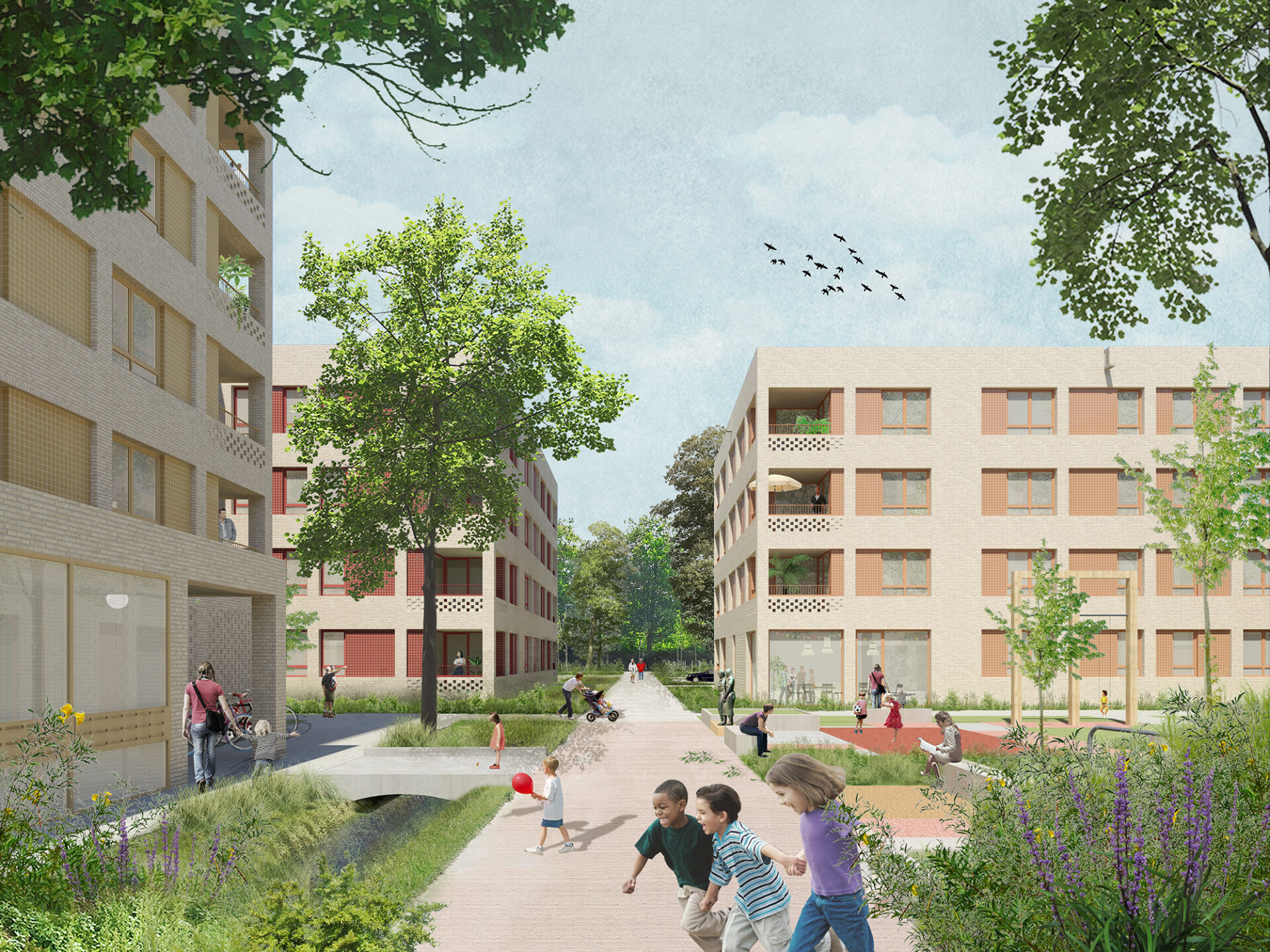
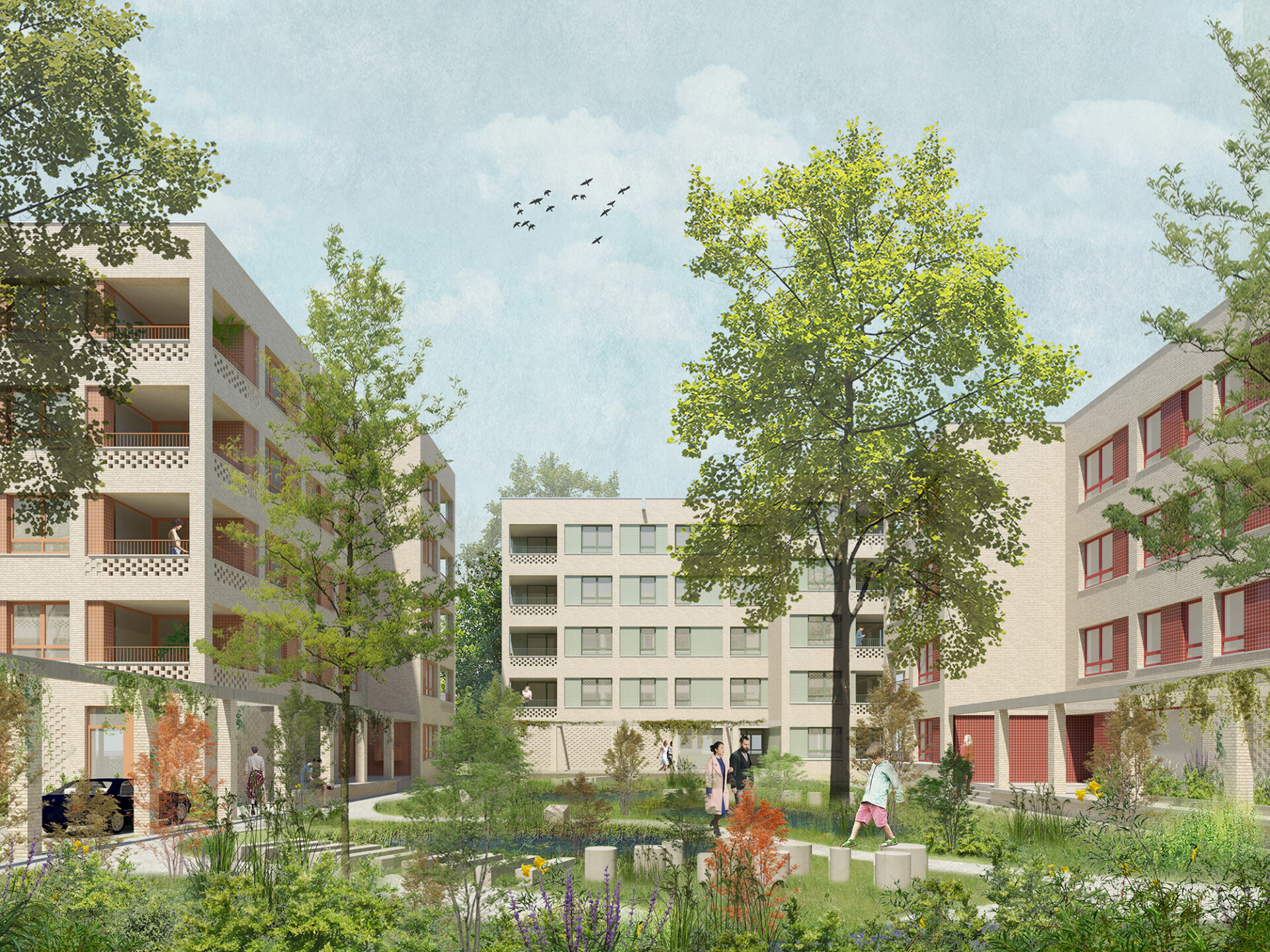


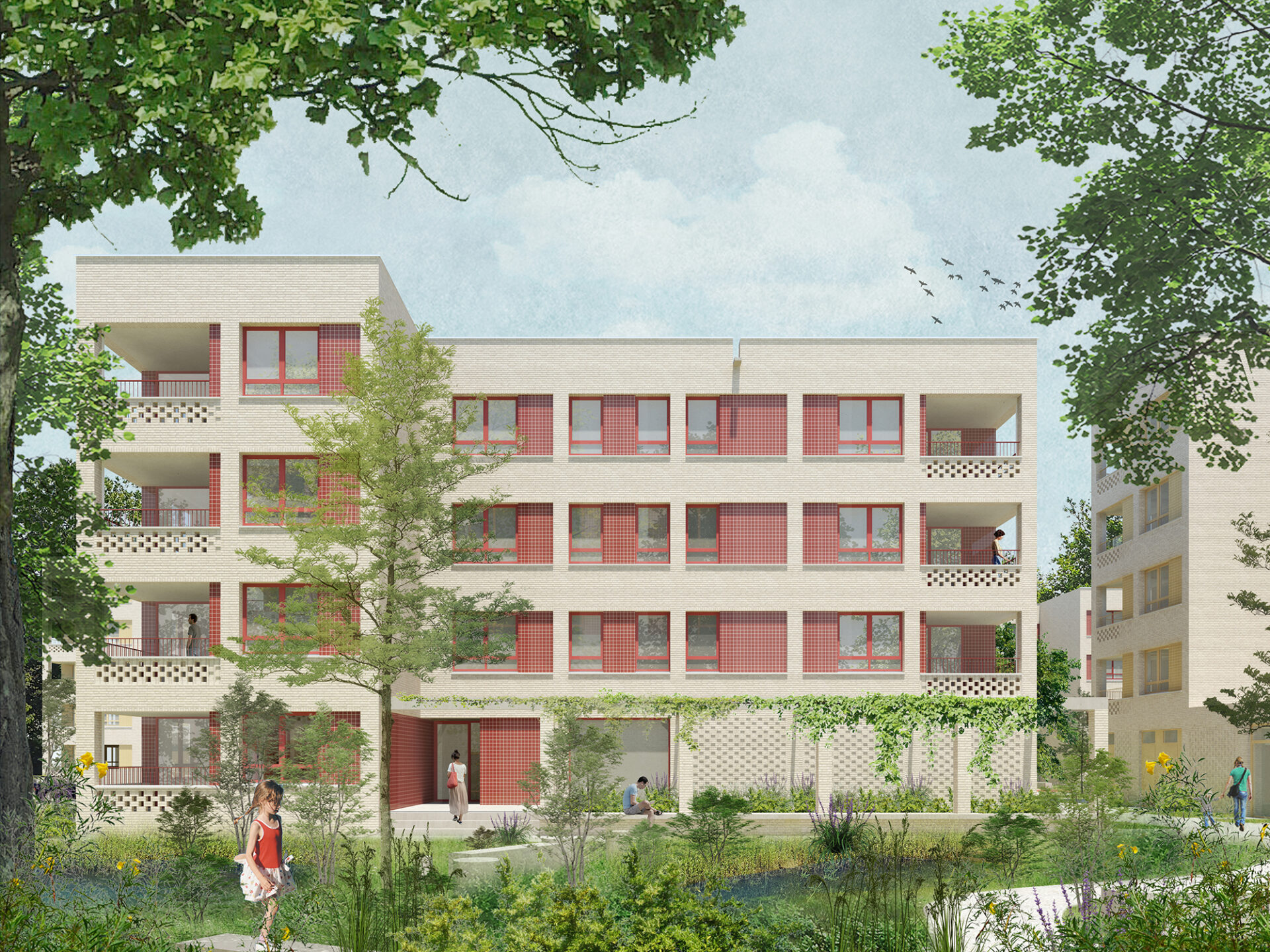
By using a common DNA for the architecture, a family of buildings is created that clearly belong together but at the same time are all unique. Both the blocks and the slabs are based on a rational typological system that allows for high degree of variations in terms of apartment types. In the blocks, each specific configuration of apartment types leads to its own building mass, that subtly differs The rational facades balance between solid and transparent, creating both an analogy and a contrast with the radical transparency of the gallery flats by Kempe Thill with which the project clearly seeks a dialogue.


D tower
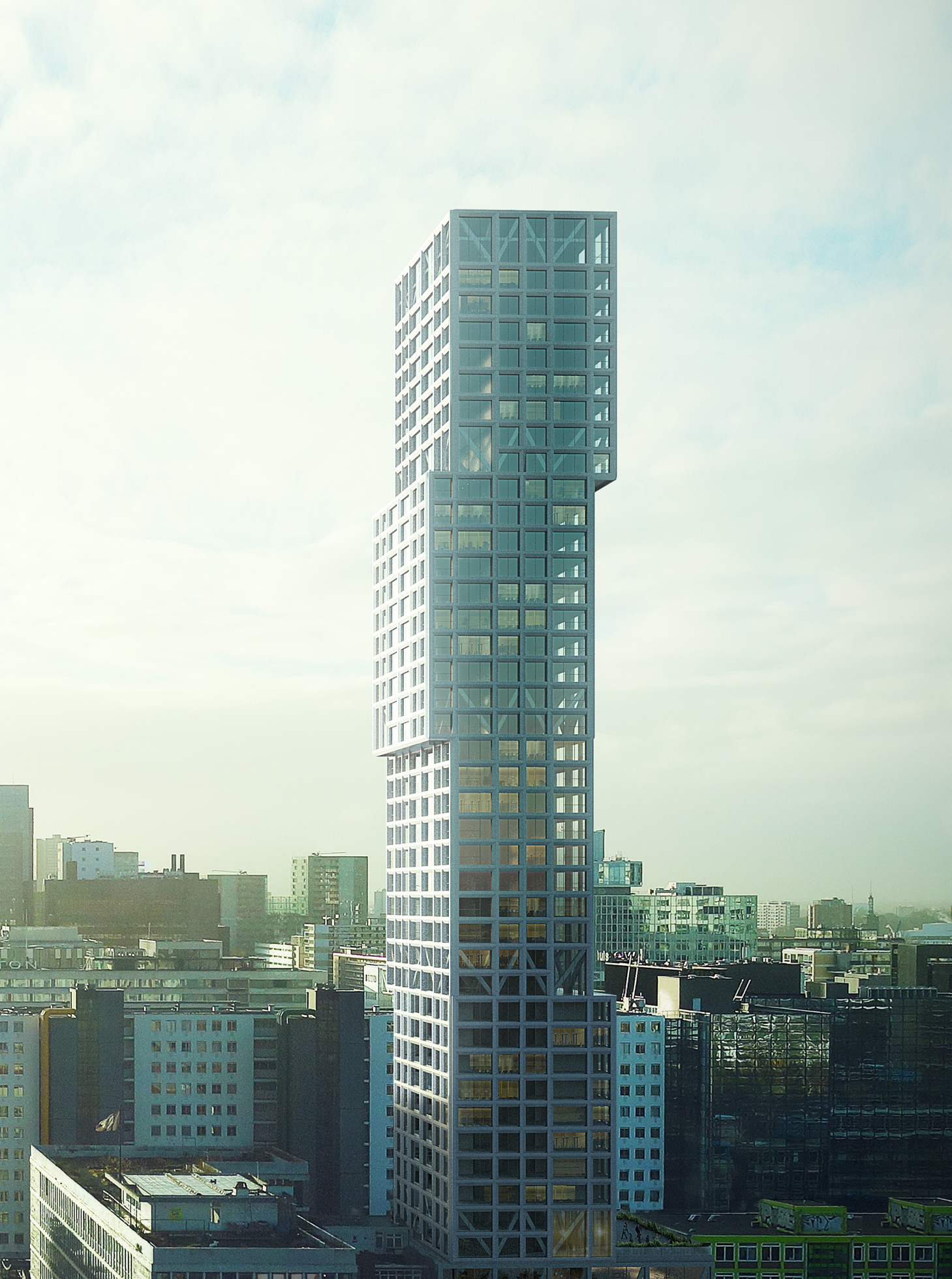
D tower proposes a high rise residential tower for the Central District of Rotterdam, one of the allocated areas for towers up to 200m. The tower relates to the existing high-rise buildings in the Rotterdam Central District, but at the same time joins the “Rotterdamse laag” of the Schiekade block. Instead of an unambiguous extrusion of the ideal residential floor plan, the tower is designed as a stack of separate volumes that refer in scale, grain size and architecture to the post-war buildings of the Schiekade block.


The tower assumes a dynamic pose with a silhouette that changes from different viewpoints in the city. D tower has a programmatic distinction between the substructure (activity) and the superstructure (apartments). The compact core, in combination with the load-bearing facade, allows a flexible layout of the floor plans from 1 to 8 apartments per layer. Due to the differentiation in size and type of homes, a rich mix of residents is possible.


The collective facilities are located at the moving parts of the tower. Here they benefit from the elongated terraces on the east, south and west. Due to their position and double height, the collective spaces are clearly recognizable. They turn the residential building into a vertical city and stimulate meeting and social interaction between the different residents.


Domūs Houthaven
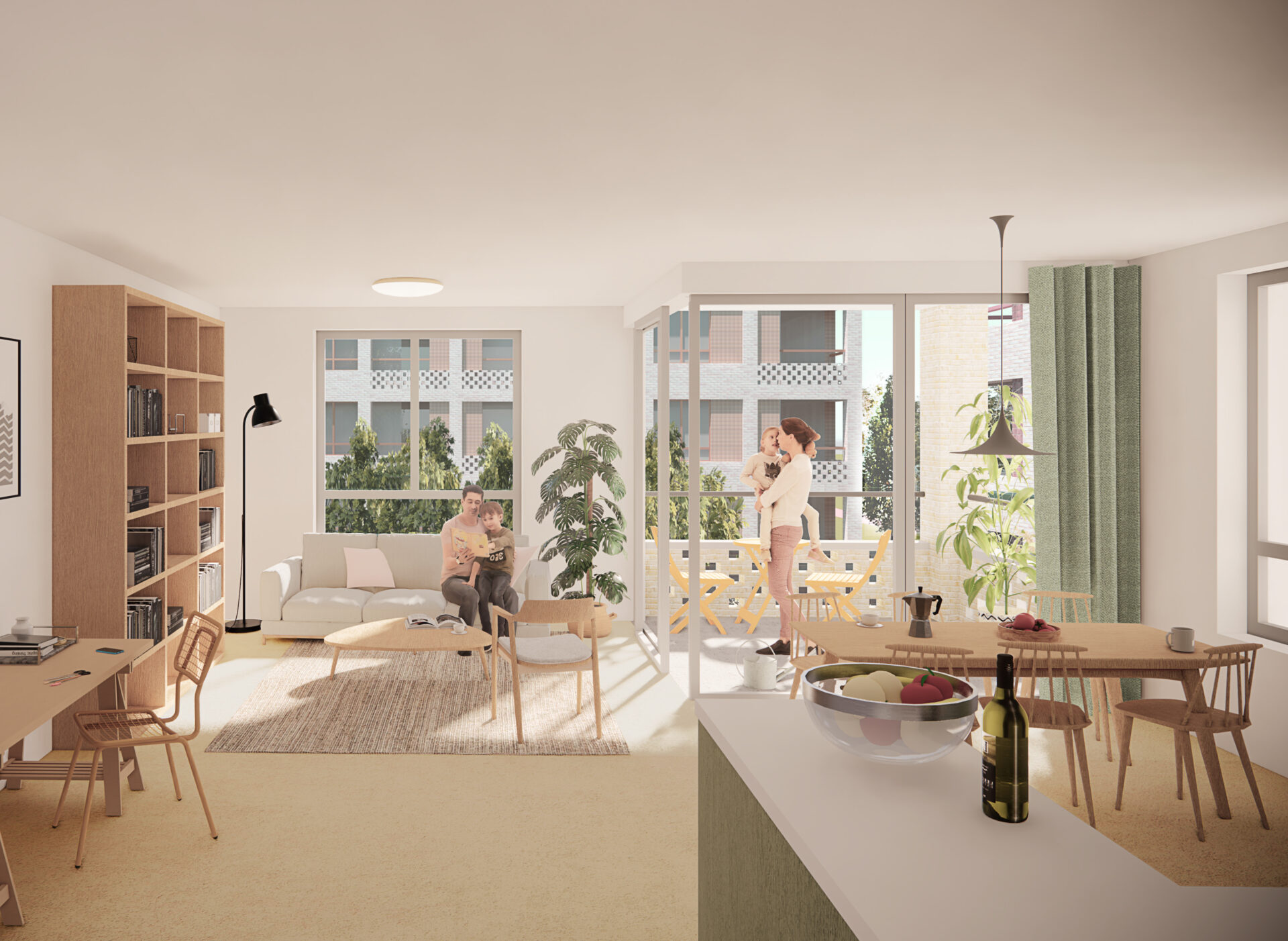
Domūs Houthaven is a residential ensemble featuring 235 smart compact apartments and an array of shared facilities on a plinth of commercial spaces The complex is designed as a family of interconnected blocks surrounding a raised communal courtyard. The interconnectedness and the generous collective facilities encourage interaction among residents. In Domus, you live alone, or as a couple, without being alone.
The ensemble forms the final keystone of the superblock on the northwest edge of Amsterdam’s Houthaven, which is in the process of being developed into a new residential neighborhood.

Domūs Houthaven is the first realization of Domūs Living, an innovative urban concept developed by Shift, Synchroon and …,staat creative agency. Domūs Living combines compact apartments with the benefits of shared amenities, public services and a community nearby. It enables sustainable high-density residential buildings that use space, energy and materials efficiently. The concept targets the growing group of one- and two- persons households that put social contacts and experiences above ownership. They are open to different forms of sharing, not only because it is sustainable but also because it is fun and valuable. For example, because it prevents loneliness. Domūs is also responding to the growing group of people who like to work “from home not from home”.


The volumetric design of the project follows the principle of unity in diversity. The individual blocks – with an own grain size, facade rhytm and color – feature distinct apartment typologies and access. This differentiation enables identification with one’s own home within the large-scale complex and reduces the project to a scale consistent with the characteristic grain size of the new urban district.


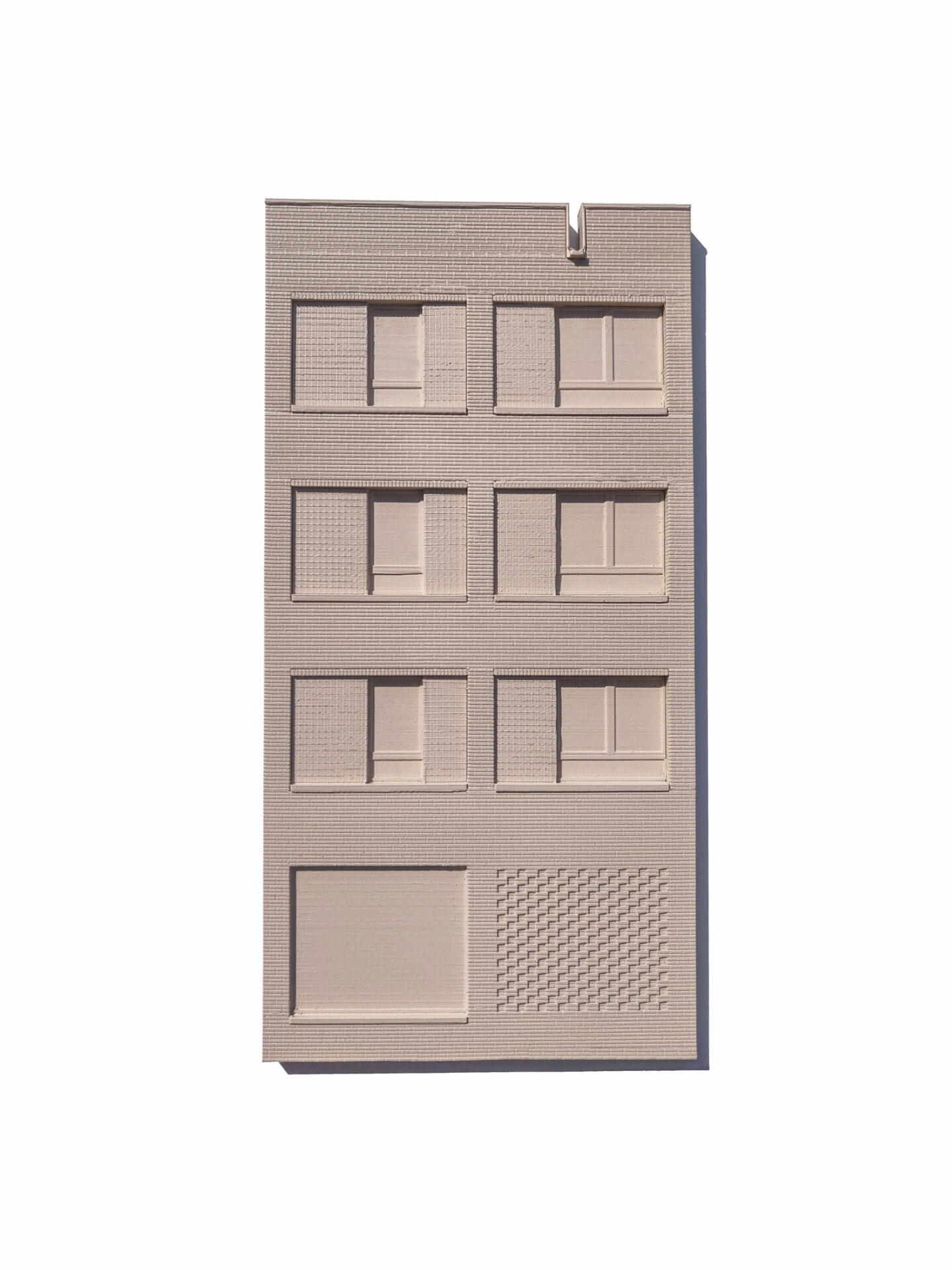
To strengthen the cohesion between the different building volumes, they share the same architectural DNA. The choice of rational brick volumes with generous facade openings and robust detailing refers to the industrial character of the harbor area. Each building volume has its own masonry grid with varying depths of recesses. These grids bring together mass and transparency in such a way that daylight, views and privacy are tailored to the specific type of apartment per block.


The building volumes are visually separated and at the same time physically connected by a common circulation space. Placing the blocks slightly apart creates entrances and corridors with plenty of daylight. Not only do they connect all the dwellings, they also open up a range of communal facilities as well as the communal garden for all residents. Placing two blocks further apart on the south side creates an opening that provides the garden with sunlight and views. To maintain connectedness within the ensemble, the gap is bridged by an aerial bridge on the fifth floor.


The communal facilities are geared toward various forms of everyday use. All residents have access to a multifunctional work- and livingroom next to the communal garden and a spacious cooking studio with roof terrace on the fifth floor. The work- and livingroom forms the social heart of the residential ensemble. The space is open and flexible and at the same time homely. Shift designed four large freestanding pieces of furniture that function as room dividers. They create different places and allow multiple activities simultaneously without affecting the continuity of the space. People work, eat, play and hang out. In addition, both large and small group activities take place. The integration of a laundromat and the manager’s office bring additional hustle and bustle.


The roof pavilion accessible via the air bridge houses a cooking studio and a guesthouse. The cooking studio is designed as a glass house with an unobstructed view of the Spaarndammer neighborhood. It is equipped with a professional cooking island and seating for groups both inside and outside on the roof terrace. The guest room is equipped with a bathroom allowing residents to have their guests stay here independently. In the belly of the building, under the communal garden, is a generous bike shed for nearly 500 bikes and a double-level parking garage with 70 parking spaces including 5 for shared cars.


communal facilities and apartment types

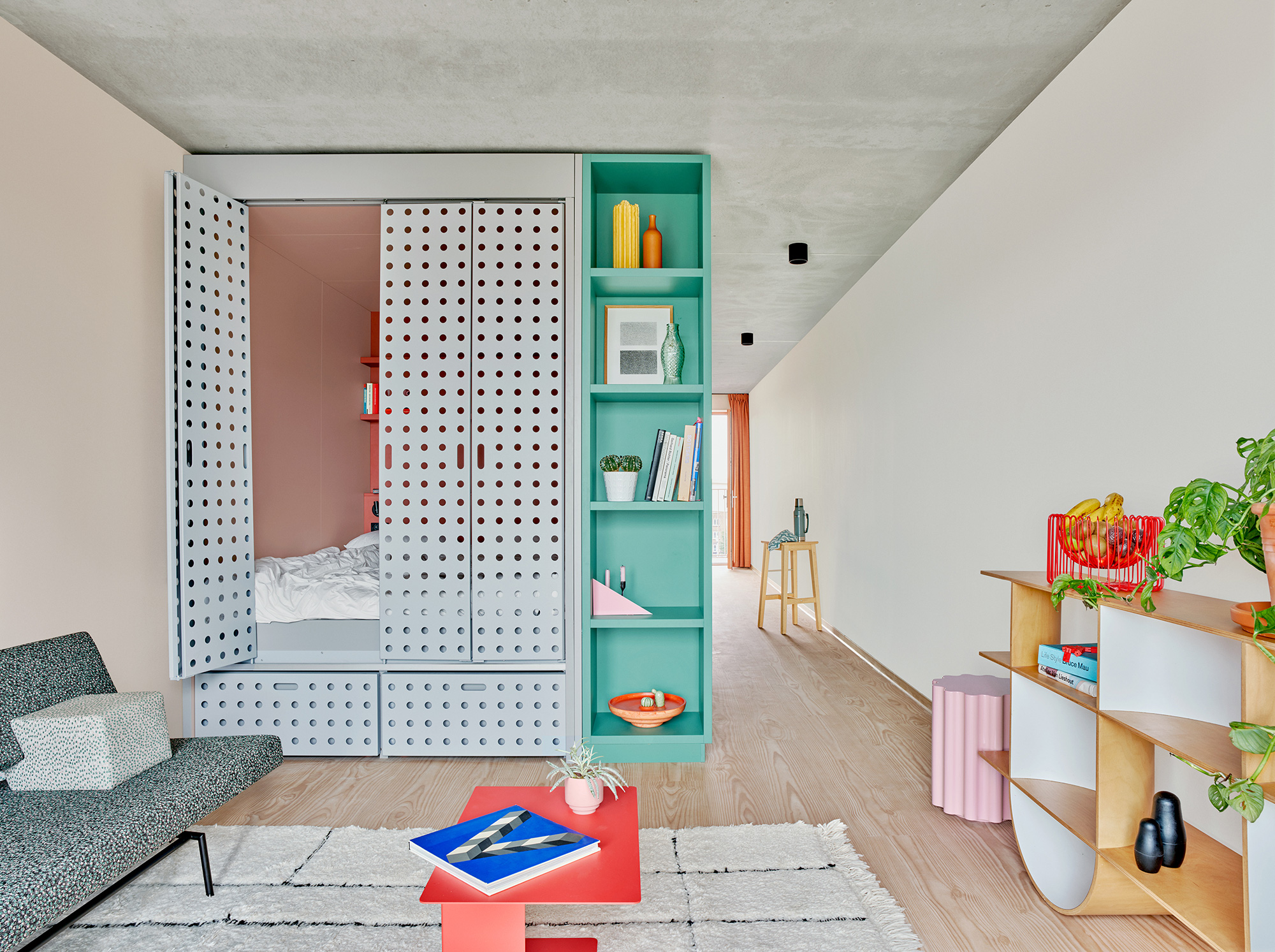
All apartments offer a high degree of spaciousness and flexibility, despite their compact area of between 43 and 60m2. They all contain a smart living core consisting of a configuration of modules for (open) kitchen, bathroom, closet space and bed alcove. In this way, the remaining space, the actual living space, is maximized both in size and in terms of use. Each module of the smart core has its own color. This gives the furniture a sculptural effect that underlines and enhances the specific character of each apartment type. The polychrome furniture piece contrasts with the concrete ceiling that has been left untreated.


The alcove bed frees the home from a bedroom without lapsing into the solution of a regular studio apartment where you actually live in your bedroom. When the alcove doors are closed, you have one large living space. Once the perforated doors of the alcove are open, the space transforms into one large bedroom. Such a solution makes use of the fact that the privacy offered by separate bedroom is not an issue in single-person household or cohabiting couples.


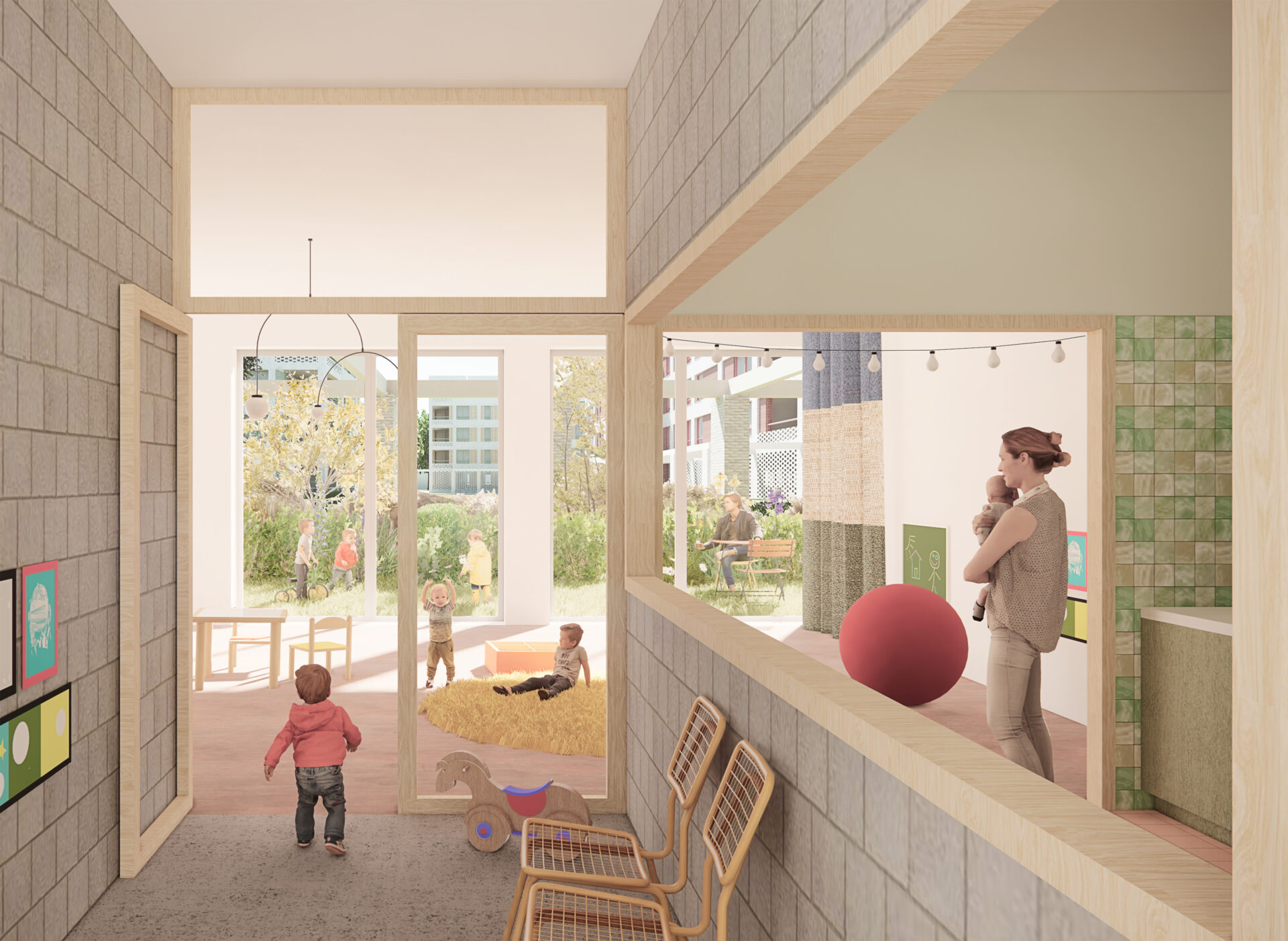
The plinth of the ensemble seeks to connect with the neighborhood by providing spaces for public amenities. The first functions to appear here soon will be a gym, a daycare center and a Domus café. This café is connected to the collective work- and livingroom and establishes a symbiotic relationship with it.


Matryoshka house
Matryoskha House transforms an early 20th century townhouse into two high-end apartments by radically opening it up. Situated in the center of Rotterdam, the house was in a derelict state due the previous owner’s conversion of it into a sub-standard workers’ hotel. Bothered by the neglect, a neighbor acquired the property and gave Shift architecture urbanism the commission to give it an extreme makeover.

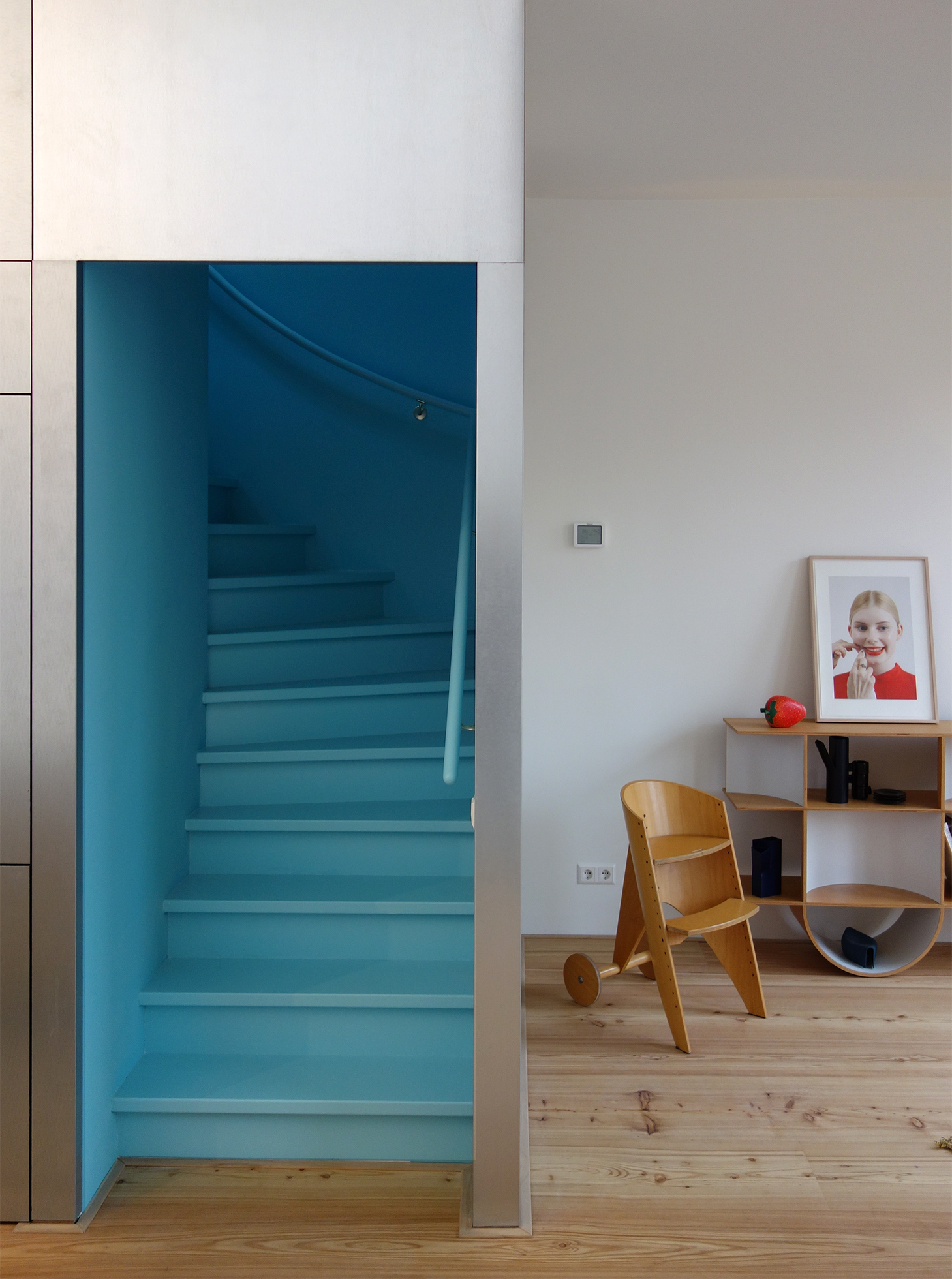
The house was stripped to nothing but its envelope and flooring structure, the later partly removed in each unit to create double-height living spaces. The private spaces are suspended in these tall spaces creating the matryoshka effect: a box within a box.
The lower apartment features double-height spaces at both the front and rear façade, isolating the volume of the bedrooms and bathroom as floating in its center. The two voids provide the living areas of this 14m deep half-basement level with plenty of daylight.
The upper apartment is conceived as an inversion of the mass-void relationship of the lower apartment. Here the bedrooms, rather than the voids, are placed against the façades, opening up a spectacular double-height space at the center of the apartment, brightly lit by a large skylight.


The historic elements of the street façade were restored. The rear façade was removed entirely and replaced by a portal frame construction in galvanized steel providing structural stability. A large sliding door and three floor-to-ceiling double doors ensure that both living rooms can be fully opened up towards the garden.

In the center of the apartments a single galvanized steel cladded volume incorporates stairs, toilets, storage spaces and kitchen equipment. A free-floating kitchen island finished in white tiles stands at the heart of each apartment.


The interior of the house is a dialogue between old and new, contemporary and traditional, polished and rough, finished and unfinished. When possible original details of the old house were preserved.
Brickwork was left exposed and roof trusses left bare, stained glass window panes were restored and placed within new frames. Warmer materials and colors balance the use of reflective metal, concrete and black steel.



5TRACKS
Following the arrival of the high speed train from Amsterdam, the entire station district of Breda has undergone a complete urban renewal. The new world-class station terminal now bridges both sides of the rails, connecting the previously isolated northern side of the city in a seamless way to the historical centre. That gives the chance to redevelop the (former industrial) sites situated north of the rails into a prolongation of the city centre, a new meeting place of the city. 5TRACKS is one of them, forming the final piece of large scale development on the west side of the station (urban design by Claus en Kaan architecten, 2010). It accommodates a mixed program with living, working, recreational and commercial facilities. The high density and varied program creates a dynamic city environment which promotes the sharing of facilites by different users and urban encounters.

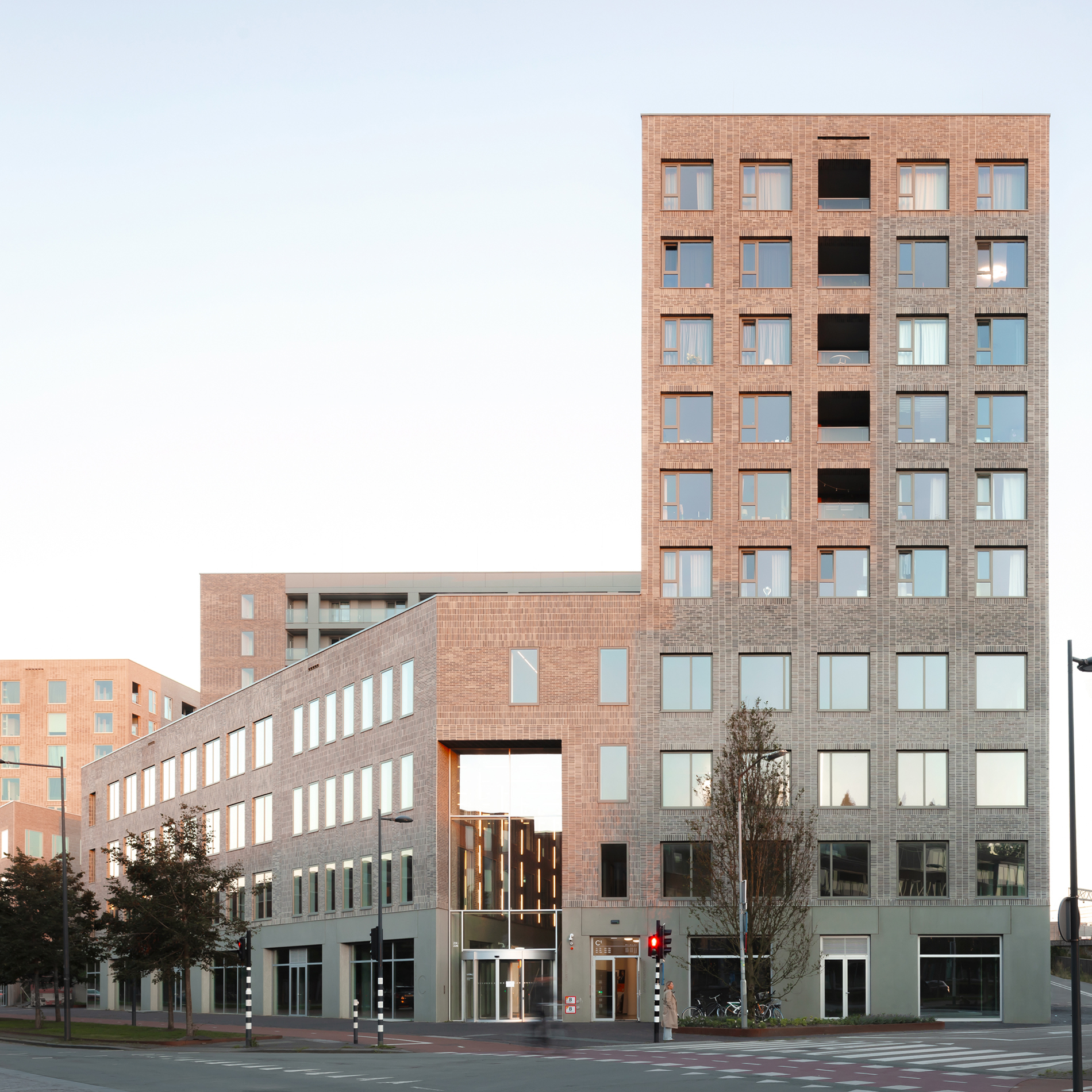
5TRACKS is designed as an ensemble of three buildings with two identities: one towards the city and one towards the railway. At the north side, along the new Stationslaan, the ensemble presents itself as a continuous city wall that relates in scale, material and height to the oppositely situated neighborhood Belcrum. At the south side, along the train tracks, it features a sequence of higher triangular buildings in a park, aligned like a zigzag “hedgerow landscape”. The design follows closely the guidelines of the masterplan by Claus and Kaan architects, which envisioned the “hedgerow landscape” along the railway as a means to create a qualitative entrance to the city. This artificial scenic landscape formed by buildings and vegetation elements in the park ensures depth and a layered perspective for the train passenger and a green buffer for the users of the buildings close to the rail.


The spatial and programmatic organization contribute to the two-sided orientation of the plan, activating both the street side and park side. A unitary plinth with bars, restaurants and other commercial functions towards the Stationslaan makes for a lively route in between the station and the Court building, situated further to the West. Behind it and stretching until the rails, a parking garage occupies the entire ground floor. On top of it, three triangular building blocks house offices and the hotel. Their northern façades build up the 16m tall profile towards the Stationslaan, while the southern façades create the zigzag “hedgerow” structure, which opens up with collective facilities towards the park. The triangular blocks are topped by V-shaped slabs towards the park which contain different types of apartments and hotel rooms. These are all oriented to optimally profit from the sun and view towards the historic centre of Breda and make use of the collective gardens on the roof of the triangular blocks.


plans
One of the challenges of the project was to make sure that the park is not just a decorative piece of green trapped in between the buildings and the rails, but an integral part of the city.
The organization of program in three distinct buildings leaves room for generous connections between the Stationslaan and the higher situated park. The height differences are bridged by inviting stairways and ramps where the vegetation is literally pulled down to announce the park at the street level. The parking deck is covered with a 50cm -90cm earth substrate in which a vegetation of grasses and groups of birch trees are ordered to form the hedgerow structure. Several thematic squares featuring terraces, outside working and meeting places charge the park with activity.


Additional to the public connections in between the volumes, each buildings has a central atrium which relates to both the park and the street. The atria are conceived as voids sculpted in the building mass and separated from the outside with very transparent facades, so that indoor and outdoor run seamless into each other and the park and the city literally meet. The various collective facilities situated here provide synergetic moments where the resident, the entrepreneur and the passerby come in contact with each other.


Within the project, recycled ceramic stone strips from Stonecycling will be applied on a large scale for one of the first times in the Netherlands. With this application, around 385,000 kilos of construction waste material will thus be incorporated into the project’s facades. The wide variety of “masonry bonds” maximises the potential of the stone strips. The use of sawn strips makes full use of the bricks, but also creates a differentiated image of baked and sawn strips in the façade.


Klaksvik United
Klaksviks sublime location has become its weakest link. Present day Klaksvik is a spatially divided town. Ironically it is precisely the spectacular estuary location, and the way it is occupied, that causes this separation. Both the bay and the central isthmus act as barriers that split the town into two linear settlements with little connection to the water.

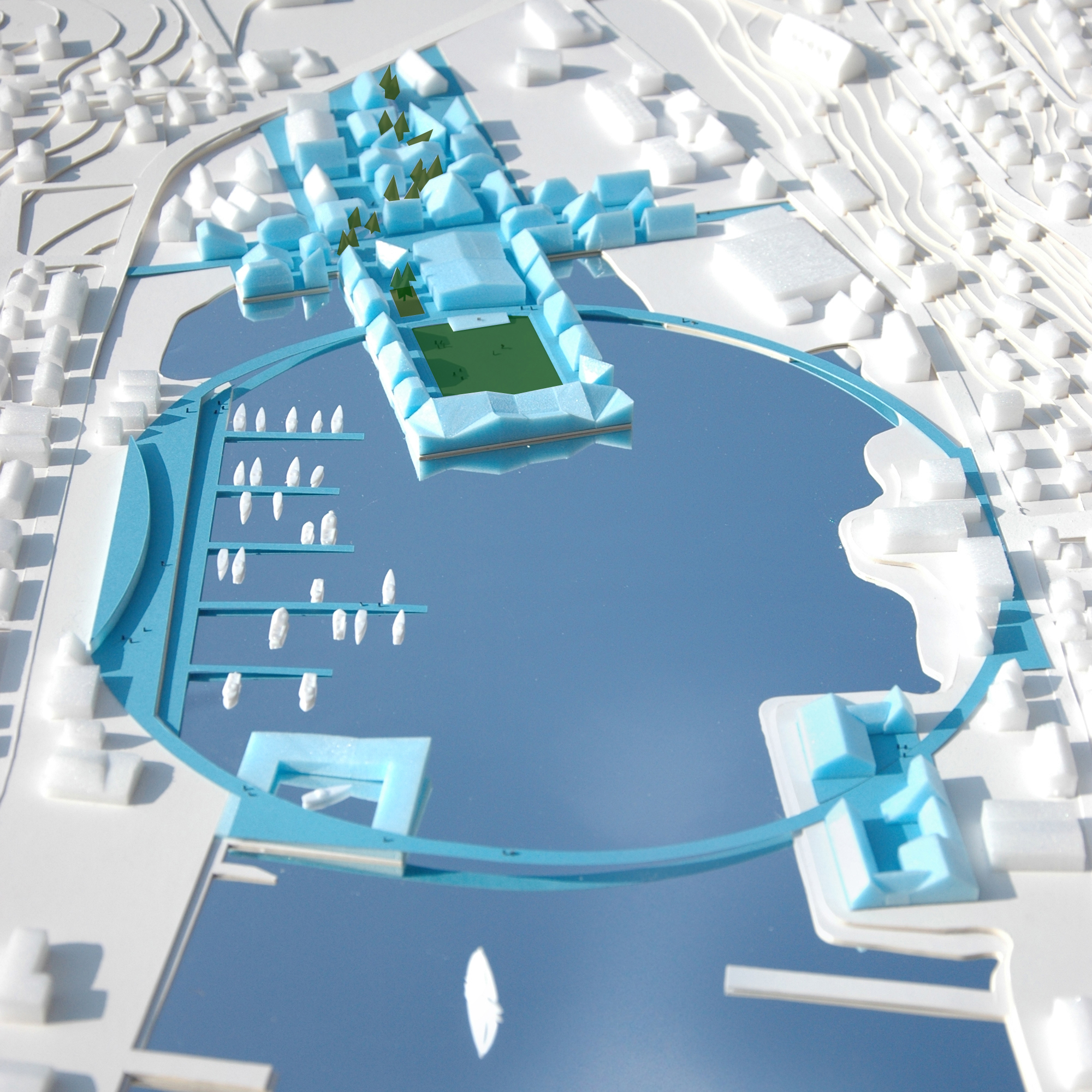
Our proposal, Klaksvik United, aims at creating a new town center that unites Klaksvik with itself and its waterfront. Two strong forms, a ring and cross, are used to transform the open water and the empty center from barriers into connectors and from non-places into places. They function as fixed armatures for flexible city center developments. Their unifying gesture opposes ánd incorporates the urban fragmentation of the site and creates multiple links between east and west, north and south, water and land, old and new. The new center makes Klaksvik into one and celebrates its unique location.


The Ring reinforces Klaksvik’s relation to the sea by connecting both parts of the town an uniting them with the water. It functions as a pedestrian boardwalk of exactly one kilometer long that links a variety of waterfront programs, both new and existing and defines a new water square. In a mere 10 minutes walk one can experience the vital role that the sea plays for Klaksvik. The ring connects the outdoor event area of the new cross with the existing marina, the ferryboat terminal, the second landfill and the existing shopping street on the south bank.
The ring transforms the bay experience into Klaksvik’s main asset.

The Cross, consisting of various spatial typologies designed to minimize the disturbing winds, establishes two crucial connections.
Main street runs from North to South and connects the separated halves of Klaksvik. Its mixed use program of retail, services and housing creates a lively street that forms the backbone of the cross development.
In the other direction, a central square with public facilities and a wind free labyrinth neighboorhood connect the green isthmus with the bay and reestablish the relation of the old center of Klaksvik with the water. The central square is surrounden with a multifunctional event hall, the administration building and the tourist information, which protect it against the wind and use it to program cultural outdoor festivities, year round. The intimate and wind free labyrinth invites for strolls along its shops. Existing buildings are integrated in a compact urban tissue. The small block size allows for a flexible infill with a variety of retail and leisure programs combined with housing.

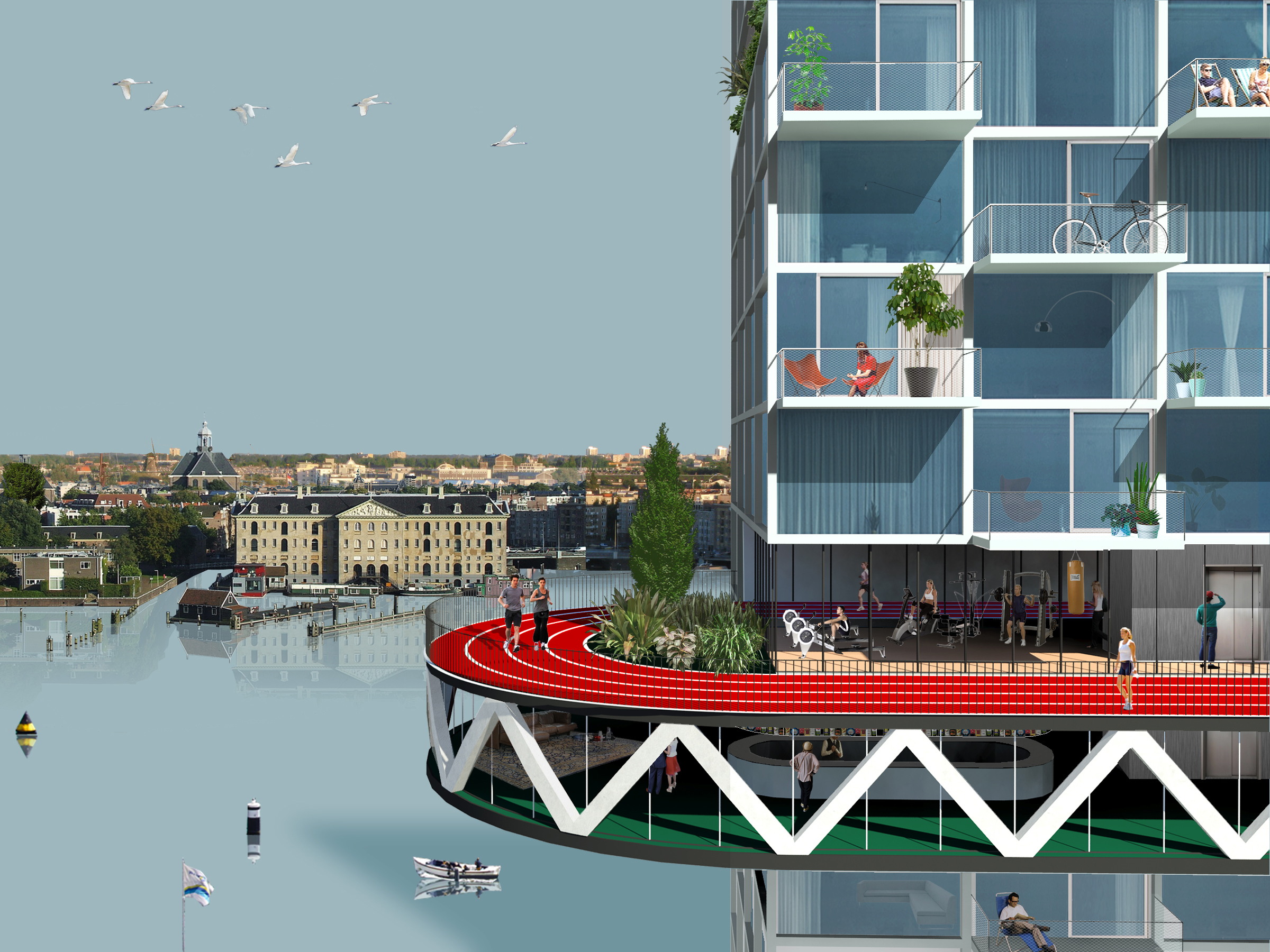
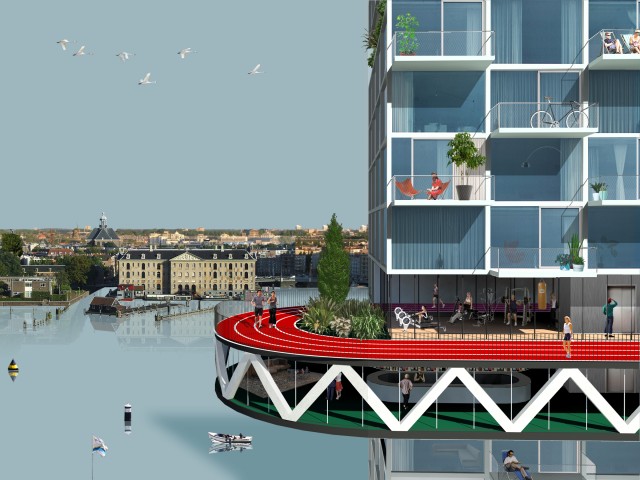
XS Deluxe
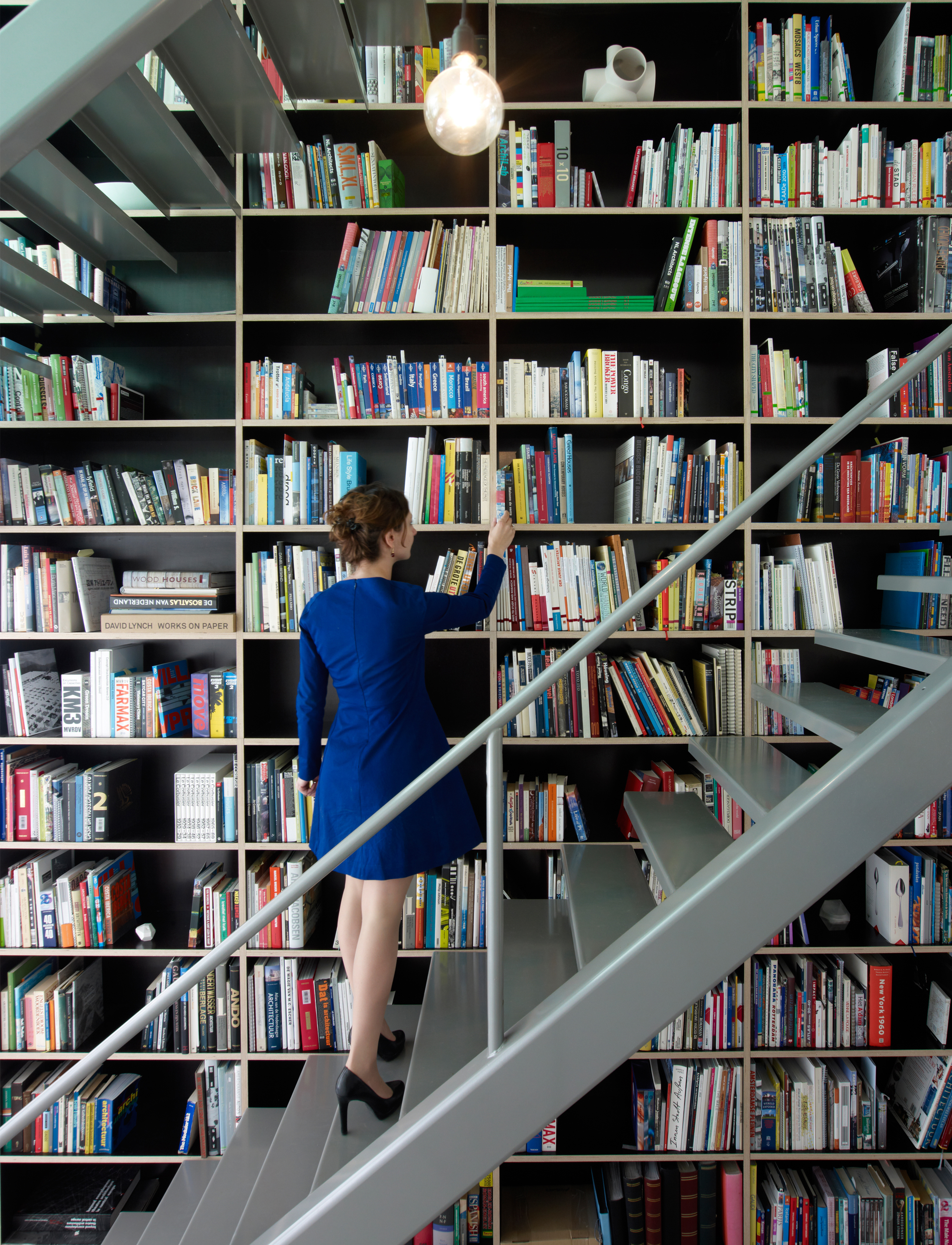

Vertical Loft
This so called do-it-yourself dwelling in the centre of Rotterdam is part of a bold experiment initiated by the municipality to revitalize dilapidated urban areas. Run-down pre-war dwellings are renovated on the outside and brought back to their monumental appearance, while the interiors are stripped bare.

The empty shell dwellings are primarily bought by enthusiastic young people who transform them according to their specific needs, desires and budgets. Real estate developers have picked up the initiative and a new demand driven market of urban housing has been generated in recent years. The result is a growing number of contemporary custom-made dream houses within the uniform old fabric of the traditional nineteenth and early twentieth century city.

Vertical loft is a house without walls, where the three floors are stitched together into one continuous space. One oversized closet connects all the floors and functions as a storage device for the whole house. This piece of XXL-furniture, measuring 10 meters in length and 9 meters in height, replaces the load bearing middle wall of the original house. Its modular system integrates kitchen appliances, bookshelves, wardrobe, and a walk in closet.


The introduction of a central void reinforces the presence of the closet. The void enables diagonal views through the house in which the closet is experienced in its full height. It also makes daylight penetrate far into the 14 meter deep house. Two steel stairs in the void make the bookshelves accessible and create a vertical circulation along and through the closet.


The extreme makeover of the house is combined with a selective preservation of elements of the old casco. Industrial materials such as the phenol coated multiplex of the closet and the polyurethane flooring are balanced by the longitudinal brick wall that is left bare, the stained glass and the original doors that are restored and re-used. The roughness of the wall, full with traces of the past, tells stories about the continuous makeovers that the house has undergone in the last hundred years.


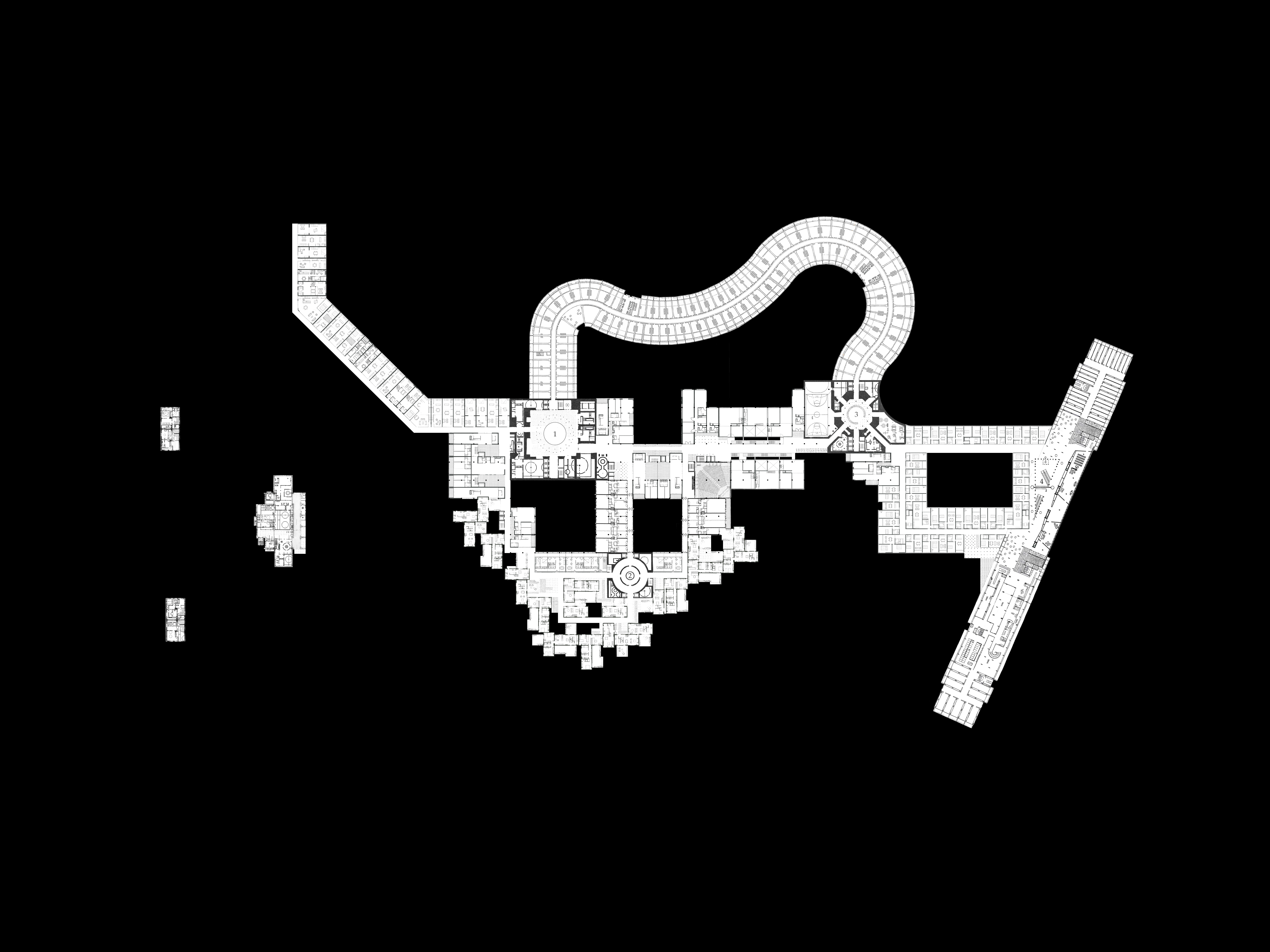

The Acme Manifesto
The Europan assignment asked for the conversion of a former industrial site in Vienna’s fragmented suburban south into an exemplary housing complex, manifest for the diversity of contemporary living models.

At the time of Red Vienna, the city was home to one of the most impressive housing strategies in modern European history. Vienna realized a housing project of monumental scale, building over 400 communal blocks, known as “Hofs”, progressively redefining the potential scale and ambition of large housing developments. “Hofs” continued to be implemented well into the 70’s, with substantial housing developments radiating out of the city in all directions, many of which are clustered near the competition site. In this context, the restriction of the site to only 400 dwellings seems woefully underdeveloped. Our proposal offers 700 dwellings which is still a very modest solution when compared to projects such as the Rabenhof which has a similar size site with nearly double the amount of dwellings.

With the unprecedented wealth of thinking and experimentation in housing of the 20th century, the question we posed ourselves was not:
‘what is the next bold statement in housing’ but,
‘how can one use the intelligence of what has gone before in a contemporary staging’

The project accumulates and reinterprets various episodes of the 20th century collective intelligence on housing, fusing it together into an implausibly rich whole. The agglomeration of typologies guarantees that differences will be exposed and nurtured. The deliberate coexistence and interconnection of types stages interaction and fosters the creation of a community. The diversity of types ensures the needs of ALL prospective tenants will be met, with the flexibility, to continue meeting their needs over the course of their lifetime and into the future.

The various typologies are merged into a specific form that responds to the site and its context, reflecting the site’s position at the intersection of the surrounding 8 island conditions. As the adjacent environment changes from industrial to small housing plots, the proposal morphs from one typology to another in response to scale, mass, height and open space. Whilst the appropriated typologies are universal, their implementation within the project is specific and a direct response to the site.


The proposal features five main typologies with hybrids emerging at points of transition. The typologies meet at 4 public cores that create epicenters of activity, housing all the public and communal uses and the main vertical circulation, connecting down to the car park. At the mid-level of the complex, all typologies are unified by a continuous circulation path.



Transformation Oude Dijk monastery complex
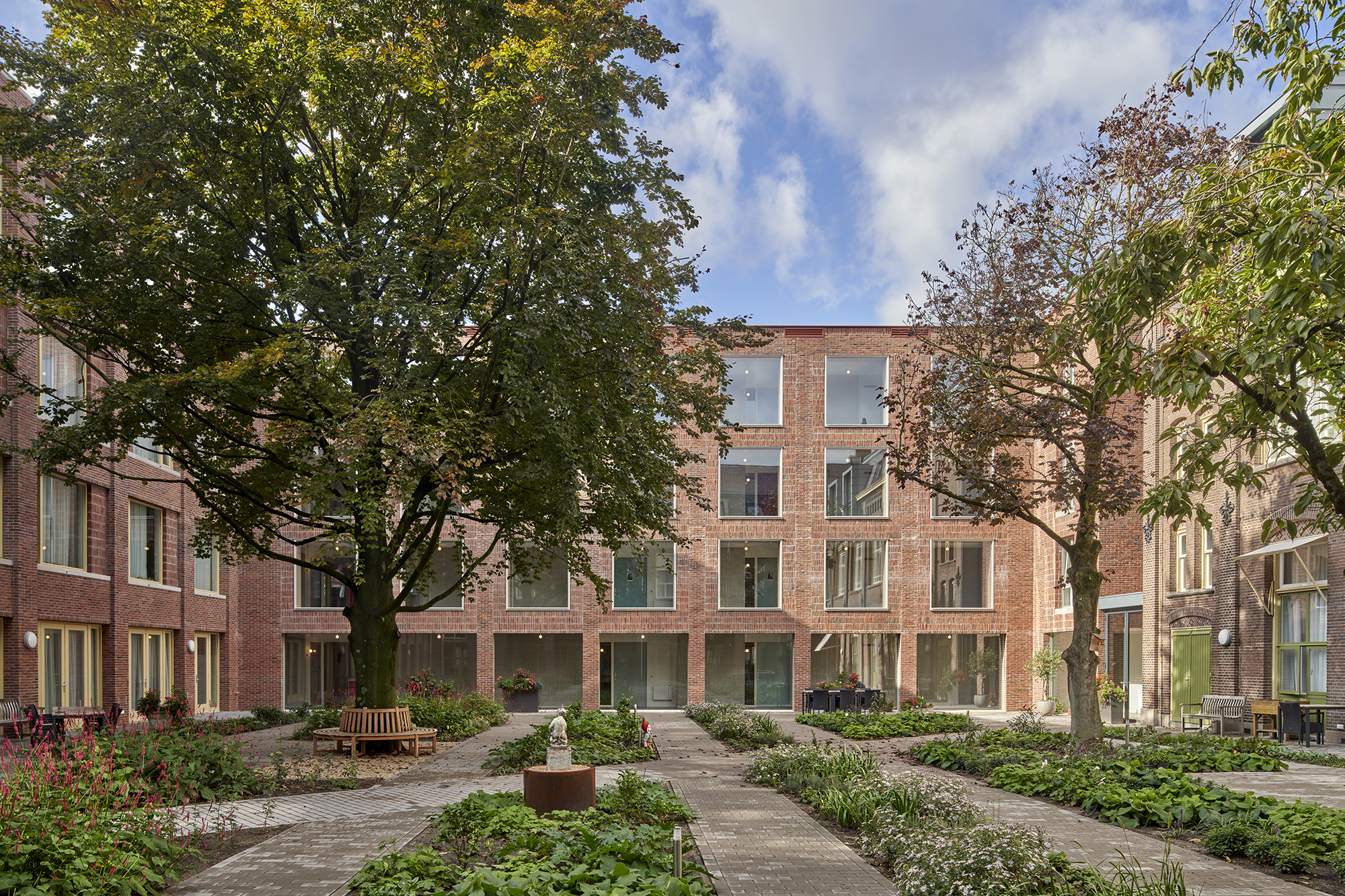
The existing complex of the Oude Dijk monastic community is not tailored to offer elderly care for the monastery’s aging population. The assignment is to realize 100 elderly care apartments in the convent garden, while preserving the continuity and the exceptional green character of the garden.

The convent of the Sisters of Charity in the centre of Tilburg is a unique ensemble formed by buildings and their adjacent outer spaces including the highly maintained garden. This large green oasis brings the much needed tranquility within the urban field. From the first establishment in 1832, the complex and its garden is undergoing a process of continuous spatial transformations following the changing needs of the sister community, with the last generation of buildings from the 1980ies. We see the current assignment as a logical next phase in this ongoing process. The challenge is to develop a spatial concept that answers the current (housing) need while anticipating the moment when the complex will be fully inhabited by laymen and the garden will be open to the public.

Despite its central location, the complex has a limited physical relationship with the surrounding city, partly due to the intrinsic monastery function, but also to the fact that the city in its development has consistently turned its back to the monastery. By selectively opening the complex in strategic places towards the surrounding public space, we see an opportunity to take the monastery complex out of its isolation without sacrificing the private monastic atmosphere.

The starting point of the new design is the historical courtyard typology, present at several moments in the convent’s development. We propose three new courtyards at the edges of the convent’s garden, each with its own character and functionality. The new volumes forming the courtyards are not to be recognized as independent buildings, but rather as (decor) walls of the new (and existing) courtyards. They are subordinated to the overall figure of the ensemble by taking over the volume height and size of the existing.


In a first phase, the monumental wing of the “Oude Ontmoetings Centrum” (transformed into housing with high care level for psycho-geriatric patients) and a new volume at its west side (with medium care apartments) define two new courtyards. A private, closed courtyard forms a secure outdoor area for the psycho-geriatric patients. An open, city-oriented courtyard serves as an entrance square for both buildings and creates a new formal entrance to the adjacent city park (once part of the monastery garden, at this moment poorly accessible).
In the second phase, the outdated ’80ies central wing of the complex will be demolished. On its place, two new volumes, together with the western ’80ies wing, will define a new residential court. One of the new volumes sticks out through the current northern alignment of the complex, opening up the courtyard and announcing the presence of the complex towards the city centre. Perpendicular to it, the other new volume is positioned in such a way to create two openings towards the convent garden. The new residential court acts as a stepping stone between the city and the convent garden, spatially regulating the limited opening of the garden.

The materialization and façade design of the new volumes is derived from the urban concept of the courts, dictating the adjacent walls of a courtyard to have similar façades, and not the single volumes. This results in volumes with different “faces “, depending on the court they are oriented. When a façade is oriented to a monumental part of the monastery, the rhythm and proportion of the openings is adapted accordingly, when a façade is oriented to the garden, the design of the openings is more “free” and can therefore be maximized. These façade families along with the consistent use of a brick similar to that of the monument provide a sense of continuity in the overall ensemble between old and new. The flat detailing and the use of multiple bonds within the same plane create a contemporary look.


The new volume in the first phase has 4 floors, where the sisters will live in groups of 10 per floor. A transparent double-height entrance hall, placed in the corner of the entrance court, runs through until the garden and connects it visually with the city. The apartments are ordered by a common corridor, with most(8) oriented towards the garden and two on the entrance court. The corridor is generously lit via the closed courtyard and widens at the place of each apartment entrance. The relatively high surface requirements for care accessible housing combined with the desire to achieve a compact building has resulted in a particular typology of the apartments. These are made up of three naves, with the central nave functioning as both living room and connection between the other rooms.


The two new residential buildings of phase 2 with a total of 60 apartments create a new courtyard together with a renovated existing west wing. This residential courtyard functions as a buffer and at the same time as a future stepping stone between the city and the monastery garden. Both buildings have a fully sunken parking garage that allows the new residential courtyard to be car-free.

The north-south oriented residential building of phase 2 has a wide central corridor with entrances and daylight on which 36 relatively compact and affordable three-room houses are situated. The east-west oriented volume is accessed via three porches containing two luxury flats per floor, one with standard four rooms and one with standard three rooms. The very large nave dimension of 8.6m for residential construction, which is spanned in one go, gives residents a lot of freedom of layout.


The project brings biodiversity, water storage and reduction of heat stress in the middle of the city. The smart implantation of the new volumes maximises the preservation of existing greenery. This is combined with the generous planting of new vegetation and the placement of several nesting boxes.

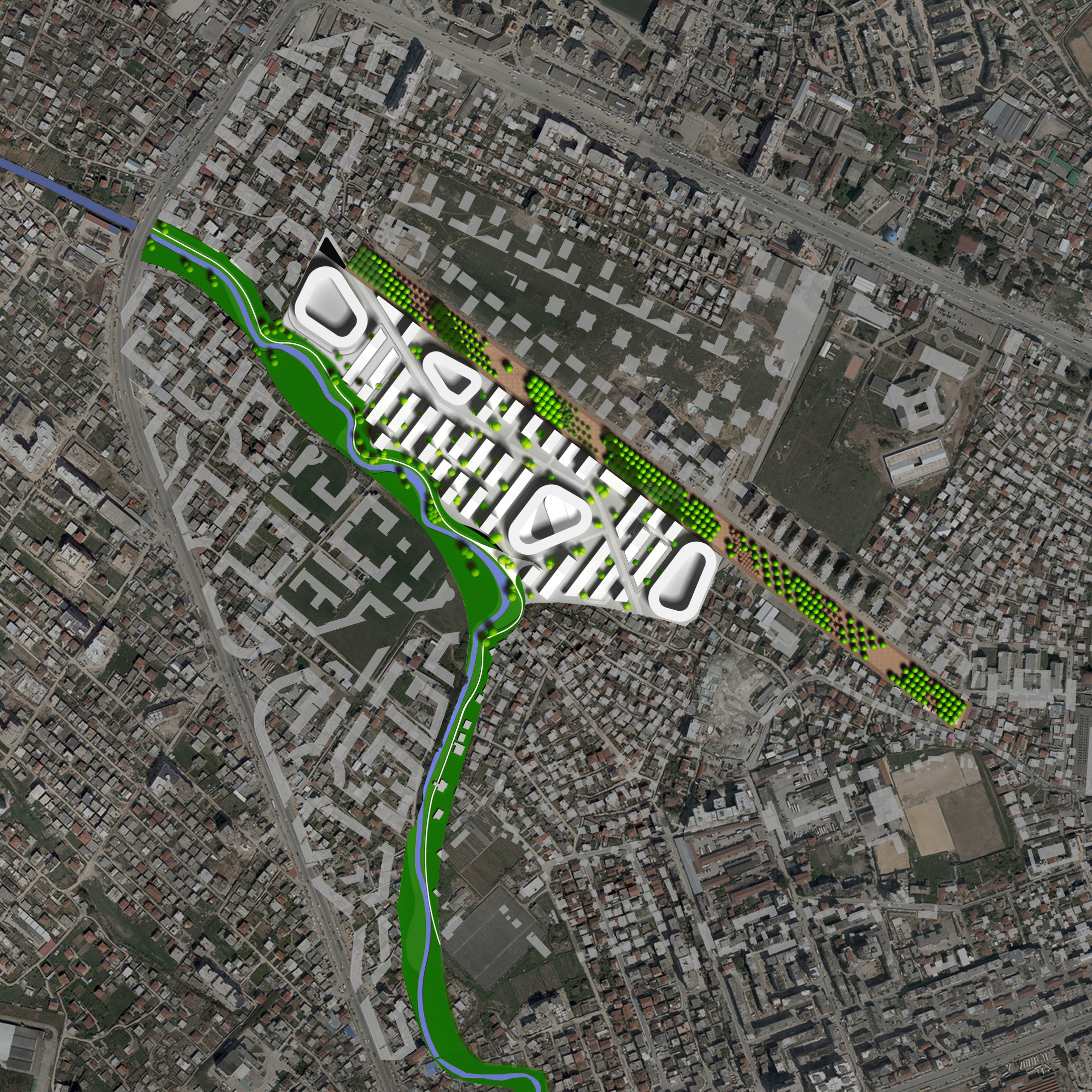

Park City


Open house
Shift architecture urbanism has redesigned an historic family house in the “Indies Neighborhood” of Amsterdam to maximize its relationship with both the street and its garden. A multifunctional wall cabinet, 14 meters in length, plays a key role in opening up the ground floor. This furniture element contains all servant functions, allowing for one open and flexible space for living that spans between street and garden.

The relation to the street is emphasized by the absence of an entrance hall: one enters the house directly into the open living space. Thus, the house is linked to the attractive sidewalk with its vertical gardens, typical for Amsterdam. The seamless continuation of indoor living area into the private garden is strengthened by extending the wall cabinet into the garden to define a private terrace.


The juxtaposition of three contrasting finishes for the cabinet differentiates the main living space. Each material provides the space with a specific character that connects to its use: a warm plywood for the living, a sanitary pink laminate for the kitchen and dining area, and a weather resistant anodized aluminum for the terrace.

The plywood section of the cabinet integrates a small winter-entrance, a stair, TV & audio and a wardrobe. The part in pink laminate contains kitchen appliances and cupboards. Its arch-shape makes room for a recessed kitchen in black MDF. The last piece in natural aluminum accommodates a toilet and a garden storage. The aluminum cladding reflects the garden vegetation back into the house, enhancing the experience of the private garden, a true luxury in the old neighborhoods of Amsterdam.


In contrast to the common use and open character of the ground floor, the two upper floors are divided for a functional layout of individual rooms for this young family. The first floor contains a working space, a master bedroom with walk-in-closet and a bathroom for the parents. The second floor contains three small bedrooms and a second bathroom for their three kids.


Open House is an example of how the Dutch inner city housing stock can be adapted to the needs and desires of young families with kids, avoiding them to flee the city for its lack of (outdoor) space and appropriate dwellings. Urban residential areas such as the “Indies Neighborhood” should house multiple generations, cultures and incomes to remain attractive and socially sustainable.


OPEN specifiCITY
The open city stands or falls on the way it manages the organisation of diversity. Our heterogeneous society demands a planning regime that shapes the exchange between and the overlap of different worlds. The public domain, in particular that of the square, is typically the place where contact between different sections of the population is stimulated and forms of new collectivity take shape.
In order to redevelop the square into a social space that ties in with the reality of the open society and that of the network city, we must introduce new types of buildings and squares. These types must be at once open and specific: open to different groups of users and uses while at the same time specific enough to produce the necessary differentiation and identification.

The Western Garden Cities, are being transformed with little regard for the original qualities of the modern city. The open structure of the initial General Extension Plan is replaced by a defensive form of urban planning that sources its ingredients from the pre-war city. Parks are fenced off, flats are replaced by perimeter blocks and open squares are redeveloped into indoor shopping areas.
The result – a patchwork of gentrified enclaves – may be filling the indeterminate open space of the original city, but is incapable of accommodating new forms of collectivity.

The brief for the August Allebé Square offers the opportunity to formulate an alternative strategy for the ‘problematic legacy’ of the modern city that failed to respond to demographic developments. This must be a strategy that sees the open city and its diverse population not as a problem, but as a chance to forge new types of collectivity and urbanism.


The design proposes a new spatial and programmatic composition that opens up radically on the levels of both neighbourhood and network city.
The potential of the square’s strategic position between the regional axes (A10, metro and train) and the major thoroughfare (Postjesweg) is capitalized on by spanning the square in between these different axes and introducing programs that are relevant on both regional and local levels.

In order to program and differentiate the larger space of the square, while at the same time safeguarding its openness, a new type is introduced: the so-called ‘pleingebouw’ (square building). An amalgam of building and public space, the square building is capable of adding programmed mass as well as charged emptiness to the square as a whole.
In dialogue with the existing buildings and/or embedded within the infrastructural network, a sequence of square buildings will enrich the open space with a number of urban archetypes (the podium, the colonnade, the canopy, the plan oblique and the frame).


snake


collonade


podium


table


labda


oblique plan
The result is a square-within-a-square-situation, which can simultaneously accommodate different groups and activities without disrupting the continuity of the open space.
The explicit programming of the masses (public transport, commerce, culture, community and sport) and their specific design imply the use of adjacent public space without fixing it. There will still be room for improvisation, spontaneity and the appropriation of the squares by different groups.


The August Allebé Square in its entirety is more than the sum of its individual parts: the co-existence of different groups and their activities transforms the square into an urban “coulisse landscape” where one is constantly reminded of the presence of parallel worlds, of ‘the other’.


M3

Jozefzorg
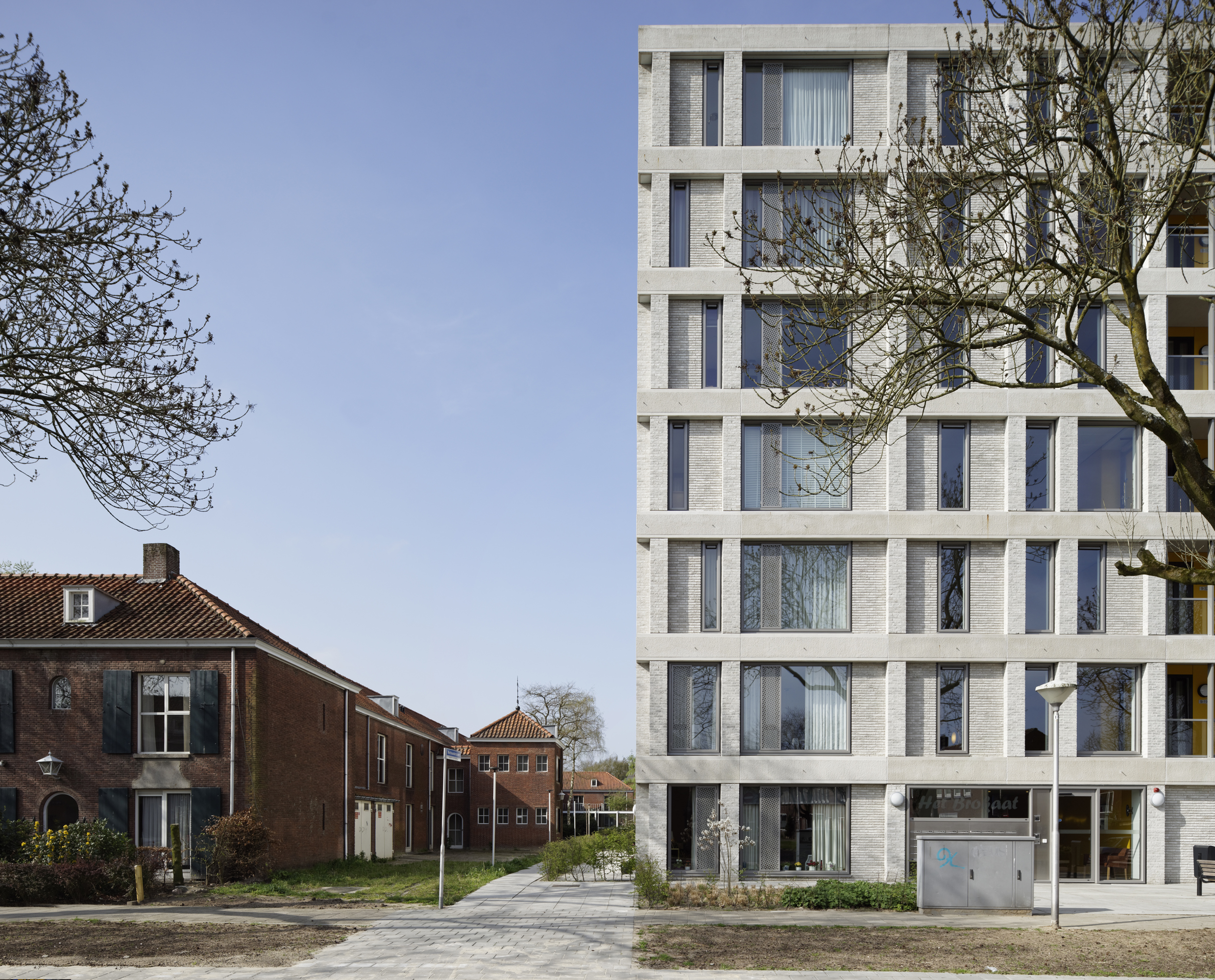
This project deals with the redevelopment of an outdated care complex in Tilburg. Some buildings have to be kept, others need to be demolished. The new program consists of 120 apartments for seniors , 60 high care units and a local care center.


Our winning proposal introduces a meandering urban figure, a snake, that creates an intimate living environment for seniors along a series of open courtyards. It absorbs all program in one differentiated gesture whose form is derived from the existing comb-shaped monument with its typical open courts, an icon of post-war housing by architect Jos Bedaux. Two high-rise volumes at the perimeter of the site relate to the city, while the low-rise inside relates to the monument.

Two new east-west axis´ -one for car acces and one promenade- open up the site towards the adjacent neighbourhoods. The new courtyards relate towards these public routes without giving up their intimate quality. They function as collective garders for the inhabitants.
On the western side of the project area, the building frames the existing chapel and creates a new public square where the new housing, the monument and the city meet.


Plans groundfloor and first floor

The project will be realised in two phases. Phase one was completed in 2014. Its homogeneous grid facade emphasises both the horizonality of the urban figure and the verticality of the main housing block. The overall gesture is further strengened by the monochrome charachter of the light concrete in combination with the cemented brickwork.


Phasing


Housing Carpet
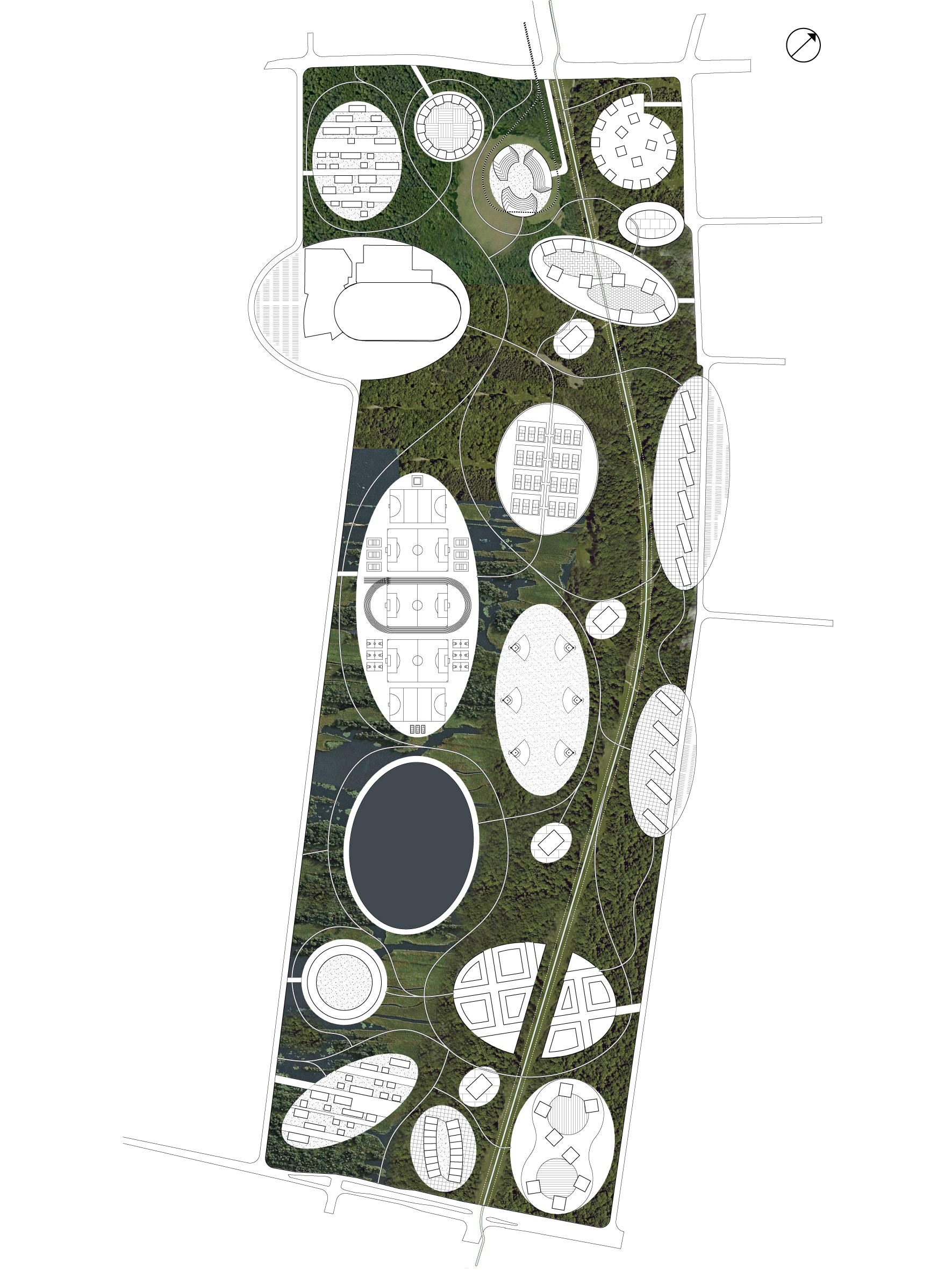

Green Archipelago
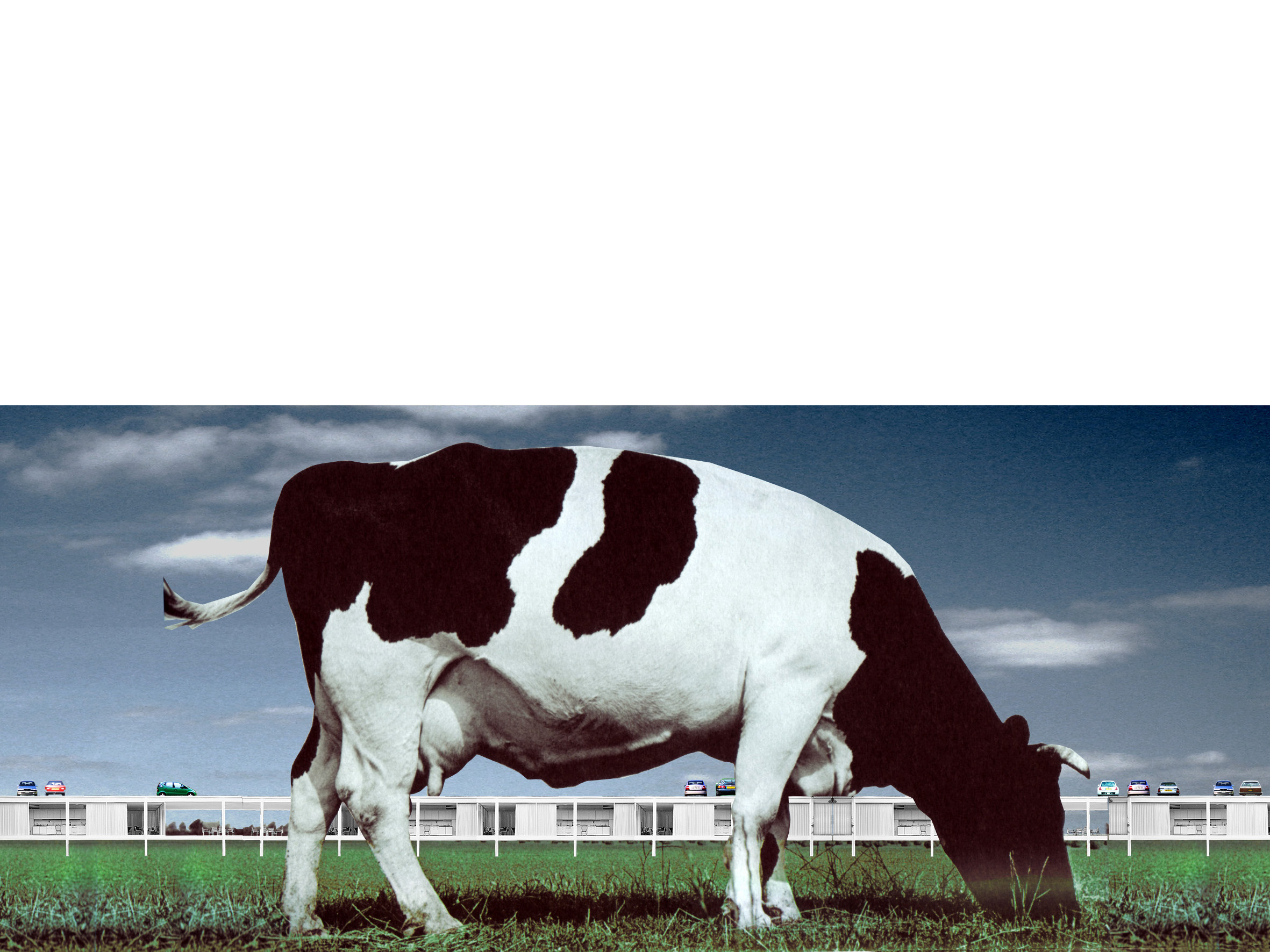

Bulb City
Living apart together
The municipality of Waalwijk selected six national developer/architect teams to envisage an urban vision for the redevelopment of De Walewyc School location into a specific, differentiated and high profile living environment.
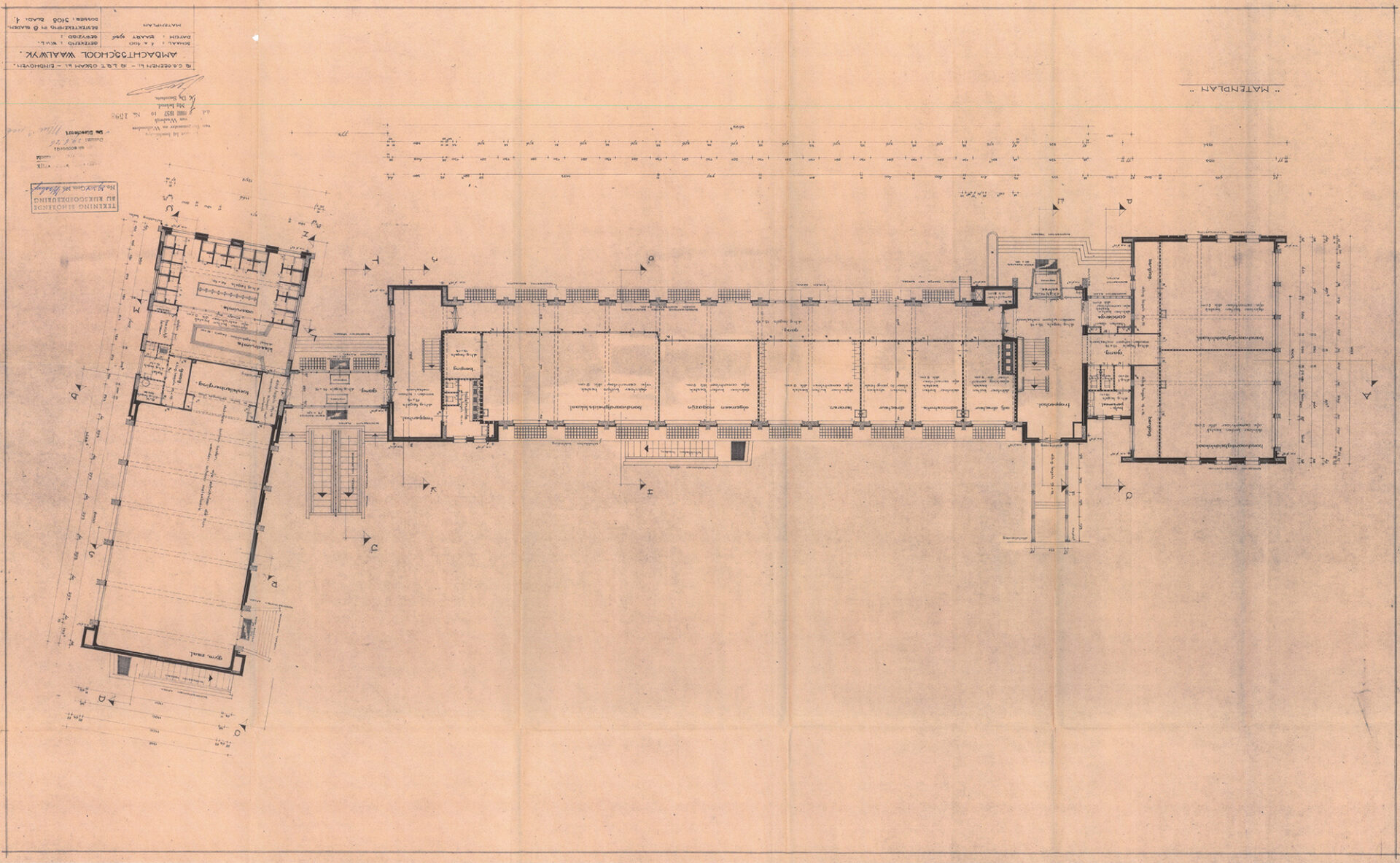

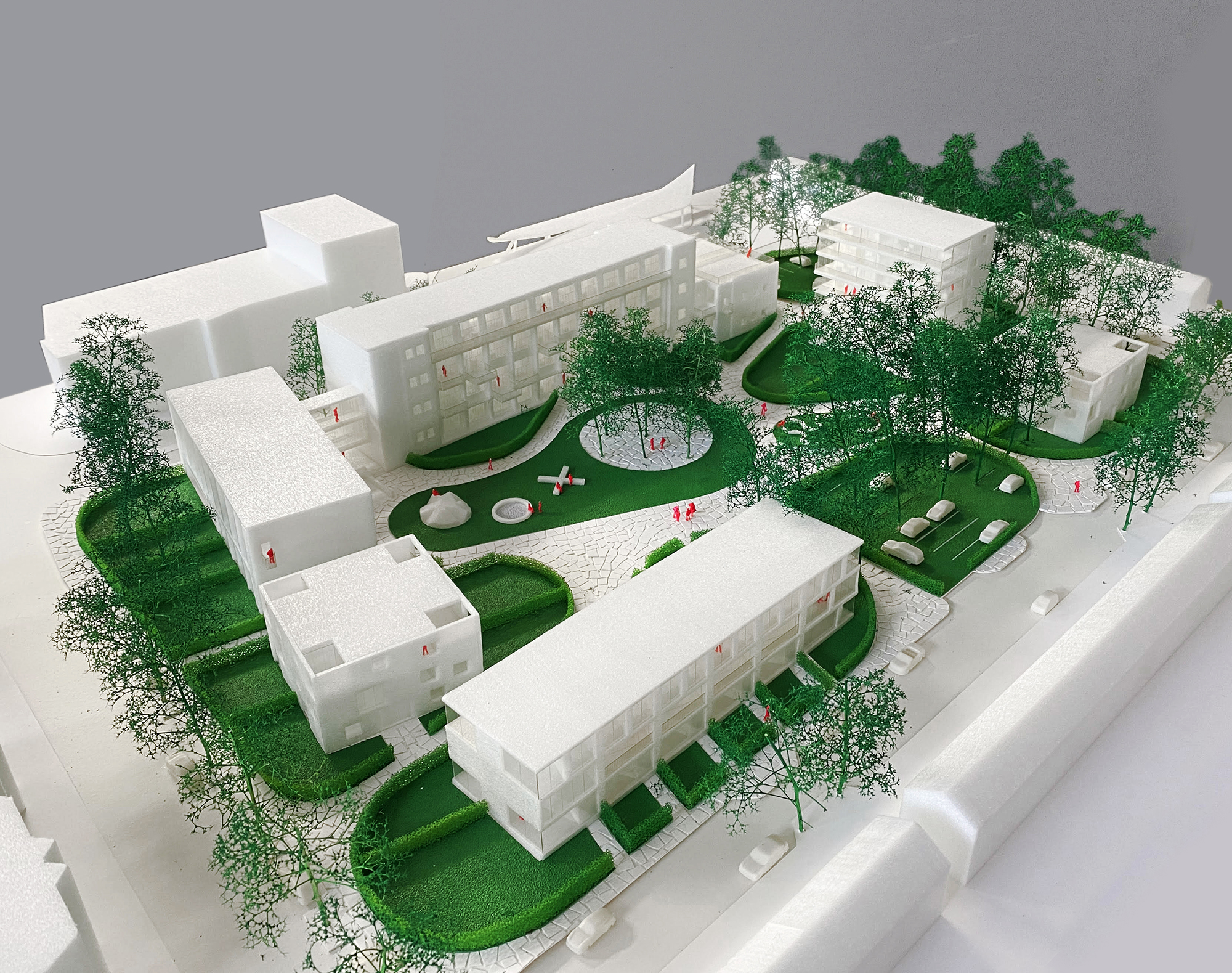
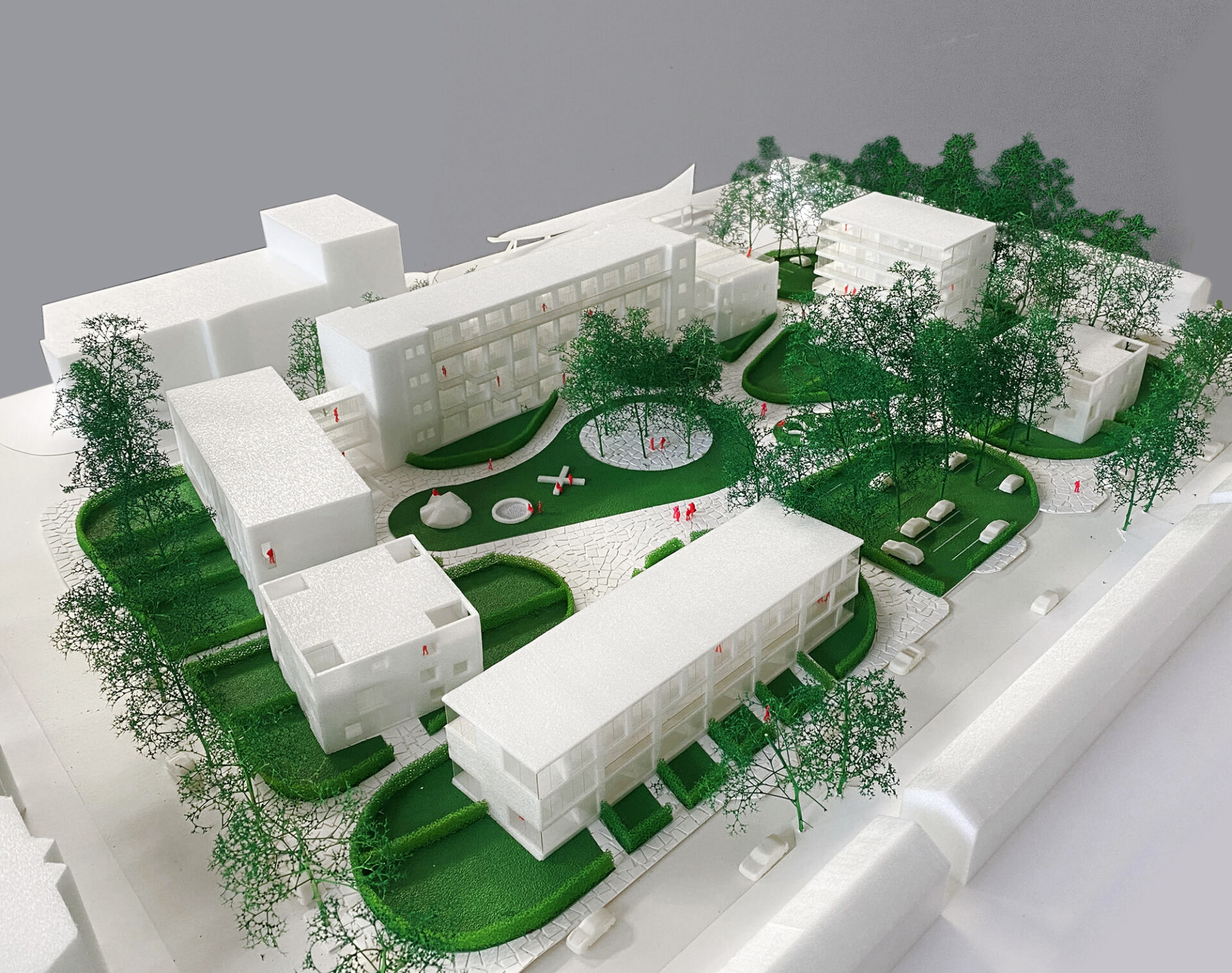
In order to fulfil this ambition, we found it essential to reconsider the municipality’s suggestion to demolish the existing school buildings. De Walewyc School is an icon of post-war reconstruction architecture in a surprisingly good and original state. Besides the cultural and historical value, a building’s potential for future uses should determine the choice for demolition or conversion. The former school’s urban situation, its transparent architecture, high ceilings and internal layout create the premises for a unique housing ensemble with spatial qualities difficult to match nowadays.


Scheme
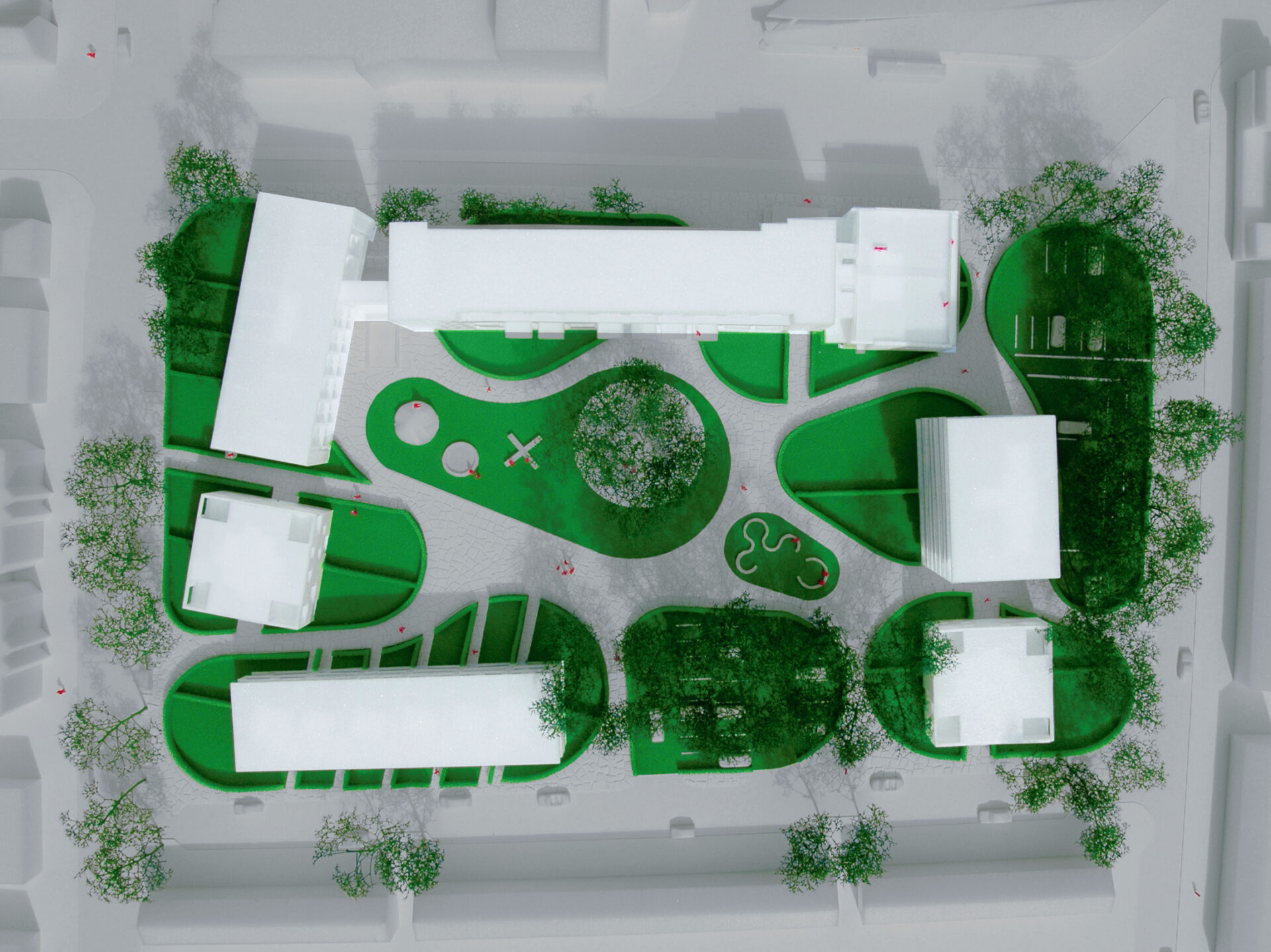
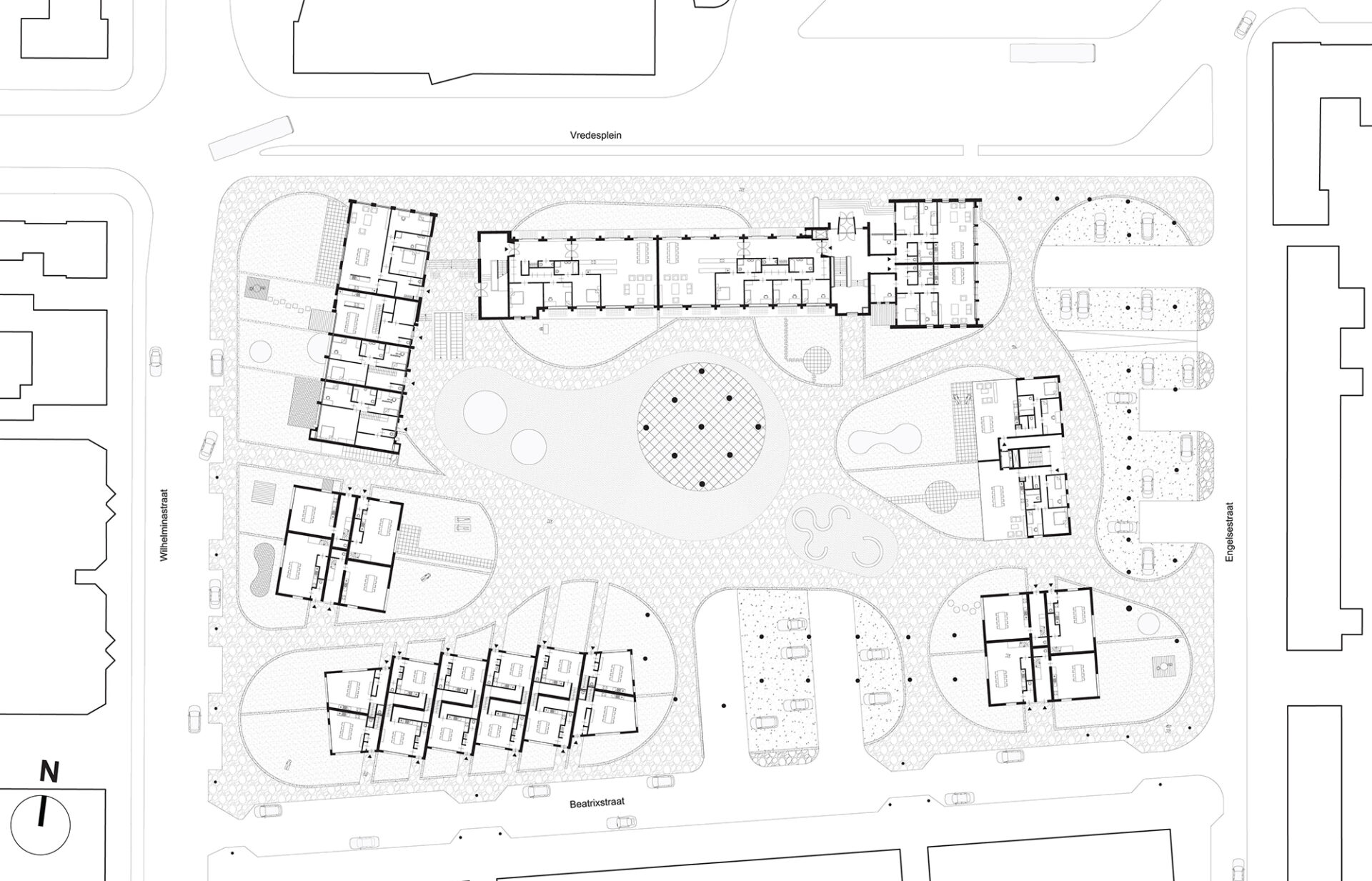
Our proposal preserves the school’s three original buildings and adds four new ones around the former schoolyard. The building volumes form a permeable ring of solitaires that – together with the row of existing trees – define the limits of a public park (the former schoolyard). The volumes are positioned in such a way that the park is visible and accessible from the surrounding neighbourhood without losing its strong definition. By replicating the existing volumes’ DNA into the new ones, a family of buildings is created. This family has two generations, three volume sizes and several housing typologies, derived from each building’s specific orientation. The building solitaires are imbedded in an archipelago of green islands, consisting of public green, private gardens, and parking pockets. The green islands manifest themselves beyond the ring of buildings towards the surrounding streets, emphasizing the park-like character of the entire development.
The School

The existing school lends itself perfectly for appartments. Luxurious high ceilings, a corridor to the north and large windows to the south. Simply adding balconies and (roof)gardens to the building is enough to convert the school building into a rich collection of different typologies.


School New Floorplan

The Row Houses

The row houses are designed as back to back houses. Each floor flips to the other side of the block, creating houses that are orientated towards the park as well as the street.


Mirroring floor plans

The Block

The small blocks are designed as helix houses: each floor of the house jumps to the other corner, creating houses that touch each corner of the block: 360 degrees orientation towards the park as well as the street.


Rotating floorplans

The Tower

The apartment tower is dived in two halves: a closed part that houses the night program and an open part, orientated towards the park and the sun, that houses the day program.


Floorplans


