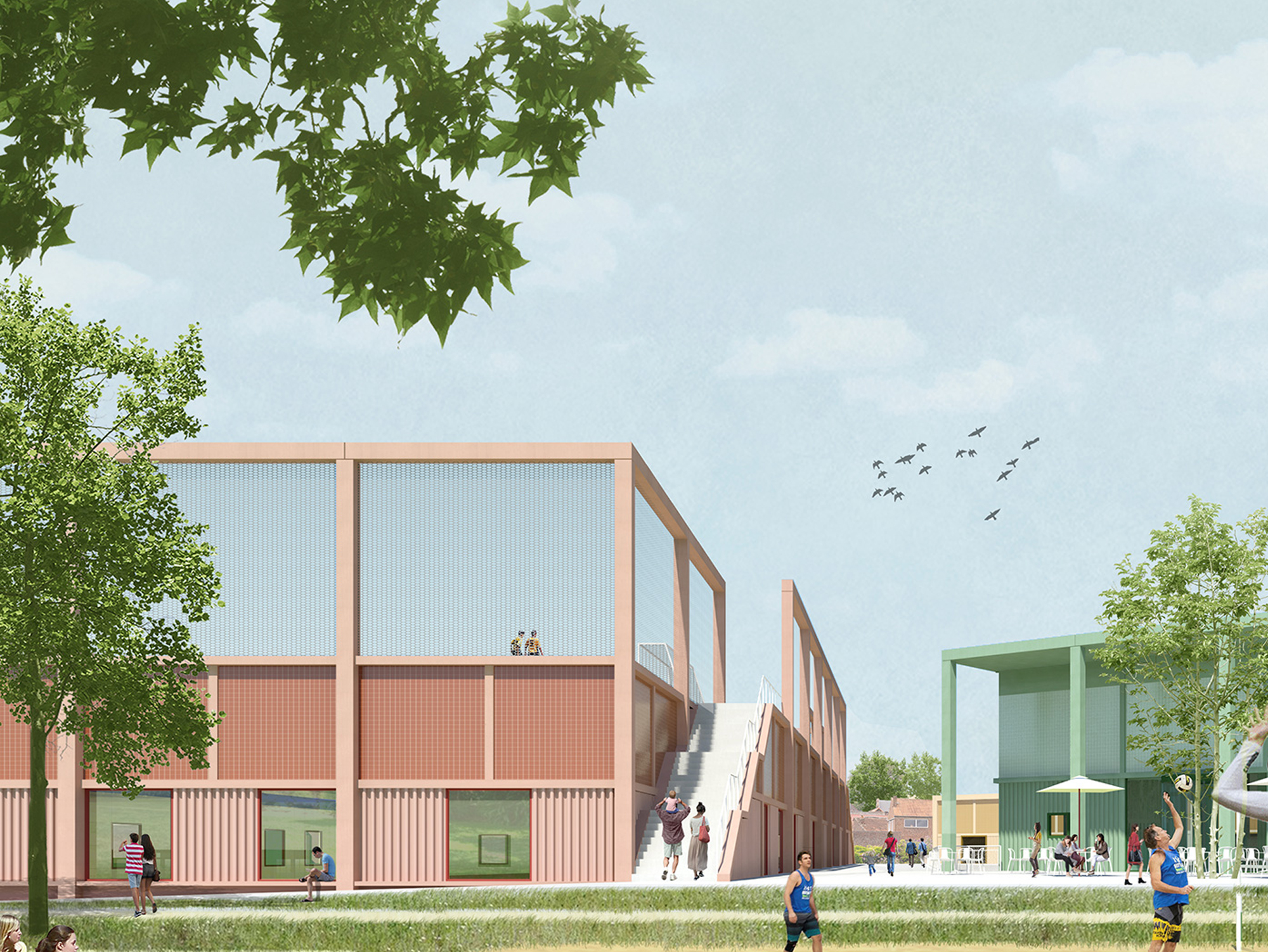


SportHalle on the Zenne
Sport – once the exclusive domain of sports clubs – is now an inseparable part of everyday social life. Sport charges public space with activity, dynamism and social encounters. The social and economic value of sport is at the forefront of politics, the civil service and the media. The importance of sport in society gets its spatial translation in Halle through a new urban typology: the hybrid urban sport park, which is embedded both spatially and programmatically in the existing city. The sports cluster is not a building or complex but, above all, an important public place within Halle’s inner-city pedestrian network.


The new sports building manifests itself at ground level as a cluster of three volumes around a sunken patio. The modest footprint and height of the volumes above ground preserve views and leave room for two pedestrian connections from the surrounding residential buildings towards the Zenne park.

The volumes represent the aboveground part of the main sports hall and the gym as well as a centrally located park pavilion where the reception, the cafeteria, the offices and the meeting room are located. The transparent park pavilion forms the link between indoor (sports) and outdoor (sports), between park and patio and between the upper world and underground sports world organized on two levels.


plans of ground level and -2 level
The -1 level is for the spectator, in the form of a balcony with views on all sport halls. The sunken patio located here forms the heart of the sports cluster, providing daylight and orientation to the visitor. The -2 level is the domain of the athlete, giving access to the multi-purpose hall, the main hall, the martial arts hall and the gymnastics hall. The two main halls are provided with generous windows on all sides at ground level and open completely on one longitudinal side towards the balcony on level -1.


The main hall is dimensioned (67x32m) to increase flexibility and permit a wider range of sporting opportunities. The multifunctional pavilion and the clear logistics with separated levels for athlete and spectator/visitor ensure that the sport cluster can also accommodate other functions such as markets, parties, performances, exhibitions or major school exams.


Beach City 2.0
In 2012 Shift architecture urbanism made a spatial vision for Beach City on behalf of the municipality of The Hague. Building on the study of Shift architecture urbanism, the Beach City Foundation has asked Shift to contribute to a supported programmatic vision for the total concept. All the different stakeholders (water sports, beach sports, boardwalk sports, catering pavilions and the stadium) were represented in drawing up this vision. Based on this programmatic vision, Shift has made a design proposal for the location in collaboration with LOLA landscape and POSAD spatial strategies. This design takes the extension of the Scheveningen boulevard as a starting point and concentrates a large number of different sports in a sports dune, a sports square, a sports boulevard and a sports quay.
The Beach Sports Accommodation (BSA) is central to the design. The BSA is the programmatic heart of the area and facilitates the various sports landscapes. In addition, it also facilitates the beach stadium that descends on the beach in the summer months.
The beach sports accommodation is a flexible building that enables a wide range of user scenarios, a contextual building that responds to the unique location on the beach, boulevard and sea and a connecting building that makes the link between the higher situated square and the beach and the various (sports) activities.
The building consists of two main functions: a permanent Beach Sport Accomodation (BSA) and a temporary Beach Stadium. The BSA functions as the center of Beach City all year round. Here are facilities for the wide variety of athletes who visit Beach City as well as other visitors. In addition to a sports canteen, the BSA houses multifunctional spaces that enable the building to accommodate a wide range of usage and exploitation scenarios. There are changing, shower and locker facilities specifically for athletes.
The Beach Stadium will be added to the BSA in the summer season, or will only be built at the time of major events that require such a stadium. It consists of temporary stands around a Center Court and is enclosed by a lockable boundary. This makes the stadium suitable for sporting events and other types of events that can be both freely accessible and “ticketable”.


The BSA is located at the head of the square, at the end of the new boulevard. This prominent position gives the building a landmark function for Beach City. A landmark that makes Beach City clearly visible and accessible from the Scheveningen boulevard, the beach and the sea. The positioning of the Beach Stadium on the sea side of the square guarantees the visibility of the BSA.
The BSA is an all-sided building consisting of four quadrants, separated by 2 axes that form a central hall in the middle. Each quadrant has its own function and shape that is derived from its specific orientation.
The quadrant, oriented towards the sea and the beach, contains the canteen whose round glass façade underlines the panoramic view. The quadrant aimed at the Beach Stadium is designed as a round bite out of the building that connects to the contour of the temporary stadium, which contains a multifunctional space that can be used as part of the canteen as well as separately as a skybox towards the stadium. The quadrant towards the boulevard and square contains a cluster of multifunctional spaces designed like a glass house. The quadrant towards the windward-facing part of the beach, where the permanent beach sports fields are set up during the bathing season, is designed as a grandstand with all the changing, shower and locker areas for the athletes underneath. These facilities are directly accessible from the beach via an entrance in the grandstand.

The two transparent axes through the building make the building publicly accessible from both the sports beach and the square. From the main entrance on the square one looks and walks straight through the building towards the open beach. The axis transverse to this also provides access to the building from the private part of the sports beach.

The grandstand makes the roof of the building accessible. This creates a public viewpoint from which one has a panoramic view of Beach City. By also making the roof accessible from the building, it is possible to design the roof as a terrace and multifunctional space during (sports) events.
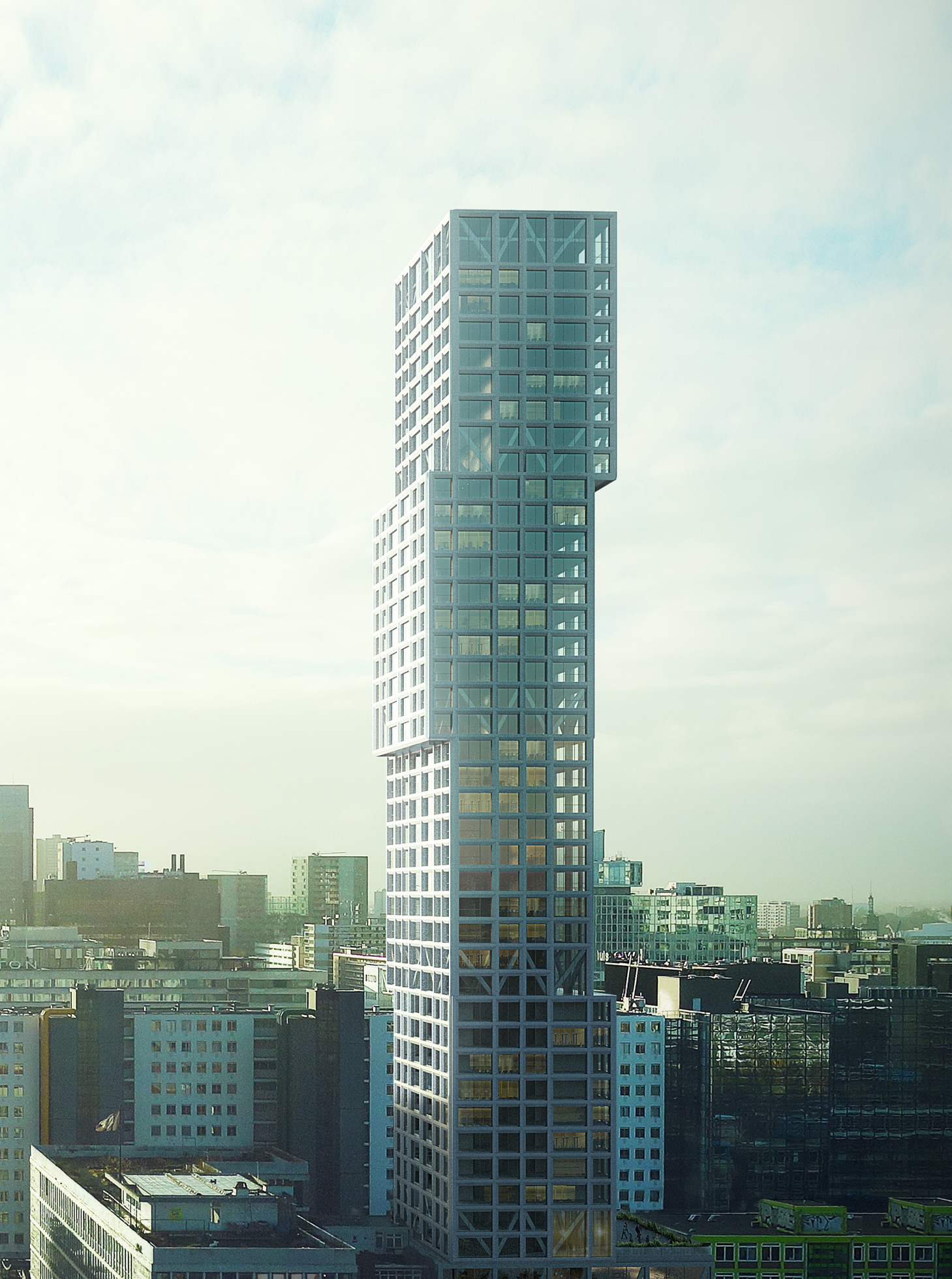

D tower
D tower proposes a high rise residential tower for the Central District of Rotterdam, one of the allocated areas for towers up to 200m. The tower relates to the existing high-rise buildings in the Rotterdam Central District, but at the same time joins the “Rotterdamse laag” of the Schiekade block. Instead of an unambiguous extrusion of the ideal residential floor plan, the tower is designed as a stack of separate volumes that refer in scale, grain size and architecture to the post-war buildings of the Schiekade block.


The tower assumes a dynamic pose with a silhouette that changes from different viewpoints in the city. D tower has a programmatic distinction between the substructure (activity) and the superstructure (apartments). The compact core, in combination with the load-bearing facade, allows a flexible layout of the floor plans from 1 to 8 apartments per layer. Due to the differentiation in size and type of homes, a rich mix of residents is possible.


The collective facilities are located at the moving parts of the tower. Here they benefit from the elongated terraces on the east, south and west. Due to their position and double height, the collective spaces are clearly recognizable. They turn the residential building into a vertical city and stimulate meeting and social interaction between the different residents.

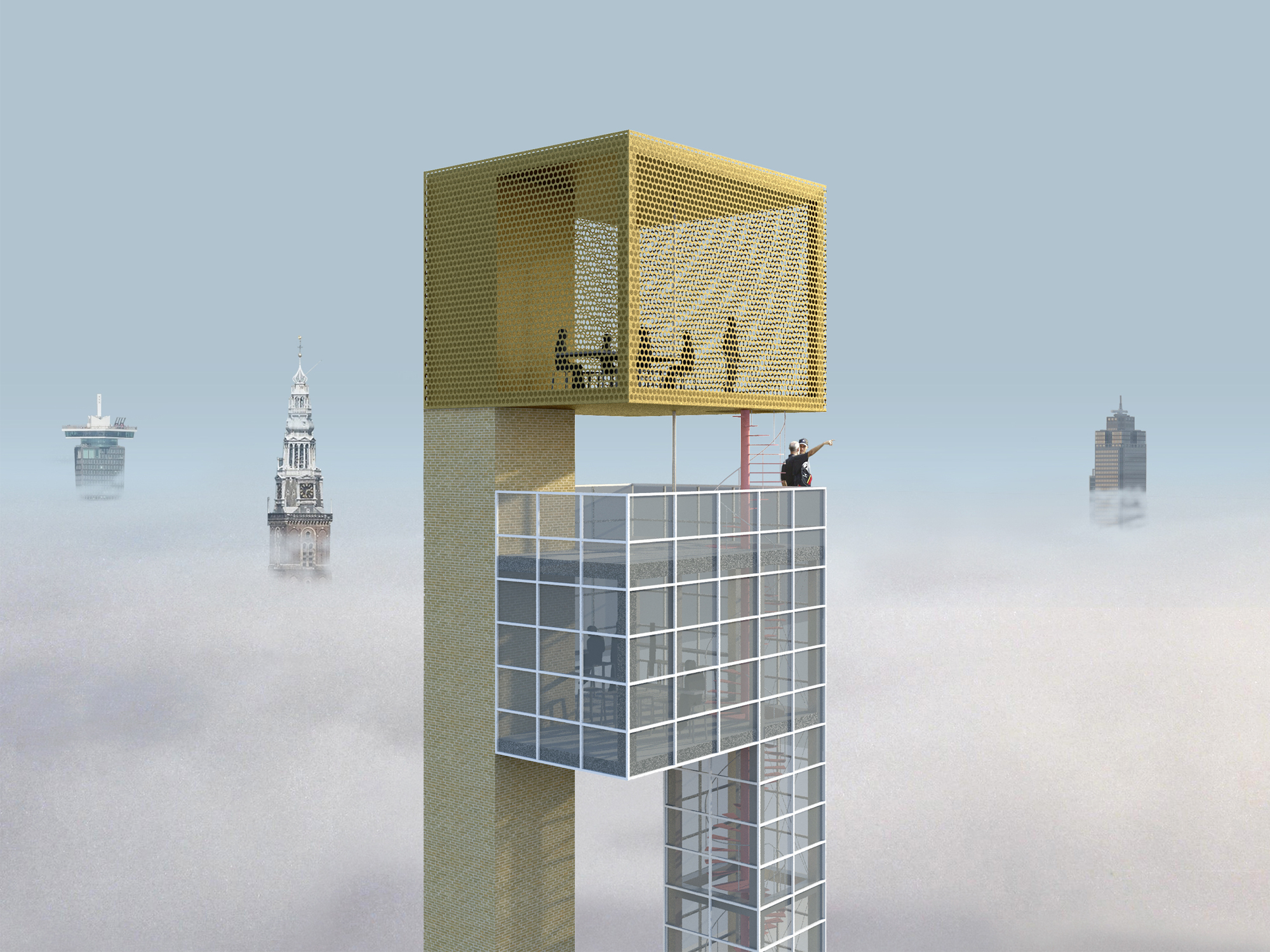

Skybar
Skybar is a proposal for a new bell tower for the existing market hall of the Food Center Amsterdam. The new tower is a representation of the new destination that the Central Market Hall will be given as a publicly accessible food hub for Amsterdam. We interpret it as an opportunity to extend the food experience into the air.


In the spirit of the functional expressionistic style of the Markthal, the new tower is an efficient and expressive translation of its program. By separately executing the lift and staircase, which are necessary to make the bar easily accessible and safe, a slender composition is created that makes the circulation of people and products visible. The materialization in brick and glass seeks connection with the existing monument.


array of different possible plans


The result of the composed tower and its materialization is a three-dimensional sculpture that, like the historical market hall, seeks a balance between large and small, mass and emptiness, inaccessibility and intimacy. The small, outward-facing sky volume functions as the opposite of the gigantic inward-facing atrium. The atrium is like a multifunctional mega-container that tries to capture the emptiness, the sky volume like a multifunctional space capsule that seeks emptiness.

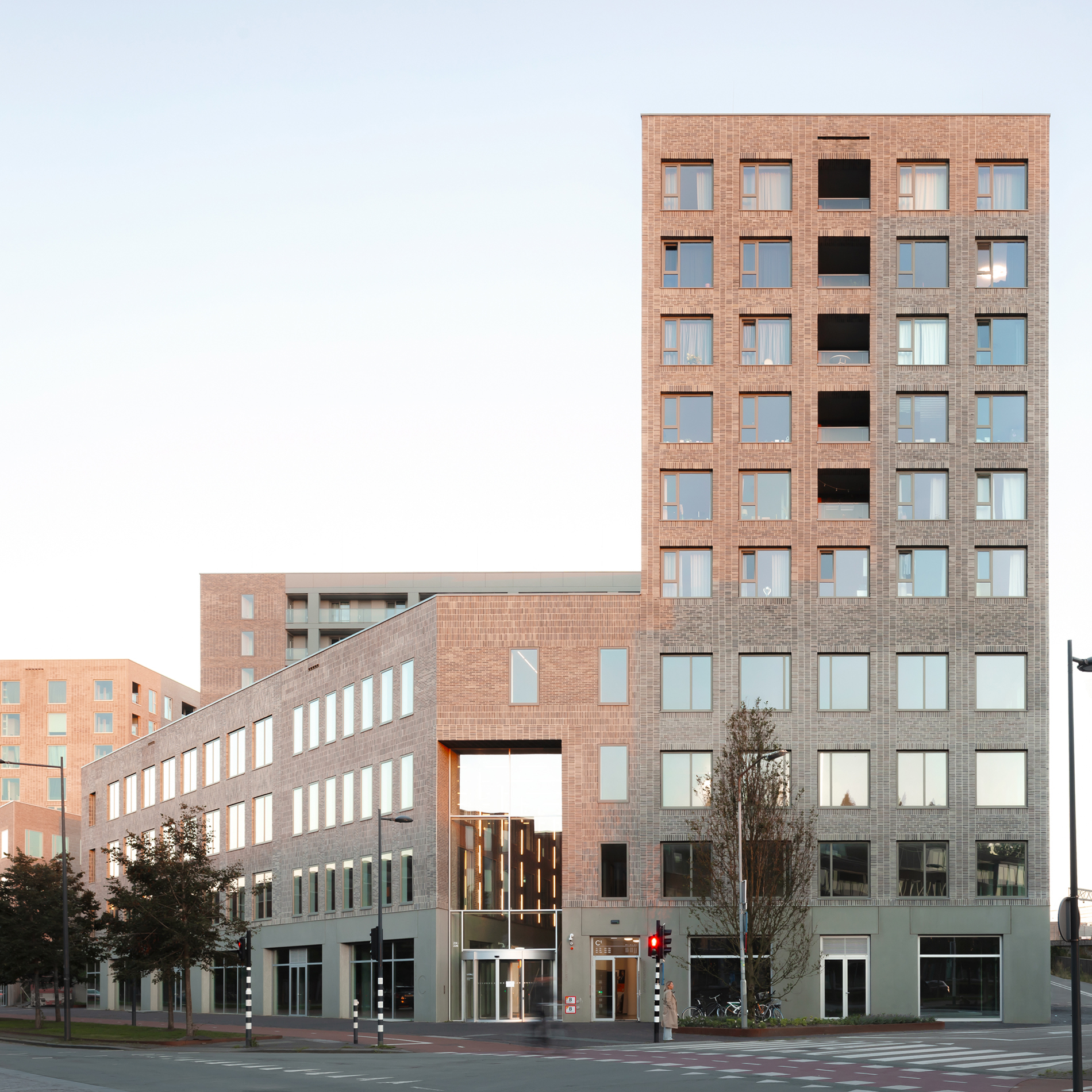

5TRACKS
Following the arrival of the high speed train from Amsterdam, the entire station district of Breda has undergone a complete urban renewal. The new world-class station terminal now bridges both sides of the rails, connecting the previously isolated northern side of the city in a seamless way to the historical centre. That gives the chance to redevelop the (former industrial) sites situated north of the rails into a prolongation of the city centre, a new meeting place of the city. 5TRACKS is one of them, forming the final piece of large scale development on the west side of the station (urban design by Claus en Kaan architecten, 2010). It accommodates a mixed program with living, working, recreational and commercial facilities. The high density and varied program creates a dynamic city environment which promotes the sharing of facilites by different users and urban encounters.

5TRACKS is designed as an ensemble of three buildings with two identities: one towards the city and one towards the railway. At the north side, along the new Stationslaan, the ensemble presents itself as a continuous city wall that relates in scale, material and height to the oppositely situated neighborhood Belcrum. At the south side, along the train tracks, it features a sequence of higher triangular buildings in a park, aligned like a zigzag “hedgerow landscape”. The design follows closely the guidelines of the masterplan by Claus and Kaan architects, which envisioned the “hedgerow landscape” along the railway as a means to create a qualitative entrance to the city. This artificial scenic landscape formed by buildings and vegetation elements in the park ensures depth and a layered perspective for the train passenger and a green buffer for the users of the buildings close to the rail.


The spatial and programmatic organization contribute to the two-sided orientation of the plan, activating both the street side and park side. A unitary plinth with bars, restaurants and other commercial functions towards the Stationslaan makes for a lively route in between the station and the Court building, situated further to the West. Behind it and stretching until the rails, a parking garage occupies the entire ground floor. On top of it, three triangular building blocks house offices and the hotel. Their northern façades build up the 16m tall profile towards the Stationslaan, while the southern façades create the zigzag “hedgerow” structure, which opens up with collective facilities towards the park. The triangular blocks are topped by V-shaped slabs towards the park which contain different types of apartments and hotel rooms. These are all oriented to optimally profit from the sun and view towards the historic centre of Breda and make use of the collective gardens on the roof of the triangular blocks.


plans
One of the challenges of the project was to make sure that the park is not just a decorative piece of green trapped in between the buildings and the rails, but an integral part of the city.
The organization of program in three distinct buildings leaves room for generous connections between the Stationslaan and the higher situated park. The height differences are bridged by inviting stairways and ramps where the vegetation is literally pulled down to announce the park at the street level. The parking deck is covered with a 50cm -90cm earth substrate in which a vegetation of grasses and groups of birch trees are ordered to form the hedgerow structure. Several thematic squares featuring terraces, outside working and meeting places charge the park with activity.


Additional to the public connections in between the volumes, each buildings has a central atrium which relates to both the park and the street. The atria are conceived as voids sculpted in the building mass and separated from the outside with very transparent facades, so that indoor and outdoor run seamless into each other and the park and the city literally meet. The various collective facilities situated here provide synergetic moments where the resident, the entrepreneur and the passerby come in contact with each other.


Within the project, recycled ceramic stone strips from Stonecycling will be applied on a large scale for one of the first times in the Netherlands. With this application, around 385,000 kilos of construction waste material will thus be incorporated into the project’s facades. The wide variety of “masonry bonds” maximises the potential of the stone strips. The use of sawn strips makes full use of the bricks, but also creates a differentiated image of baked and sawn strips in the façade.

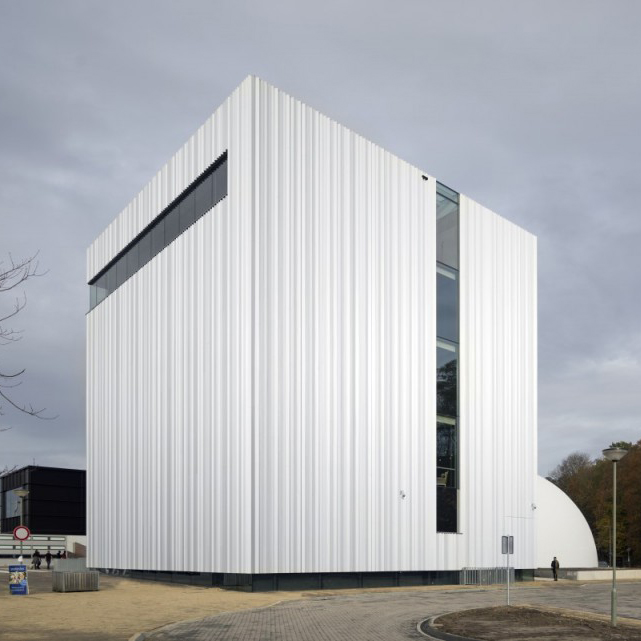

Cube
Cube, one of the three attractions of Museumplein Limburg, is a design museum. The museum is aimed at an international audience interested in the process of designing. Simultaneously it functions as a permanent laboratory where students and designers co-create together with the public.


Cube is draped in a reflective curtain of coated steel that emphasizes the vertical character of the museum. The curtain effect is obtained by the random placement of vertical profiles of three varying folds that each reflect the light differently. The facade is cut open by two identical windows: one vertical that reveals the stacked exhibition floors, and one horizontal that provides the multifunctional space on the top floor with a panoramic view over the Limburg landscape.


The museum is housed in a perfect cube measuring 21x21x21 meters. A glass plinth creates the illusion of a volume floating above the red underground landscape. Together with the patio, this plinth allows for natural light and views into the space underneath where the design labs are situated. True to their programmatic role as interface of the museum with the outside world of regional education centers, business and manufacturers, the design labs form the showcase of Cube towards the public space of the city.


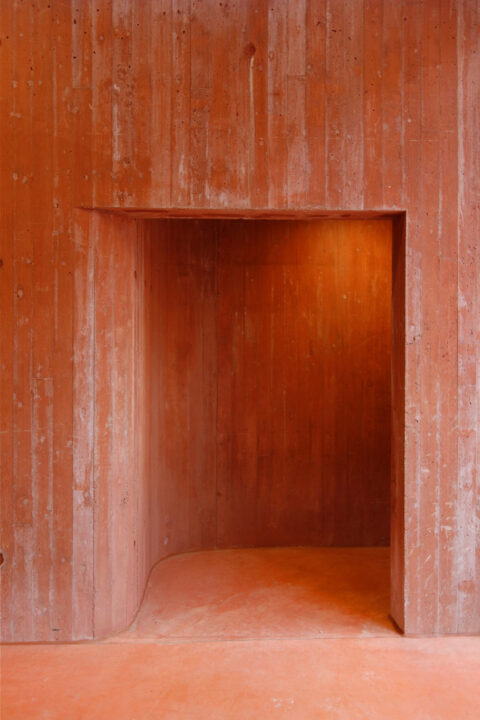

Cube is organized as a vertical exhibition machine with identical floors, creating space for an ever changing set of exhibitions. Each floor is divided between a „servant“ core (containing utilities, technical spaces and circulation) and a „served“ open space. This exhibition space is dark, generic and its prefab concrete structure is left unfinished. This gives curators and exhibition designers maximum freedom and flexibility to appropriate it according to any given theme.


The only specifically shaped element in Cube’s interior is the main staircase that links all gallery spaces of this vertical museum. It is made of identical straight flights which are variously rotated, creating the effect of a cascade falling down a 25 meters high void. Its generous dimensions allow it to function besides as circulation space as an extension of the exhibition spaces.


The top floor offers a multifunctional event space that can be partitioned in many different ways by means of a curved curtain system.


various spatial scenarios created with the curtains



Columbus
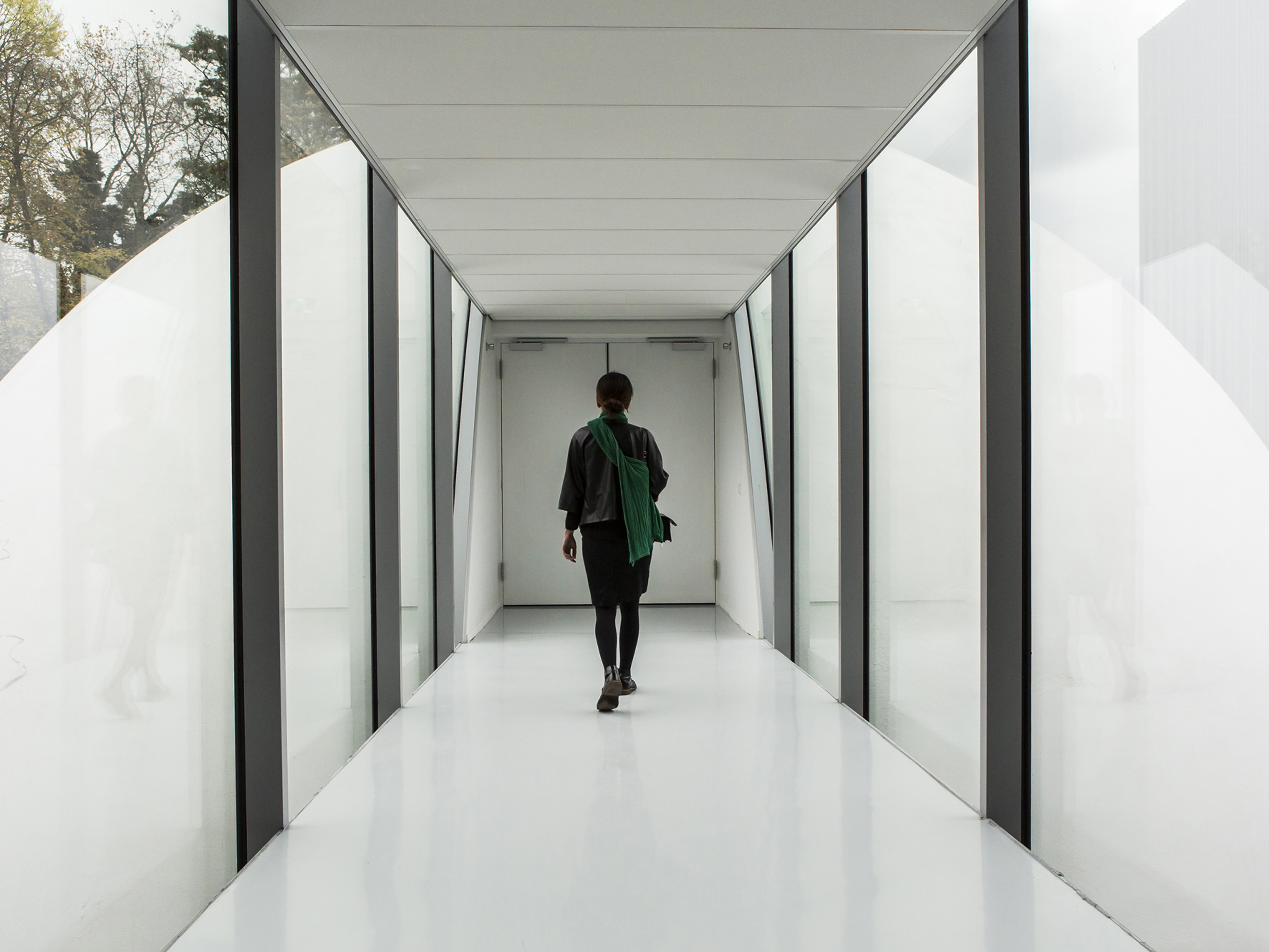
Columbus, one of the three public attractions of Museumplein Limburg, is a visualization machine for Planet Earth. The main message of the shows concerns the limits and the vulnerability of our home planet, its uniqueness, beauty and above all, its irreplaceableness. In the tradition of architecture parlante, it is housed in an ostensibly perfect volume: a sphere, half above ground and half underground. The spherical design draws inspiration from several visionary proposals in which the sphere stands symbol for the immensity, the sublime, the future, inclusiveness, shared experience and responsibility.


The lower half of the sphere accommodates the Earth Theatre, equipped with a spectacular – 16-meter wide and 9 meters deep – hollow projection sphere which can be viewed from two rings of glass balconies. This first built inverted planetarium offers visitors the experience of an astronaut looking back towards planet earth, featuring the effects of human inhabitation on Earth.


Besides pre-programmed movies which project the reality as seen from above, the theater is designed for the visualization of big data. In the near future, with a projection system operating in real-time, the users will be able to navigate through a predefined database to view and interact with future scenarios regarding the development of our cities, regions and the planet. The sheer scale and dramatic setting of the Earth Theater will enhance the perception intensity and understanding of the visualized big data. The theater becomes a machine providing people the unprecedented power to understand, analyze and make decisions about, and thereby ultimately change the world we live in.


The upper half of the Columbus Sphere, underneath the dome, is occupied by a circular auditorium. It can be reached by a glass bridge from the entrance hall via the Beam building or through an internal stair that descends into the Earth Theater. The auditorium functions independently for lectures and conferences and as a National Geographic 3D cinema or in combination with the Earth Theater, as a platform for dialog and debate after the visualizing experience in the inverted planetarium.


Columbus’ cupola is made of two shells of shotcrete. The concrete was sprayed on a permanent geodesic scaffolding filled in with triangular plates of EPS isolation. The seamlessness of the shotcrete skin emphasizes the absolute form and its density guarantees sound insulation from the loud shows inside.

Klaksvik United
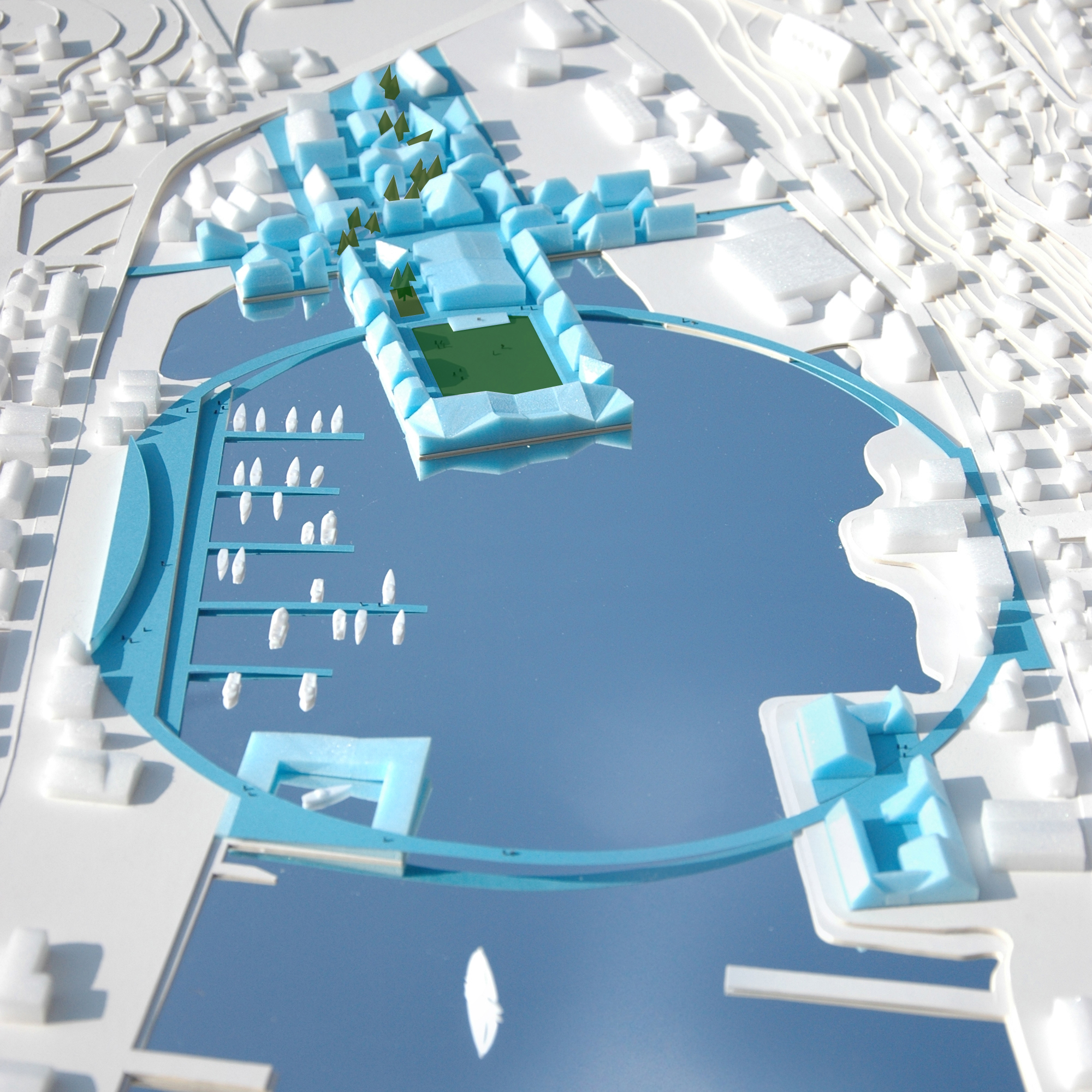
Klaksviks sublime location has become its weakest link. Present day Klaksvik is a spatially divided town. Ironically it is precisely the spectacular estuary location, and the way it is occupied, that causes this separation. Both the bay and the central isthmus act as barriers that split the town into two linear settlements with little connection to the water.

Our proposal, Klaksvik United, aims at creating a new town center that unites Klaksvik with itself and its waterfront. Two strong forms, a ring and cross, are used to transform the open water and the empty center from barriers into connectors and from non-places into places. They function as fixed armatures for flexible city center developments. Their unifying gesture opposes ánd incorporates the urban fragmentation of the site and creates multiple links between east and west, north and south, water and land, old and new. The new center makes Klaksvik into one and celebrates its unique location.


The Ring reinforces Klaksvik’s relation to the sea by connecting both parts of the town an uniting them with the water. It functions as a pedestrian boardwalk of exactly one kilometer long that links a variety of waterfront programs, both new and existing and defines a new water square. In a mere 10 minutes walk one can experience the vital role that the sea plays for Klaksvik. The ring connects the outdoor event area of the new cross with the existing marina, the ferryboat terminal, the second landfill and the existing shopping street on the south bank.
The ring transforms the bay experience into Klaksvik’s main asset.

The Cross, consisting of various spatial typologies designed to minimize the disturbing winds, establishes two crucial connections.
Main street runs from North to South and connects the separated halves of Klaksvik. Its mixed use program of retail, services and housing creates a lively street that forms the backbone of the cross development.
In the other direction, a central square with public facilities and a wind free labyrinth neighboorhood connect the green isthmus with the bay and reestablish the relation of the old center of Klaksvik with the water. The central square is surrounden with a multifunctional event hall, the administration building and the tourist information, which protect it against the wind and use it to program cultural outdoor festivities, year round. The intimate and wind free labyrinth invites for strolls along its shops. Existing buildings are integrated in a compact urban tissue. The small block size allows for a flexible infill with a variety of retail and leisure programs combined with housing.


Studio Sport
With Studio Sport, Shift architecture urbanism shows how, where and why sport should be mobilized to boost urban quality. The result is a plea for hybrid urban sport places that are spatially and programmatically integrated in the existing city. They release sport from its isolated position, introvert character and mono-functional programming and charge the urban landscape with meaningful new places of (inter)action.


traditional city vs. sports city
Sport is sexy and it’s everywhere. It is connected with fashion, music, lifestyle, media, the street and the city. If sport was once the exclusive domain of clubs and associations, these days it is an indispensable part of our society and daily life.

In recent years, sport has developed from a goal in itself into an instrument. An instrument for policymakers to reach social targets, an instrument for commercial sport organizations to earn money and an instrument for municipalities to develop city marketing. Every Dutch city wants to be a sports city, or even thé sport city.

Sports and sportspeople are moving ahead too. The number of sports is growing fast, as is the so-called non-organized, spontaneous practice of sport, which takes place outside the context of the club, within the public domain of the city. This trend is expected to continue, as it corresponds to the need for flexibility of the modern urbanite.

Sport’s value for the community and the economy is getting major coverage in politics, the civil service and the media. Sport is good: good for your health, good for social cohesion, good for your image. Strikingly enough, the so called instrumentalization of sports has been overlooked by the spatial disciplines. Sport is subject of rest planning and its value for the city and its public domain is unexploited.

In the modernist city planning sports parks were allotted a place in the green zones sometimes in but more often around the city. The sports park was a way of escaping the hectic city.


In later urban urban expansion schemes many sports facilities had to make way for new residential and work areas. As a result sports parks shifted ever further outwards to end up in isolated leftover areas and ragged edges of the city, often right up against motorways or railways.

This back-seat status held by sport in spatial planning has led to the ‘islandisation’ of sports that is completely at odds with the development of sports itself and the social and economical roles it got assigned by the outside world.

High time then, that sport’s key place in society is reflected in the way it is designed and integrated in the city. The question is what sport can mean for the city and, conversely, what the city can mean for sport. Sport can benefit the city and its public domain. It provides a counterbalance to the impoverishment of public space by charging it with activity and dynamic. Sport is one of the most powerful means to get people out of their protective home environment during their leisure time. It provides frameworks for encounter and interaction, two prerequisites for a vibrant public domain. In addition, qualitative sport facilities enhance a city’s attractiveness as a place for companies and residents to settle.

Also the city has to offer quite something to sport. First of all, large groups of city dwellers would like to sport close to where they live, especially in the “problematic urban neighborhoods”, where car mobility is limited and there is a large demand for sports. Secondly, the city provides the possibility to connect sports accommodations, that generally have a low intensity of use, to other urban functions in the field of education, culture and neighborhood facilities. Smart programmatic synergies lead to a substantial intensification of sports use in space ánd time.


In a series of concrete case studies in Rotterdam, The Hague and Amsterdam, developed in collaboration with the municipal departments of spatial planning and sports, Shift has explored the Dutch city for its potential to integrate sport on a structural level. The issue on the one hand is to stitch existing, often isolated sport locations to the city and on the other to integrate new sports facilities in the city.

The case study projects have resulted a new kind of urban typology: the hybrid urban sports place. In these places, several sports are combined with each other and with other urban functions. Their hybrid character is reflected in the balance that they seek between formal and informal, top-down and bottom up, commercial and public, inside and outside, sports and other programs.


They are designed as urban landscapes with an open and flexible character, rather than closed utilitarian facilities. They function on the level of the neighbourhood, the city or the region, depending on their size, program and position in the city. Despite their speculative character, the proposals have a high level of realism and they react to concrete urgencies. Three case-study designs have led to further spatial and financial feasibility studies, commissioned by the municipalities or other stakeholders.


In addition to the case study projects, the website sportspace.eu was developped. SPORTSPACE is an online platform about urban sports spaces. The website collects reference projects of sports and movement spaces that are successfully embedded within the city and connects these with spatial design tools. It functions as a source of inspiration and a frame of reference for everybody who’s interested in the potential of sports for the city and vice versa.

The full body of work of Studio Sport was exhibited in the New Institute (former Nai) in Rotterdam. The exhibition was openend during a conference in which specialists from the domain of sports and space were triggered to participate in a constructive dialogue.


Binnenrotte SportSquare
Twice a week, the Binnenrotte accommodates a large market. The rest of the week, it forms a huge strip of emptiness at the heart of the city centre. On these days, Rotterdam’s largest square hopelessly craves for activity.
This project capitalizes on the Binnenrotte’s unused potential. It transforms the square, on days when there is no market, into thé metropolitan sports place for all Rotterdammers: a place for jogging and skating, football, tennis and hockey; a place for sports clinics, tournaments and gym classes of the surrounding schools; a place for informal activities, play and cultural manifestations.


marketsquare vs sportsquare

In order to guarantee the multiple use of the square, a specific sport toolbox has been developed. Its tools enable the continuous metamorphoses from a market square into a multifunctional sports square and vice versa, all week long, year-round.


Toolbox to transform the Binnenrotte from a market into a sport square and vice versa
An 800-metre urban athletics track encircles the square. It functions as a shared space for pedestrians, joggers, bikers and skaters.

Two multi-sport fields out of concrete are enclosed by a pergola structure with motorized curtains that automatically descend on sport days and retract on market days.


“curtain” fields
Two moving platforms – continuing a Rotterdam tradition that includes the nearby vertical-lift railway bridge De Hef – accommodate sports activities that require a surface other than concrete.

One consists of an artificial grass platform with variable positions: set at ground level on sports days; lifted to form a covered market space on market days. The other structure features a covered artificial ice rink, with a roof that descends to ground level to become a wooden deck on market days. Finally, a sun-oriented stand accommodates a clubhouse underneath, with space for locker rooms, showers and the offices of both the square’s sports and market manager.


moving artificial grass field
The Binnenrotte Sports Square lives up to ‘Rotterdam’s Sports City’ ambition and injects the city centre with the much-needed activities other than consumption.


Sportspark Escamp
Sportpark Escamp is a prototypical modernistic island-like sports park, situated right in the middle of a post war extension neighborhood: introvert, isolated, mono-functional, with a low density and intensity of use. Most of the park is occupied by football fields out of natural grass. They are used mainly on weekends and in the evening. The rest of the time the park is empty and inaccessible.

This project turns Escamp into a multifunctional urban sports park that combines a variety of outdoor sports with recreational facilities and routes that are strongly linked to the surrounding urban fabric.
By introducing football fields out of artificial grass – which allow for a more intense use – space is liberated for new functions without sacrificing the football-capacity of the park. The intensity of use is further strengthened by the addition of extra sports facilities (tennis, skateboarding), a play garden, and a school with daycare that uses the sports fields for gym and their annual sports day. These programmatic interventions strengthen the neighborhood function of the park and animate it also during weekdays and at daytime.


From monofunctional, isolated sport park, to an integrated sport neigborhood park
A new system of elevated routes, which continue the pedestrian network of the surrounding neighborhood, opens the location for recreational use. This public armature is designed as a body of earth that incorporates functions like parking, dressing rooms, storages and tribunes.


It creates two park levels: a lineair and informal park on the same level as the surrounding neighborhood and a sunken and formal park with several well defined outdoor sports fields. This landscape concept guarantees attractive visual relations between athletes, spectators and people strolling through the elevated park.

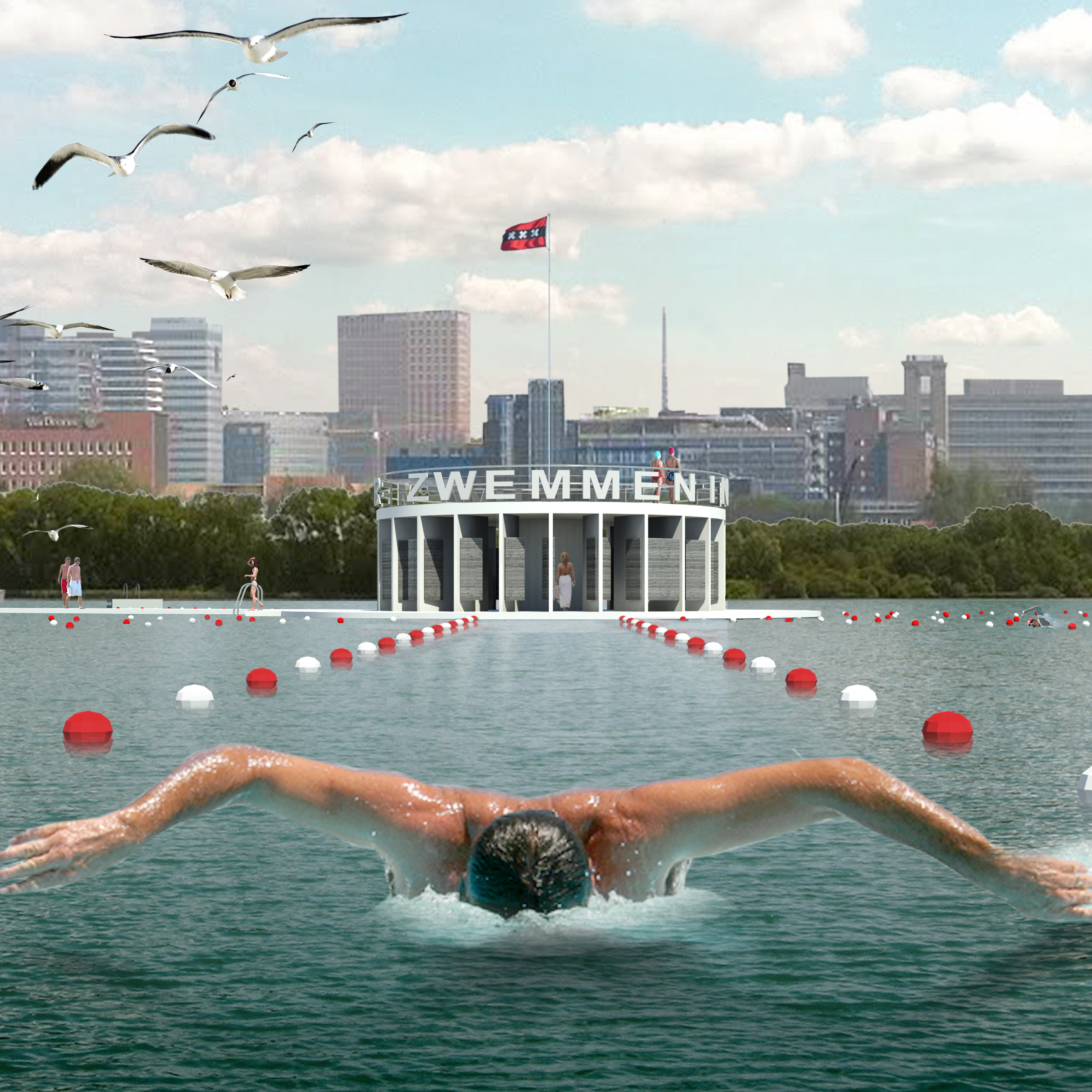

Sport Axis


from an archipelago of isolated sport enclaves to a Sport Axis with integrated sports facilities


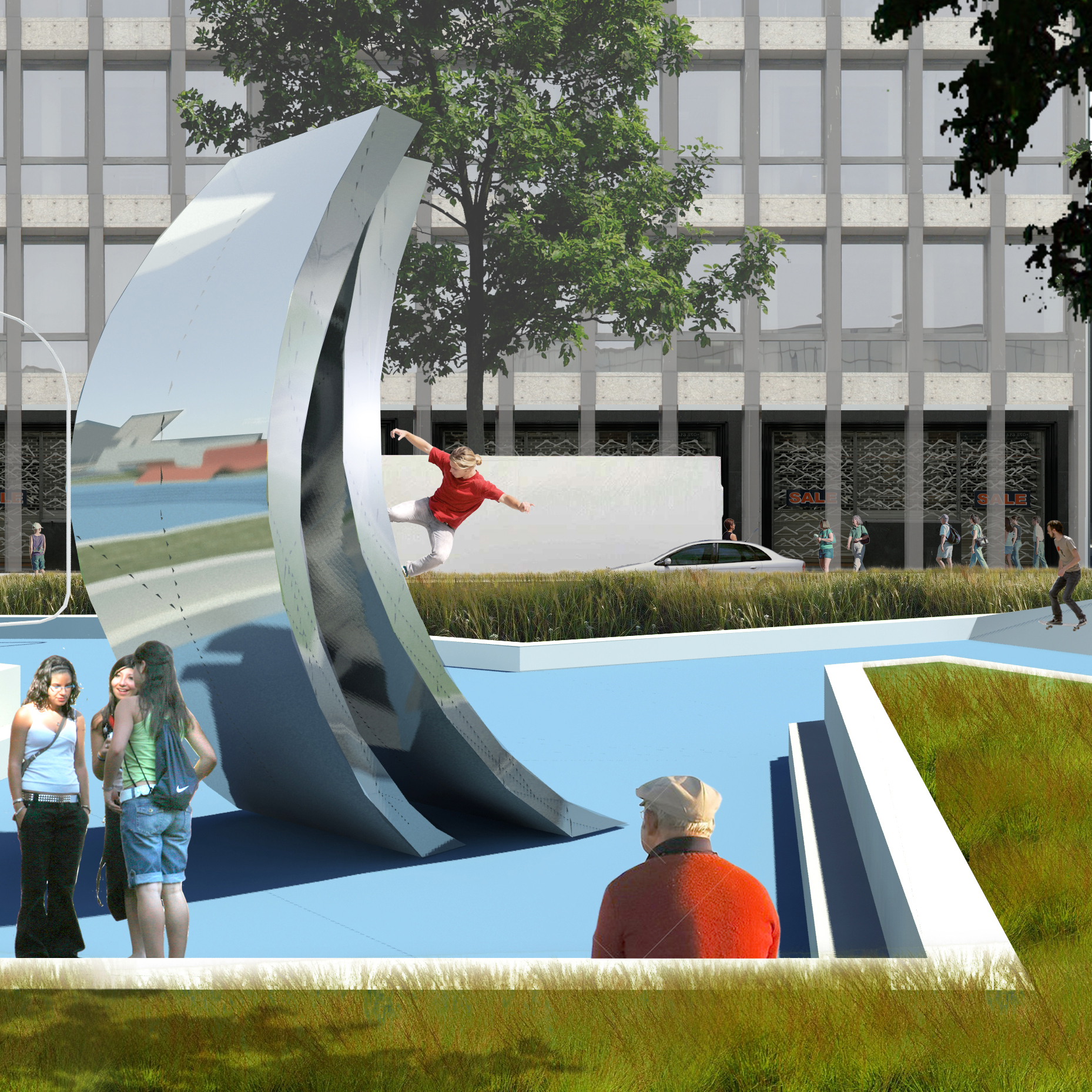

Skate off the art
The existing skatepark Westblaak is at the end of its lifecycle. Its skate objects are outdated and do not meet the requirements of many skaters any more. They dislike the prescribed movement that the objects imply and prefer a park in which skating merges with public space and street furniture. Also the mono functional character of the place is considered as problematic by the municipality.


The project proposes a hybrid concept of a skatepark and a sculpture garden. It forms a new art route that anchors the project into the area’s cultural profile and attracts a larger public than skaters only.


The design consists of a three dimensional edge that defines a series of chambers that fluidly morph into each other. This spatial armature serves as a skateable edge, a green buffer that separates the park from the road and a sitting area for the spectators of the art and the skaters.

In the chambers, a variable collection of ‘skate-off-the-art’ objects is placed. They are designed by the skaters in collaboration with artists and local manufacturers. Their specific design triggers different forms of skating, without imposing a specific skate moves.

The skate sculptures introduce a collection of ‘use art’ that, like in the neighbouring galleries and museums, changes regularly. The park’s continuous renewal enables it to remain attractive and exciting for skaters and the public over time.


OPEN specifiCITY
The open city stands or falls on the way it manages the organisation of diversity. Our heterogeneous society demands a planning regime that shapes the exchange between and the overlap of different worlds. The public domain, in particular that of the square, is typically the place where contact between different sections of the population is stimulated and forms of new collectivity take shape.
In order to redevelop the square into a social space that ties in with the reality of the open society and that of the network city, we must introduce new types of buildings and squares. These types must be at once open and specific: open to different groups of users and uses while at the same time specific enough to produce the necessary differentiation and identification.

The Western Garden Cities, are being transformed with little regard for the original qualities of the modern city. The open structure of the initial General Extension Plan is replaced by a defensive form of urban planning that sources its ingredients from the pre-war city. Parks are fenced off, flats are replaced by perimeter blocks and open squares are redeveloped into indoor shopping areas.
The result – a patchwork of gentrified enclaves – may be filling the indeterminate open space of the original city, but is incapable of accommodating new forms of collectivity.

The brief for the August Allebé Square offers the opportunity to formulate an alternative strategy for the ‘problematic legacy’ of the modern city that failed to respond to demographic developments. This must be a strategy that sees the open city and its diverse population not as a problem, but as a chance to forge new types of collectivity and urbanism.


The design proposes a new spatial and programmatic composition that opens up radically on the levels of both neighbourhood and network city.
The potential of the square’s strategic position between the regional axes (A10, metro and train) and the major thoroughfare (Postjesweg) is capitalized on by spanning the square in between these different axes and introducing programs that are relevant on both regional and local levels.

In order to program and differentiate the larger space of the square, while at the same time safeguarding its openness, a new type is introduced: the so-called ‘pleingebouw’ (square building). An amalgam of building and public space, the square building is capable of adding programmed mass as well as charged emptiness to the square as a whole.
In dialogue with the existing buildings and/or embedded within the infrastructural network, a sequence of square buildings will enrich the open space with a number of urban archetypes (the podium, the colonnade, the canopy, the plan oblique and the frame).


snake


collonade


podium


table


labda


oblique plan
The result is a square-within-a-square-situation, which can simultaneously accommodate different groups and activities without disrupting the continuity of the open space.
The explicit programming of the masses (public transport, commerce, culture, community and sport) and their specific design imply the use of adjacent public space without fixing it. There will still be room for improvisation, spontaneity and the appropriation of the squares by different groups.


The August Allebé Square in its entirety is more than the sum of its individual parts: the co-existence of different groups and their activities transforms the square into an urban “coulisse landscape” where one is constantly reminded of the presence of parallel worlds, of ‘the other’.


M3
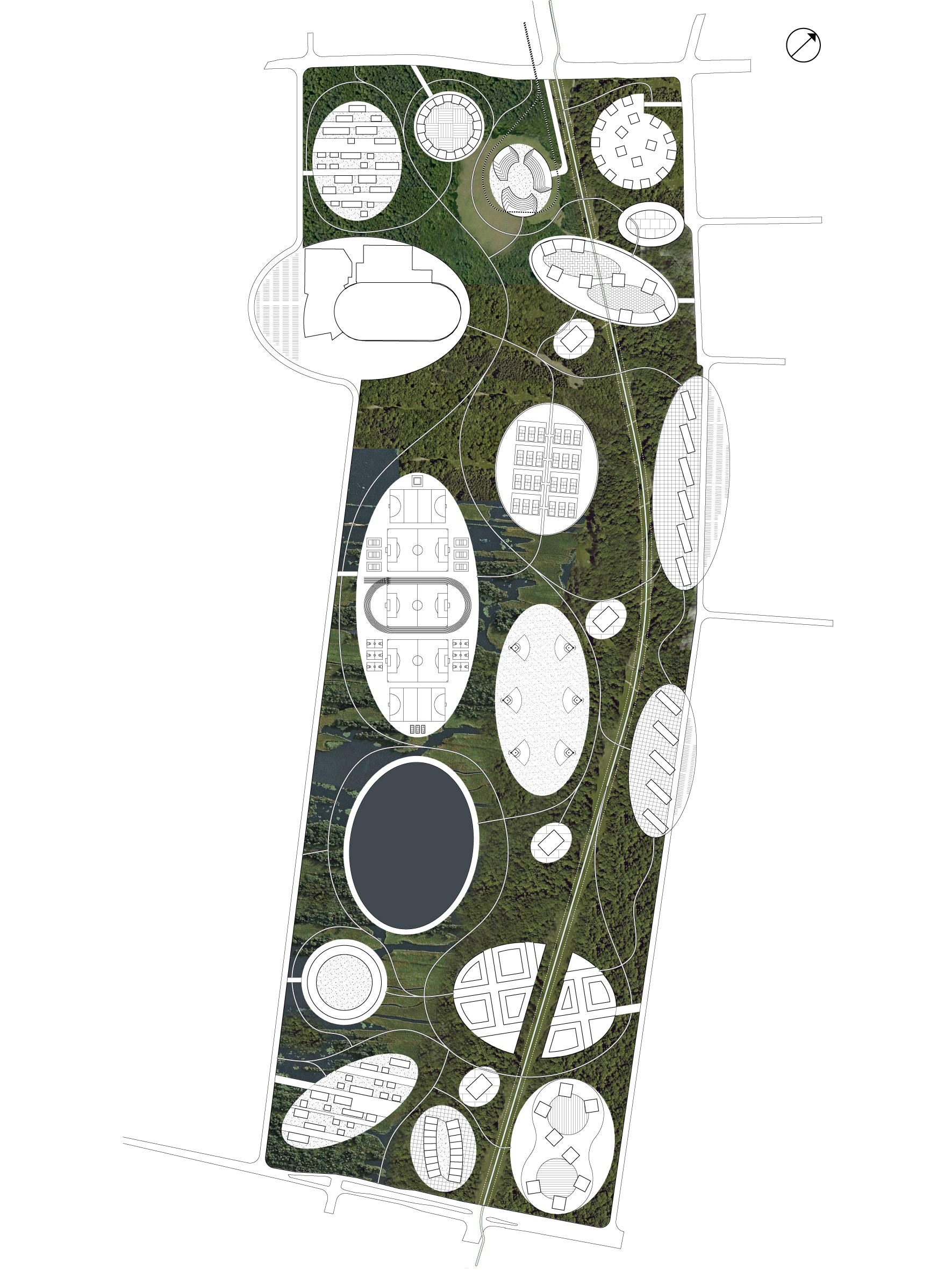

Green Archipelago
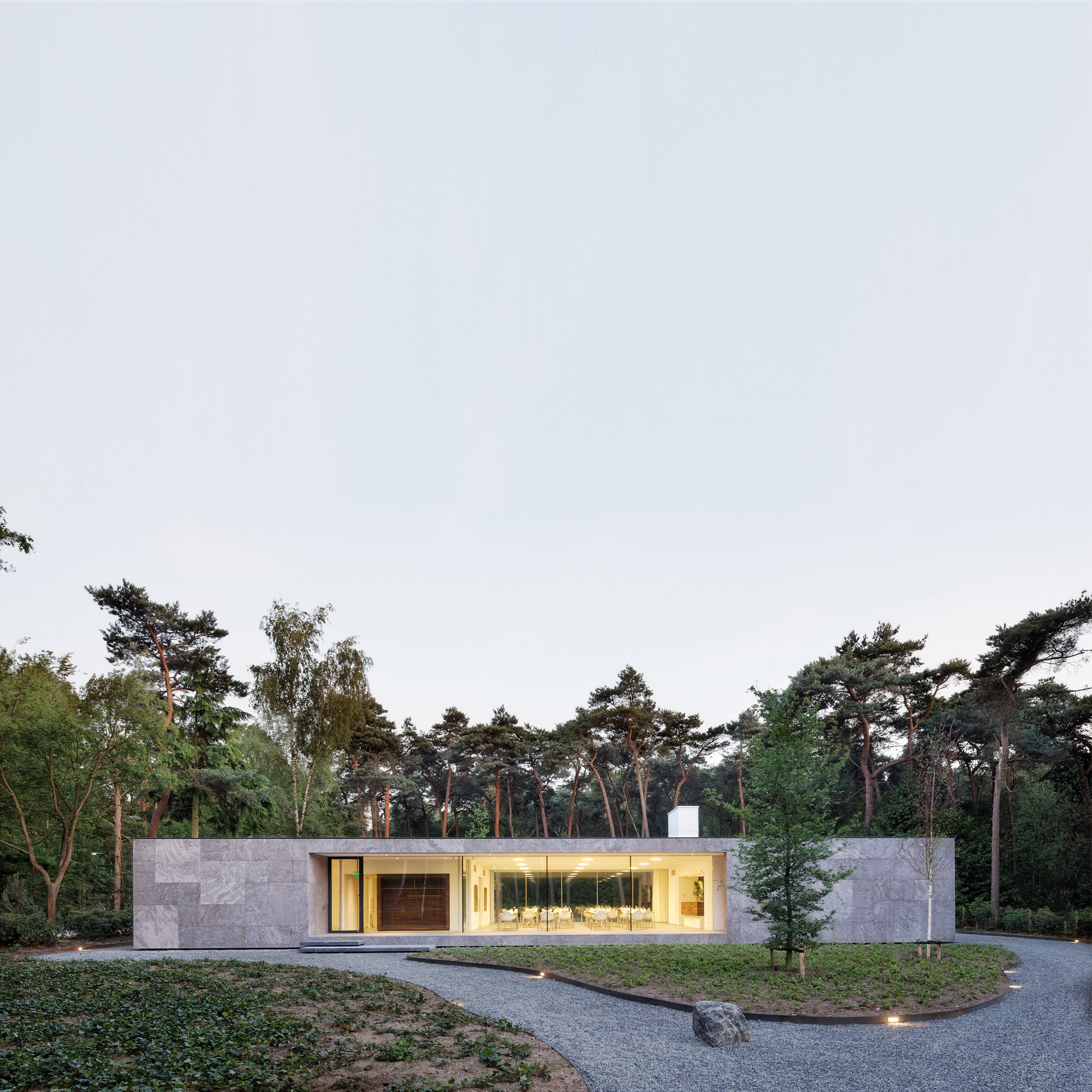

Faculty Club
The latest extension on Tilburg University’s campus is Faculty Club, a multipurpose pavilion for the academic staff and their guests. Our design reanimates the quintessential quality of the Tilburg campus: strong solitary buildings in the green. The monumental modernism of Jos Bedaux served as a frame of reference. Bedaux designed the first – still the best – buildings for the university in the sixties.


By creating a strong formal relation between the existing university buildings and the new Faculty Club, an ensemble of omni-directional solitaires is created. This enables one to recognize the Faculty Club as part of the university, despite its peripheral forest location and exclusive program.

The Faculty Club is designed as a carved-out-monolith, one simple box in which transparency and massiveness melt together. The central restaurant is carved out from the centre, creating a tunnel-effect in the front façade. In order to strengthen its solitaire character, the building is lifted from the ground. The height difference is bridged by outside stairs and a ramp integrated within the front façade.

Each façade has only one window. By recessing each window, outdoor spaces are created within the front and rear façades. These mark the entrance in front and form a large covered terrace in the back. The simplicity and plasticity of the three-dimensional window treatment further contributes to the building’s sculptural qualities.

The primary program consists of a restaurant for eighty persons, a lounge and two conference rooms. The secondary program consists of a kitchen, storage space and other services. The further the functions are situated from the campus, the more intimate and informal the space becomes. The conference rooms look out over the campus, while the lounge completely relates to the forest and the garden. All main functions are physically linked by a transparent axis running the length of the building.

Both the lounge and the restaurant are connected to the carved-out terrace situated at the rear of the building. A four-rail system of sliding windows enables one to open up two-thirds of the total eighteen meters of glass façade. This intensifies the experience of the forest without the visitor having to step outside the building envelope.


The construction principles of the Faculty Club are deceptively simple. In order to emphasize contrasting space and mass, the structure, installations and details are integrated within walls and floors. The starting point for the engineering was the visual absence of technique. Key contractors and consultants were engaged early in the process of preliminary design, enabling the development of precise and project-specific details that consistently support the overall concept.


The result is an integral, durable and engaging building. A monolith carved in such a way as to both profit and profit from the surrounding landscape while maintaining its distinct primary form. Its architecture refers to the heritage of Jos Bedaux by abstracting and updating his formal language. This makes the building into a solidary solitaire, sober and luxurious, massive and transparent, silent and outspoken.


Exorcizing on Communist Hardware

Beach City
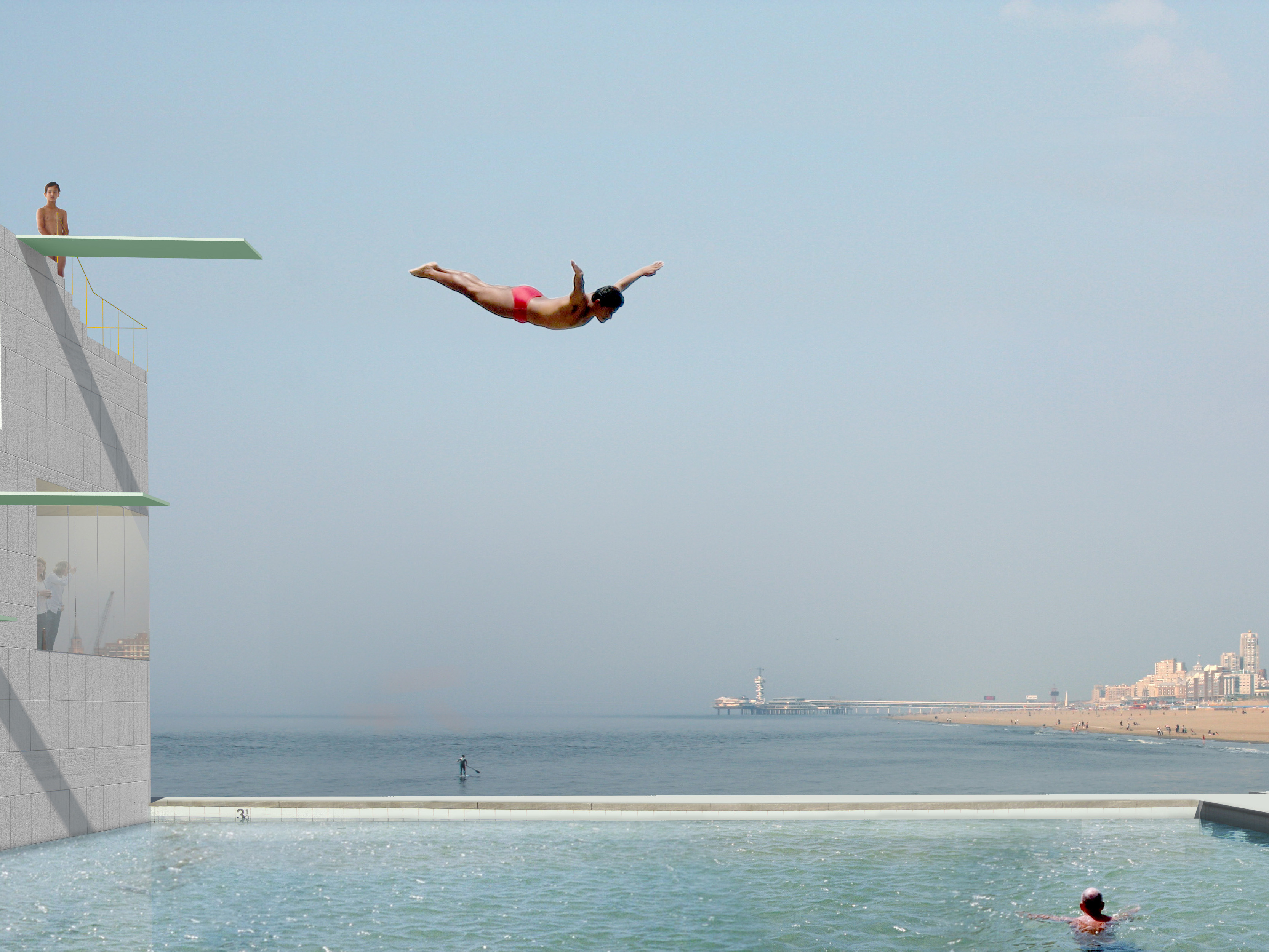
The brand new boulevard of Scheveningen lacks a clear ending at its south side. The promenade runs dead into a rather desolate area with a sport beach, a harbor and a sort of free zone of parked cars and a surfers village. The sport beach has little articulation, consistency and allure.

During the summertime several national and international beach tournaments are held in a temporary stadium on the beach. The current stadium lacks charisma. It’s a closed structure with an uninviting facade. The municipality wants to explore the possibilities of a temporary stadium that will be able to activate the beach year round.

This project transforms the current sports beach into a ‘Beach City’ that bundles beach and sea related sport facilities, both existing and new. Beach City activates the southern end of the Scheveningen boulevard with a sportive hotspot that functions on a regional scale


The design introduces a fixed and permanent armature for flexible and temporary Beach City developments. This armature consists of the prolonged boulevard that is deformed into a toothed shape in order to enhance its relation with the beach and to create docking stations onto which a flexible set of plug-and-play facilities will be attached. These facilities differ in time, according to season, demand and event calendar. The armature itself incorporates permanent facilities such as toilets, locker rooms, showers, storage spaces, a bar/restaurant and a water sport coordination center.


Sports beach seen from the boulevard


Sports beach and beach stadion seen from the harbour pier
Beach City accommodates a large variety of plug-and-play facilities: both new and existing, both public and private, both beach and water related, both temporary and semi-permanent. The surfers village and the beach stadium will be the main players that are already active in the area. Potential new plug-and-play facilities consist of a muscle beach, a climbing beach, a skate facility, a tidal swimming pool and a multi sports field. Many of these facilities will reduce in size or entirely disappear in winter. Then beach city will again be the domain of the hard core kite and wave surfers that have appropriated the site in the first place.



Dealing with Vierhaven

Topos
Landgoed De Groene Kamer seeks to develop a new type of country estate in the southwest of the city of Tilburg where eco-retail, nature and recreation are brought together. A place where city and countryside meet, both physically and programmatically. Shift’s proposal, Topos, focuses on a radical integration of architecture and landscape.


Masterplan
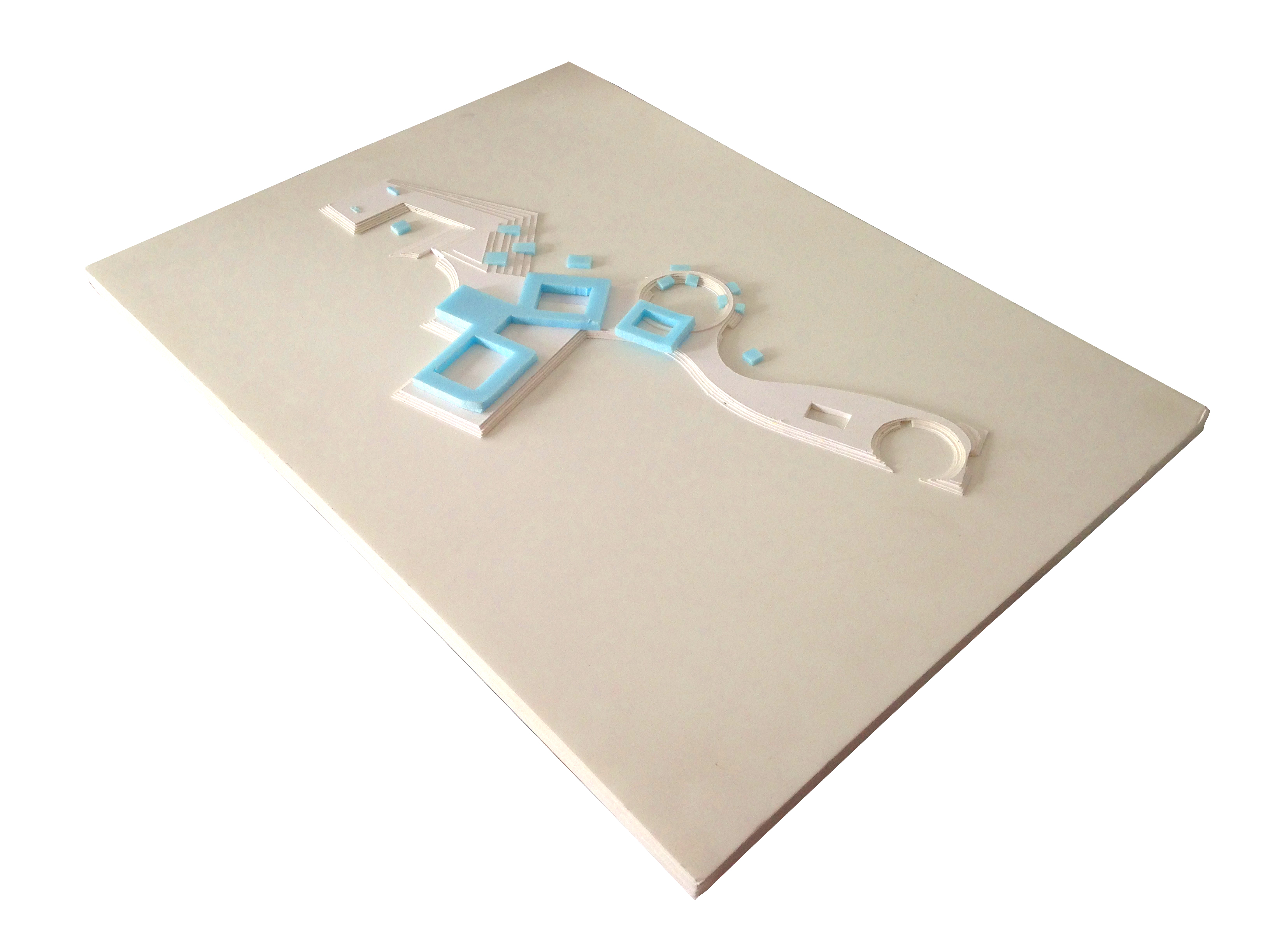
Topos transforms the flat body of earth in the existing master plan of .Fabric and LOLA into a differentiated earthwork. The boulevard, the squares and the buildings are placed in and on this earthwork. The body of earth is used as an instrument for place making and therefore becomes topographic. Each retail cluster is embedded in a specific three dimensional earth shape to create a sequence of differentiated places (topos). Shopping on the green boulevard becomes a natural experience in which the division between city and countryside, between architecture and landscape, is dissolved.


The entrance square is formed by a bowl-shaped earthwork which opens towards the parking arboretum. The circular shape embraces the visitors and welcomes them into a different world that invites for exploration. The various buildings situated in, on or under the earthwork bowl can be accessed from the square. Each building typology has its own specific connection with the earthwork and the surrounding landscape.
Block

The block houses a so-called landwinkel, a large shop where local food products are being sold. It functions as one of the anchor programs of the whole Groene Kamer development and is therefore prominently placed on top of the earthwork. The omnidirectional block manifests itself as a transparent greenhouse with a “wooden sculpture” inside.

This sculpture is designed as a cross shaped volume which allows for open corners in the building. The corners function as indoor gardens that literally bring the outside inside and vice versa. The cross volume is carved open on the ground floor, introducing a continuous and flexible floor plan that connects the corner gardens.

Campus

The campus is designed as a distinct and recognizable cluster of three retail buildings, literally embedded in the landscape. The entrances of the buildings are oriented towards the inside of the campus, to create a shared court that seduces the visitors inside. All buildings have a maximum transparency towards the shared interior. The other, more closed, facades are provided with a continuous horizontal strip window that follows the topography of the earthwork. This strip window introduces a new “constructed” horizon which dramatizes the three dimensional character of the earthworks both from the inside and from the outside.


Restaurant

The restaurant manifests itself as a triangular carve through the body of earth. The carve accommodates an open entrance towards the square, a covered middle part with the seating area and a large terrace towards the south. The other functions of the restaurant are situated in the body of earth adjacent to the carve. Foldable window panels allow the complete south façade to open up, erasing the border between inside and outside.


Solitaire

The solitaire is designed as a “programmed vase” that provides a distinct landmark for the square. The vase consists of a closed core that evolves into a circular dish with a large mix of vegetation on top. The closed core house secondary functions, while the space under the dish functions as a ring shaped pavilion enclosed by glass panels. The system of sliding panels allows for different open-closed-configurations of the pavilion.


